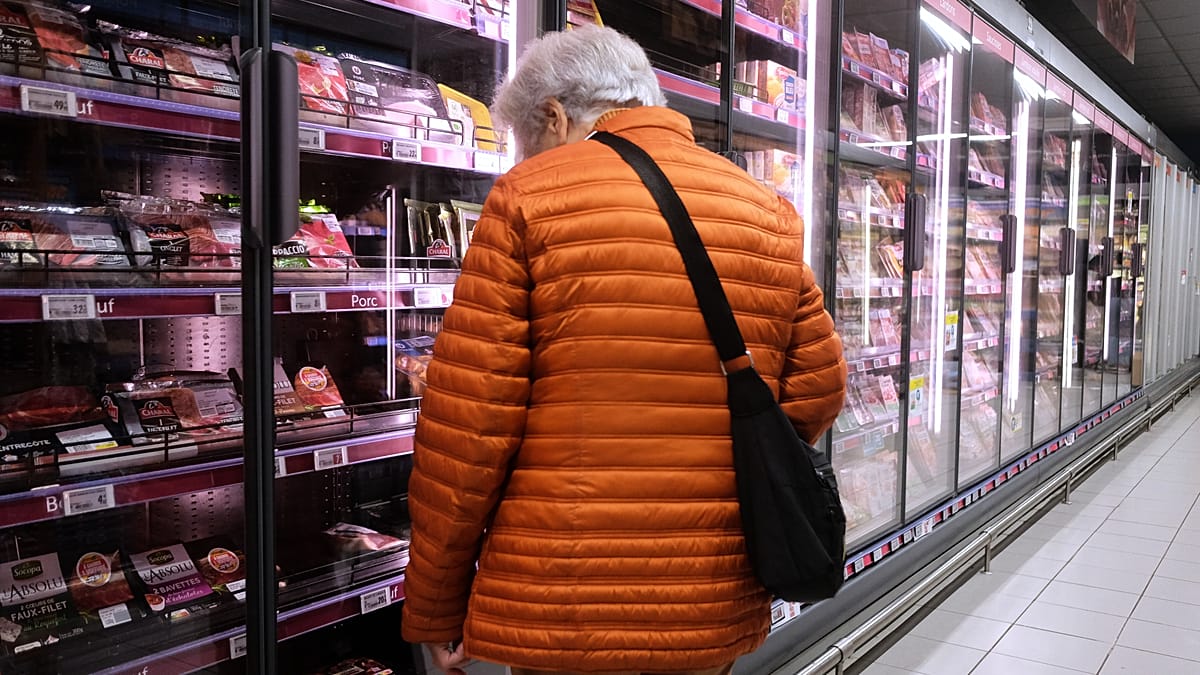
Walking into a supermarket in Naples or elsewhere in southern Italy in late October, shoppers might have found the fruit aisle half empty. For about two weeks, lorry drivers protesting diesel costs blocked roads and ports across the region. Warehouses stopped loading, and shelves of meat, fresh milk, fruit, and bottled water in Campania, Puglia, and Calabria emptied—in some small shops within a day.
Italy's national statistics office Istat reported that unprocessed food prices in October were 7.5% higher than a year earlier, up from 5.5% in September. The typical shopping basket of food, household, and personal care goods rose 2.5%, compared with 1.5% the previous month. Italy is an extreme case, but it points to a broader trend across Europe: after a relatively quiet year, the weekly shop is starting to get more expensive again.
Energy drives inflation, but food follows
Eurozone inflation reached 4% in October, the highest in over three years, according to preliminary Eurostat data. Energy was the main culprit—fuel, electricity, and heating were 20.8% more expensive than a year earlier. Food prices, by contrast, have risen much more slowly. Prices of food, alcohol, and tobacco rose 1.6% in the eurozone in October year-on-year. Across the EU as a whole, food and soft drinks were just 0.6% dearer in September, the latest month with complete data.
But the picture is uneven. Processed food, alcohol, and tobacco rose only 0.5% in October, while unprocessed food—fruit, vegetables, meat, and fish—jumped 4.6%, up from 2.7% in August. "Energy and food drove the increase in prices, while core inflation remains broadly stable despite the ongoing energy shock," said Nicola Nobile, chief Italy economist at Oxford Economics.
The reason is straightforward: tractors run on diesel, greenhouses need heating, and almost everything travels by lorry. When those costs spike, fresh produce—which cannot sit in a warehouse for months—is particularly exposed.
Big economies show the same split
In France, overall food prices rose 1.2% in October, but fresh products were 8% more expensive than a year earlier, according to INSEE, down from 9.5% in September. Germany saw food only 0.4% dearer, while Portugal's unprocessed food prices rose 3.7%, unchanged from September. Spain's food prices were still climbing in October, though more slowly than a year ago.
Cyprus had the steepest rise in September, with food and soft drinks 4% dearer than a year earlier. Spain (2.7%), Romania (2.6%), Malta (2.5%), and Portugal (2.4%) followed. Outside the EU, Türkiye saw food prices up 27.6% year-on-year. In 14 of the EU's 27 countries, food and soft drinks were actually cheaper than a year before. The biggest drop was in Sweden, where prices fell 6.3% after the government halved VAT on food from 12% to 6% on 1 April, a cut that runs until the end of 2027. Latvia, Hungary, and Czechia also saw declines of between 3.8% and 4.8%.
Eastern Europe carries the heaviest load
Today's modest rises come on top of a very large cumulative increase. Since September 2021, as energy prices began to surge, food in the EU has become about a third more expensive. In Hungary, prices are up by more than half; in Bulgaria, Estonia, and Romania, the increase is just over 50%. In Luxembourg, Sweden, and France, it is closer to a quarter.
Several countries with the biggest increases are also those where food takes up the largest share of household spending. For a family in Bucharest or Sofia, a 2% rise at the till can therefore consume a larger share of the household budget than the same rise in Luxembourg. This adds to the pressure on households already struggling with heating costs.
Economists expect overall inflation to keep climbing. Pantheon Macroeconomics sees eurozone inflation peaking at 4.5% in January and expects the European Central Bank to raise interest rates in December. The EU's energy plan aims to shield winter bills, but food prices may remain a concern for consumers across the continent.