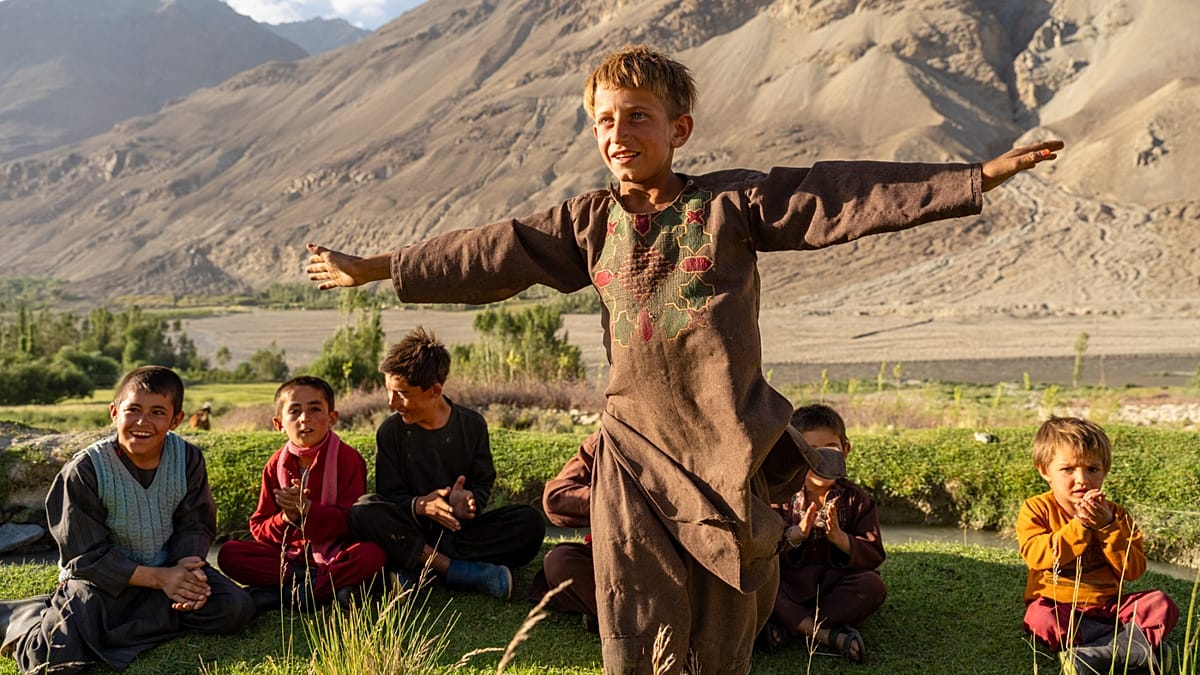
For decades, the international image of Afghanistan has been dominated by conflict, crisis and the stark headlines that accompany them. Photographer Daniel Malikyar, the son of Afghan refugees raised in the United States, is seeking to offer a different perspective. His new book, Afghanistan, is a visual counter-narrative, documenting the country's beauty, culture and resilience through the lens of everyday life.
Malikyar travelled independently across Afghanistan before the Taliban's return to power in August 2021. His journey took him from the bustling streets of Kabul to the remote Pamir Mountains, where he photographed Kyrgyz families herding yaks, and to the lush forests of Nuristan, a province that had long felt mythical to him. The result is a collection of intimate portraits and landscapes that rarely make it into the news cycle.
“When people think of Afghanistan, they just think of the headlines,” Malikyar told Euronews Culture. “But there's so much beyond that.” His images capture balloon sellers drifting through Kabul at sunrise, children flying kites above the city's rooftops, and the quiet dignity of elders in some of the country's most isolated communities.
A personal quest for roots
Malikyar's connection to Afghanistan is deeply personal. His parents left the country in 1979, just before the Soviet invasion, and he grew up in Los Angeles with a dual experience: at home, he was immersed in Afghan culture through food, music and family stories; outside, he encountered only the narratives of war and instability. “I always had this longing to bridge that gap and gain a deeper understanding of both where I come from and myself,” he explained.
The project was, in part, a search for the missing pieces of his parents' childhood memories—flying kites, tending gardens, and other small moments that had never been documented. “Seeing those moments unfold in front of me felt like a full-circle, homecoming experience,” he said.
For his family, the photographs have been a way to reconnect with a homeland they had never been able to visit. “They had heard stories about places like Nuristan—a province that almost felt mythical, with its lush forests and rivers,” Malikyar said. “Seeing those places through my photographs was incredibly meaningful. I could see their faces light up.”
Building trust through shared identity
One of the most striking aspects of Malikyar's work is its intimacy. He attributes this to a deliberate approach: he rarely takes out his camera until he has sat with people, shared tea, and explained his intentions. “I tell them that I'm Afghan, that I speak the language, and that I'm there as someone connected to them rather than as an outsider,” he said. This allows people to be themselves, without posing or agenda.
His grandfather, Omar, who documented family gatherings through photographs and home videos, was a major inspiration. “He instilled in me the desire to document the world around me,” Malikyar said. “This project is something I know he's looking down on.”
The book Afghanistan is accompanied by a documentary series, offering a broader view of the country's landscapes and communities. For Malikyar, the project has filled a personal void. “That sense of something missing has disappeared,” he said. “I feel more whole, and the way I see both Afghanistan and myself has shifted in a really positive way.”
As Afghanistan remains under Taliban rule, Malikyar's work serves as a reminder of the country's enduring spirit and cultural richness. His photographs offer a rare glimpse into a side of Afghanistan that persists beyond the headlines—a side that deserves to be seen.