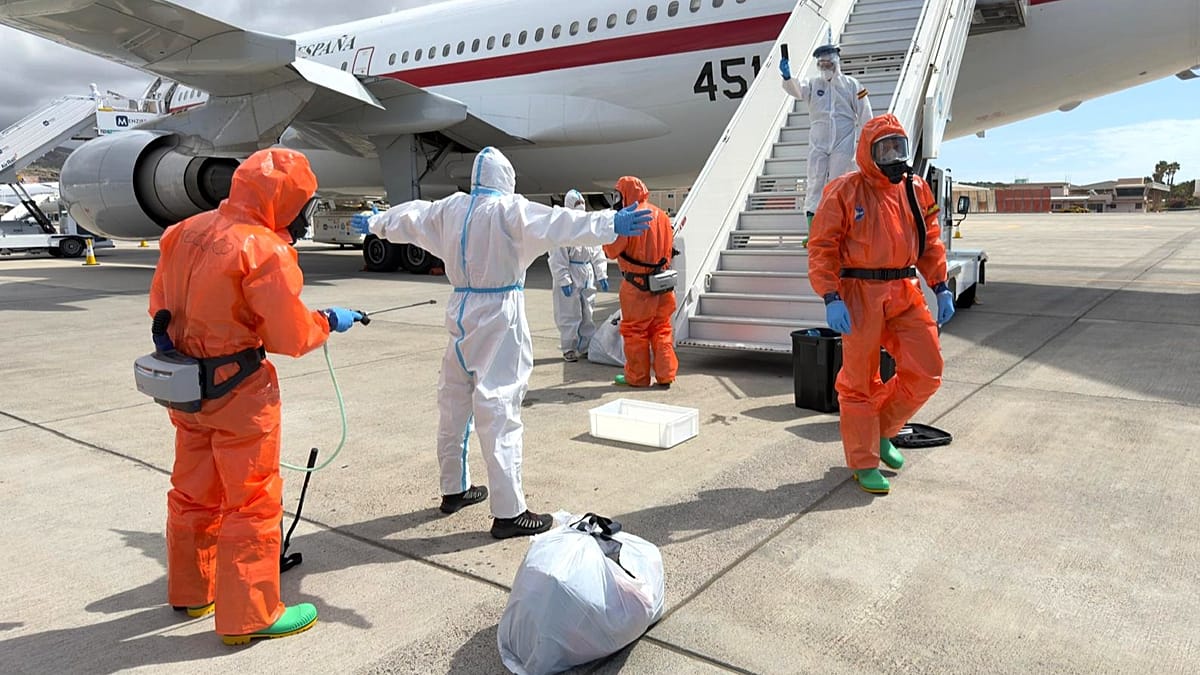
In recent weeks, a fresh wave of misinformation has swept across social media platforms, targeting the hantavirus outbreak that occurred aboard the cruise ship MV Hondius. The vessel departed from Buenos Aires, Argentina, on 1 April and docked in Santa Cruz de Tenerife, in Spain's Canary Islands, on 10 May. Eleven passengers fell ill, with nine confirmed cases and three deaths, including a Dutch couple believed to be the first infected during a stop in South America. Hantavirus is typically transmitted through contact with rodent droppings, urine, or saliva, and can spread between humans.
Conspiracy theorists have revived tactics from the COVID-19 pandemic, pushing claims that the virus is a hoax or a deliberate creation. One of the most persistent falsehoods is that the term 'hantavirus' is derived from Hebrew, implying the outbreak is a Zionist fabrication. Social media users have asked X's AI chatbot, Grok, to translate 'hanta' into Hebrew. Grok initially responded that it means 'a scam, fraud, nonsense, lie, or something fake', but later corrected itself, stating the word in question is actually 'khartah' (or chartah, חרטה), a slang term derived from Arabic. This correction has not stopped the spread of the original claim, which is used to insinuate that Israel is behind the outbreak—a baseless accusation that echoes antisemitic tropes.
False Cure Claims and Unproven Treatments
Another recurring theme is the promotion of ivermectin, an antiparasitic drug, as a cure for hantavirus. Figures like U.S. Congresswoman Marjorie Taylor Greene have amplified this claim, mirroring the drug's false promotion during the COVID-19 pandemic. However, the European Medicines Agency (EMA) has confirmed to Euronews that there is no evidence ivermectin is effective against hantaviruses. 'The EMA has not seen any evidence indicating that ivermectin, which is used to treat infections caused by parasites, is effective against hantaviruses,' the agency stated. 'In fact, there are currently no authorised treatments—antivirals or vaccines—for hantavirus, and clinical management relies on supportive care and early access to critical care facilities.'
This lack of approved treatments underscores the seriousness of the disease, which can cause hantavirus pulmonary syndrome (HPS) or hemorrhagic fever with renal syndrome (HFRS), depending on the strain. The World Health Organization (WHO) notes that hantaviruses have been known for decades, with outbreaks occurring sporadically across Europe, the Americas, and Asia.
Moderna's Vaccine Research: Routine, Not Suspicious
Conspiracy theorists have also seized on the fact that U.S. pharmaceutical company Moderna has been working on a hantavirus vaccine. Social media posts, some garnering millions of views, claim this proves the company 'knew a virus was going to be rolled out.' One X user wrote, 'What is also weird is Moderna has been working on a Hantavirus for a year - as if they knew a virus was going to be rolled out.' Another post, with over 4 million views, attached a screenshot of a July 2024 article about a collaboration between Moderna and Korea University's Vaccine Innovation Center to develop an mRNA hantavirus vaccine.
Experts dismiss these claims as unfounded. Dr. Amesh Adalja, senior scholar at the Johns Hopkins Center for Health Security, told Euronews: 'The fact that Moderna was working on early hantavirus vaccines reflects the fact that this virus has been a well-characterised threat for decades.' It is standard industry practice for pharmaceutical companies to develop vaccines for known pathogens, and the collaboration with Korea University is still in preclinical stages, meaning human trials are not imminent. The notion that this research is evidence of a staged outbreak is a classic conspiracy theory trope, similar to those that emerged during the COVID-19 pandemic.
This wave of misinformation is not just a nuisance; it can have real-world consequences, potentially deterring people from seeking proper medical care or undermining trust in public health measures. As the European Union continues to monitor the situation, health authorities urge the public to rely on verified sources such as the European Centre for Disease Prevention and Control (ECDC) and national health agencies.