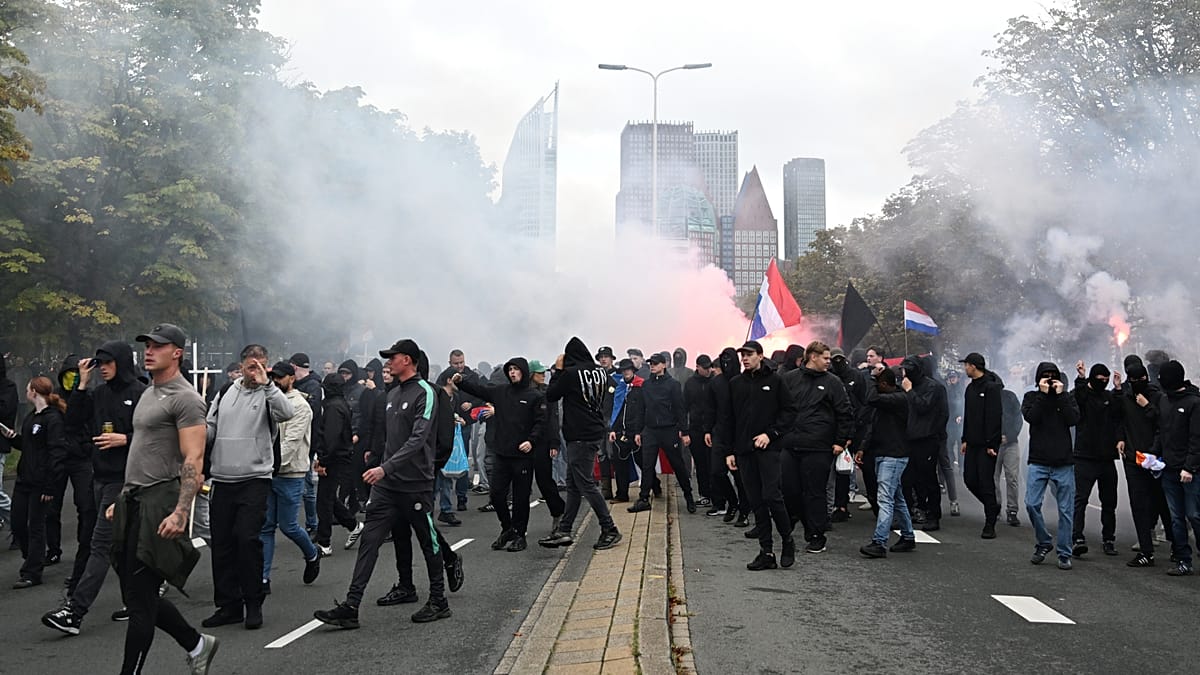
Riot police in the Netherlands used water cannons, batons, and specialist dogs on Saturday to disperse around 500 far-right demonstrators who had gathered in The Hague for an anti-immigration rally. The protest, organised under the banner “We Are The People,” descended into violence within hours, with demonstrators hurling fireworks and other objects at officers and shouting anti-Semitic slogans.
The unrest unfolded at the Malieveld, a central park in the Dutch seat of government, where authorities had banned the planned march through the city. When clashes broke out, mounted police moved in and made several arrests. Justice Minister David van Weel condemned the scenes on social media platform X, calling for an “extremely firm” response to violence against law enforcement and the use of hate speech.
“Thanks to all the police officers who are once again standing up for our democratic rule of law,” van Weel wrote, responding to footage that showed protesters performing Nazi salutes and chanting anti-Semitic remarks.
Rally rhetoric and public anger
Organisers had framed the event as a protest against government policies on immigration and asylum. One participant, 31-year-old mechanic Thijs Jansen, told reporters at the scene: “We're losing our country. We're literally losing our country to mass migration.” His words echoed a sentiment that has gained traction across parts of Europe, where populist and far-right movements have increasingly mobilised around migration issues.
The violence in The Hague is not an isolated incident. A year earlier, a similar right-wing demonstration in the same city ended with rioters setting a police car on fire and attacking the headquarters of the centrist D66 party, now led by Prime Minister Rob Jetten. That pattern has raised concerns among Dutch officials about the potential for recurring unrest linked to anti-immigration protests.
Saturday's clashes also come amid broader debates in the Netherlands and the wider European Union about how to manage asylum flows and integration. While the Dutch government has sought to tighten its asylum policies, critics argue that such measures risk fuelling social tensions rather than addressing their root causes.
The use of water cannons and police dogs is relatively rare in the Netherlands, where law enforcement typically favours dialogue and de-escalation. The decision to deploy these tactics underscores the severity of the confrontation and the challenges facing local authorities in balancing public order with the right to protest.
Justice Minister van Weel's call for a firm response reflects a broader political consensus in The Hague that violence and hate speech will not be tolerated, even as the country grapples with legitimate concerns about immigration. The Dutch government has pledged to review the events of Saturday and consider further measures to prevent similar outbreaks.
For now, the streets of The Hague have returned to calm, but the images of clashes and Nazi salutes are likely to reverberate across the Netherlands and beyond, feeding into ongoing debates about extremism and social cohesion in Europe.