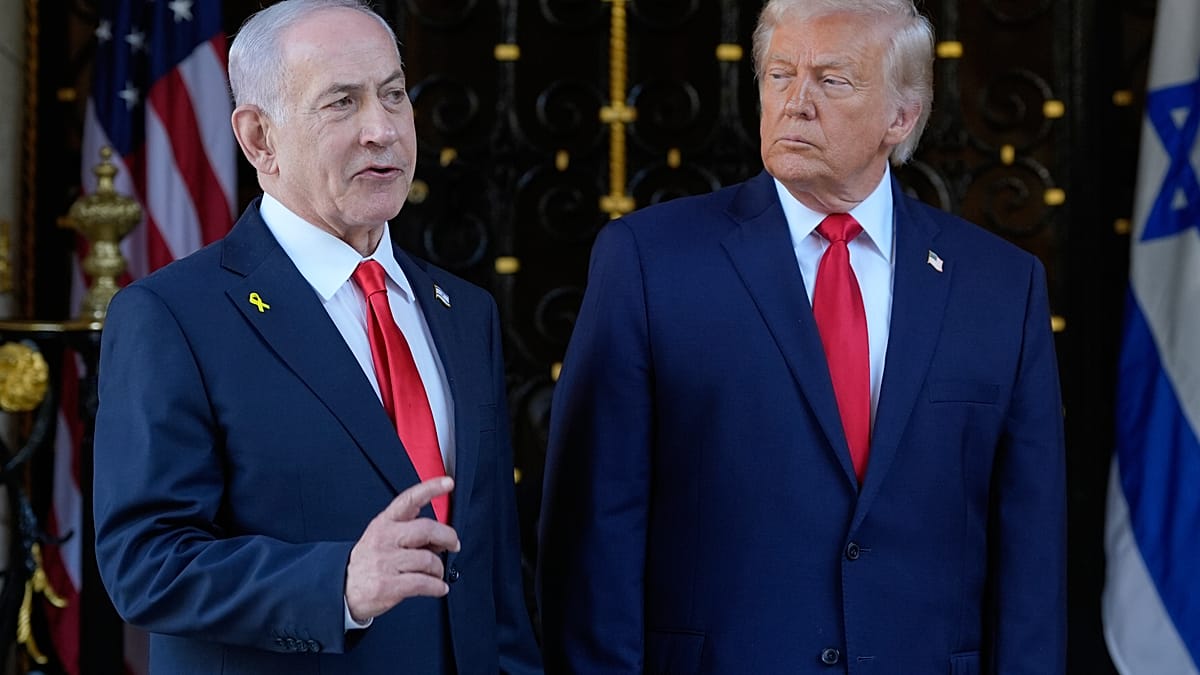
As Americans cast their ballots in Tuesday's midterm elections, President Donald Trump used a phone interview with Fox News to announce a major shift in US Middle East policy: Washington will halt its roughly $4 billion in annual military aid to Israel starting in 2027. The decision, which Trump said had been discussed with Israeli Prime Minister Benjamin Netanyahu for years, marks a departure from decades of US financial support for its closest regional ally.
“Look, we give them $4 billion of things and money, and they don’t need it,” Trump said, arguing that Israel's economy and military capabilities have matured to the point where such assistance is no longer necessary. He stressed that the US would continue selling arms to Israel, ensuring the security relationship remains intact.
Midterm timing and political calculations
The announcement came as polls opened across the United States, and Trump explicitly tied the move to the electoral campaign. He suggested that the aid package had become a liability, providing ammunition to critics such as Abdul El-Sayed, a Democratic Senate candidate in Michigan who has been outspoken in his criticism of Israel. By ending the aid, Trump appears to be attempting to neutralise a talking point that has resonated with progressive voters.
Unlike many European nations, including France, Spain, and Italy, the US has no electoral silence period that restricts political commentary on polling day. State laws only limit campaigning near polling stations, leaving the president free to make policy announcements while voting is underway. This contrast highlights a fundamental difference in political culture between the US and much of Europe, where such timing would be unthinkable.
The current 10-year, $38 billion memorandum of understanding was signed under Barack Obama in 2016 and runs until 2028. Trump's announcement effectively truncates that agreement, though the details of the transition remain unclear. Netanyahu's office did not immediately respond to requests for comment, but his political rival, Gadi Eisenkot, called the move dangerous, noting that Israel's defence establishment learned of the change through the media. Eisenkot used the moment to renew his call for Netanyahu's replacement.
The decision comes amid heightened tensions in the Gulf. A US official confirmed that American forces had conducted defensive strikes on Iranian targets in the Strait of Hormuz, specifically targeting surface-to-air missile sites. Iranian state television reported explosions on Qeshm Island, and Tehran's parliament speaker, Mohammad Bagher Qalibaf, said Iran had delivered a “firm and rational response” to Washington, while warning that the US must now act to prevent renewed conflict. He told parliament that Iran remained ready “with its finger on the trigger,” though he did not specify the nature of the response.
For European observers, the implications are significant. The US-Israel relationship has long been a cornerstone of Middle East policy, and any shift in that dynamic will reverberate across the region. European nations, particularly those with strong diplomatic ties to both Israel and Iran, will be watching closely. The recent dip in oil prices amid Hormuz talks suggests markets are already reacting to the volatility.
Trump's announcement also comes at a time when NATO allies fear delays in US military support for Ukraine, raising questions about the reliability of American commitments under his administration. The decision to end aid to Israel, while framed as a cost-saving measure, may be seen by European capitals as part of a broader pattern of US retrenchment.
In Israel, the political fallout is immediate. Netanyahu, who is facing a tight election, may find the announcement a double-edged sword: it could bolster his image as a leader who has made Israel self-sufficient, but it also exposes the fragility of the US guarantee. Eisenkot's criticism suggests that the opposition will use the issue to attack Netanyahu's closeness to Trump.
As the midterm results come in, the full consequences of Trump's announcement will unfold. For now, the US has signalled a new era in its relationship with Israel, one that will require both countries to adapt. European leaders, who have often relied on Washington's lead in the region, will need to recalibrate their own strategies in response.