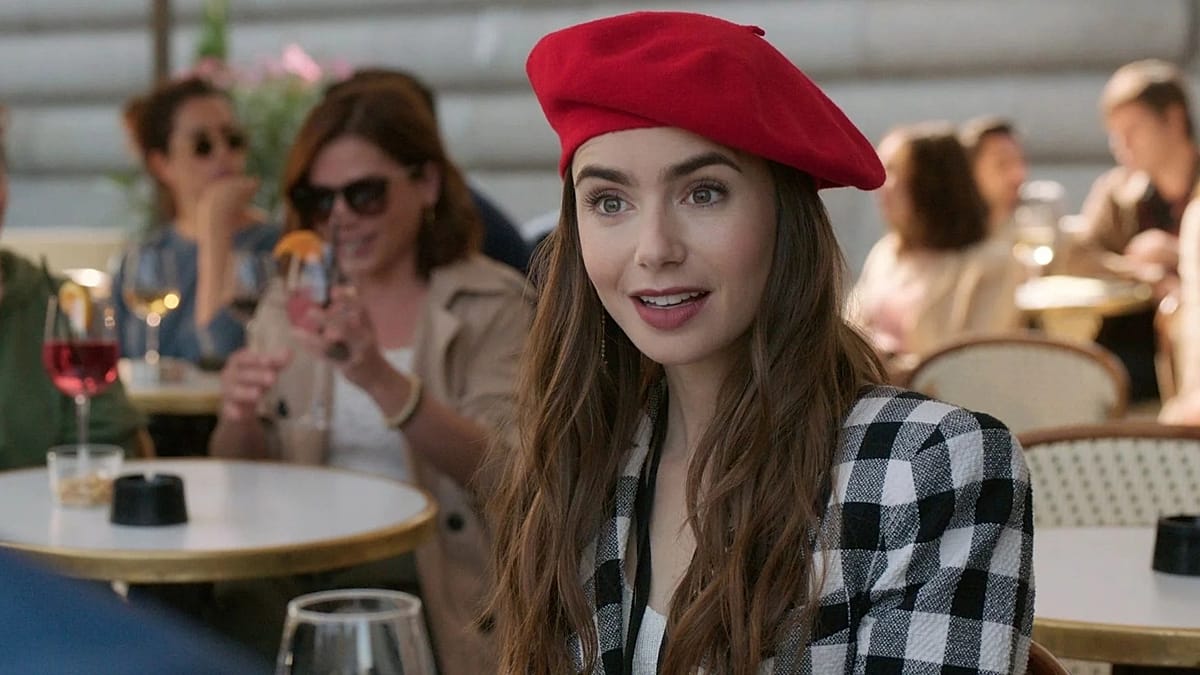
Netflix has confirmed that its hit series Emily in Paris will conclude after its sixth season, currently filming in Greece and Monaco. For those who have followed the show's trajectory—from pandemic-era escapism to a hollow exercise in brand promotion—the announcement feels less like a loss and more like a merciful release.
Created by Darren Star, the series debuted in October 2020, reaching 58 million households in its first month. It follows Emily Cooper (Lily Collins), a marketing executive from Chicago who moves to Paris to bring an American perspective to a French firm. The premise, however, quickly devolved into a parade of stereotypes: French people as lazy, flirtatious, and averse to monogamy, with a Paris that exists only in a sanitized, metro-free bubble of the fifth arrondissement, the Seine, and Montmartre.
French critics and viewers were particularly scathing. The show's geography is nonsensical—where is the métro?—and its portrayal of Parisian life bears little resemblance to reality. Even President Emmanuel Macron, whose wife Brigitte made a cameo, publicly pleaded for Emily to stay in France after a brief sojourn to Rome in Season 4. But the trip changed nothing; Emily returned to Paris virtually unchanged, a pattern that has defined the series.
A Show That Stopped Evolving
As seasons progressed, Emily in Paris lost its narrative drive. Once it became clear that Emily would not return to the United States, the show's central tension evaporated. Her influencer arc, a key element in Season 1, was quietly dropped. The will-they-won't-they romance with chef Gabriel (Lucas Bravo) circled endlessly, with Bravo himself describing his character as having been “slowly turned into guacamole.” In a 2024 interview with IndieWire, he lamented the show's risk aversion: “Anything that could go off road is carefully taken back. There is a lack of risk.”
The show's timeline is deliberately vague—has Emily been in Paris for six months or a year?—creating a Groundhog Day effect where characters exist in a perpetual, unchanging summer. Over five seasons, Emily has shown virtually no personal growth, a fact that even the most forgiving viewers find hard to ignore.
What has salvaged the experience for some are the supporting characters. Mindy (Ashley Park), Emily's quick-witted roommate and aspiring singer from Shanghai, brings energy and depth. Marketing colleagues Luc (Bruno Gouery) and Julien (Samuel Arnold) form a quirky comic duo, while Sylvie (Philippine Leroy-Beaulieu), Emily's unapologetic boss, is often hailed as the show's true star. At its best, the series achieves a kind of campy charm, but more often it feels like a cash grab.
Product placement dominates. McDonald's, Ami Paris, Fendi, Intimissimi—fictional and real brands weave through storylines without any reflexive critique. As GQ France put it, the show has become a “giant advertising billboard.” There is something grim about sitting down for a harmless romantic comedy and ending up watching a two-hour commercial.
The decision to end the series is wise. Emily in Paris has long run out of things to say, and its departure allows room for more substantive storytelling. For those who have followed the show, the finale may finally offer the closure that its protagonist never achieved.