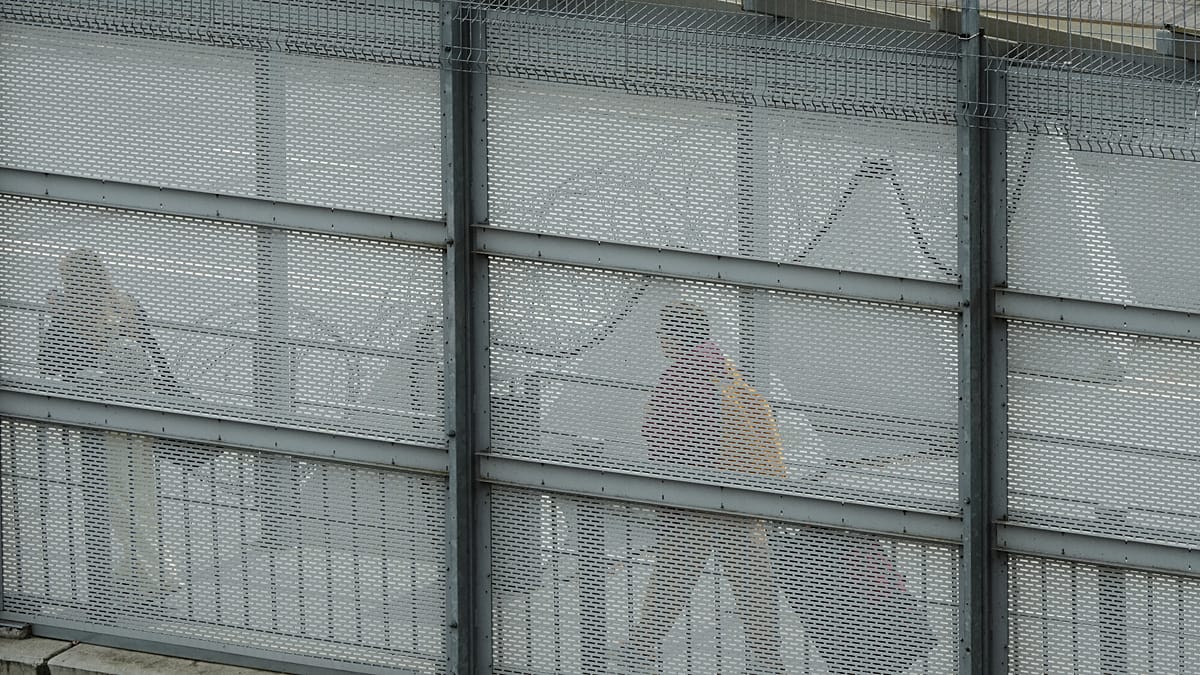
In the Russian border town of Ivangorod, people carrying suitcases, backpacks, and plastic bags have been gathering, hoping to cross into Estonia before the Baltic nation shuts its land border with Russia next month. The queues reflect the impact of a decision that will affect not only cross-border travel but also families with relatives living on opposite sides of the frontier.
Estonia, a member of NATO and the European Union, announced on 20 November that it would suspend road crossings at all five road border checkpoints with Russia from 1 December. The restriction is due to remain in place for six months, after which the government will review the security situation and decide whether to extend or amend it.
Why is Estonia closing the border?
The decision follows an attempted arson attack on the premises of Estonian drone manufacturer Threod Systems in Viimsi, north of Tallinn, on 14 November. According to Estonia's Internal Security Service, Russia's military intelligence agency, the GRU, was behind the attempted attack. Eight Latvian citizens were detained, with investigators suspecting they had been recruited to carry out the operation. The company's security staff intervened before significant damage was caused.
The Estonian government described the closure as a necessary measure to counter hostile activity against the country and other European states. It said the border shutdown would make it harder for Russian intelligence services to recruit and influence people crossing into Estonia, as well as help prevent sanctions evasion. This move is part of a broader pattern of Estonia's response to GRU sabotage.
Moscow has rejected the accusations. Kremlin spokesman Dmitry Peskov described the allegations as unfounded, while Russian Foreign Ministry spokeswoman Maria Zakharova accused Estonia of infringing the rights of Russian citizens and threatened political and diplomatic countermeasures. Zakharova also compared the planned closure to the construction of a new Iron Curtain.
Families divided by the border
For people living in the border region, the decision has consequences extending far beyond security policy. Narva, an Estonian town of more than 50,000 people, lies directly opposite Ivangorod on the other side of the River Narva. The two towns have long-standing family, social, and economic ties, with many residents having relatives on both sides. The crossing has also been used by people travelling from other European countries to reach St Petersburg.
Russia suspended vehicle traffic through the Narva crossing in February 2024, but pedestrians have continued to cross. Narva Mayor Jaan Toots has called on the Estonian government to consider humanitarian exemptions for residents who need to visit elderly relatives, attend funerals, or deal with other urgent family matters. He has also warned of economic consequences for the town, including potential losses for local hotels, restaurants, and businesses. The closure is also expected to affect employment in the region, where border guards and customs officers are among the local workforce.
Crossings have already fallen sharply
The number of people travelling between Estonia and Russia has declined considerably since the start of the war in Ukraine. According to Estonian public broadcaster ERR, annual crossings fell from more than four million before 2022 to around 760,000 in 2026. Of those, approximately 447,000 were made through the Narva-Ivangorod crossing, according to figures cited by AFP. Reuters reported that Russian nationals accounted for 307,000 of this year's crossings, while 175,000 were made by Estonian citizens and 54,000 by Finnish passport holders.
The planned restrictions will apply to all five road crossing points: Narva-1, Narva-2, Koidula, Luhamaa, and Saatse. Rail freight will continue, subject to existing restrictions and customs checks. Travellers will have to use alternative routes through neighbouring countries, particularly Latvia, although journeys are likely to become longer and more expensive. For those without access to a car, travelling by air may become the only practical alternative.
The closure comes amid heightened tensions across the region, with recent incidents such as a drone strike damaging a Russian cargo ship in the Gulf of Finland and Macron warning that Russia's aggression has reached a new level. These events underscore the broader security challenges facing Europe.
For the residents of Narva and Ivangorod, the border closure is not just a political statement but a daily reality that will reshape their lives. As the deadline approaches, the queues at Ivangorod serve as a poignant reminder of the human cost of geopolitical tensions.