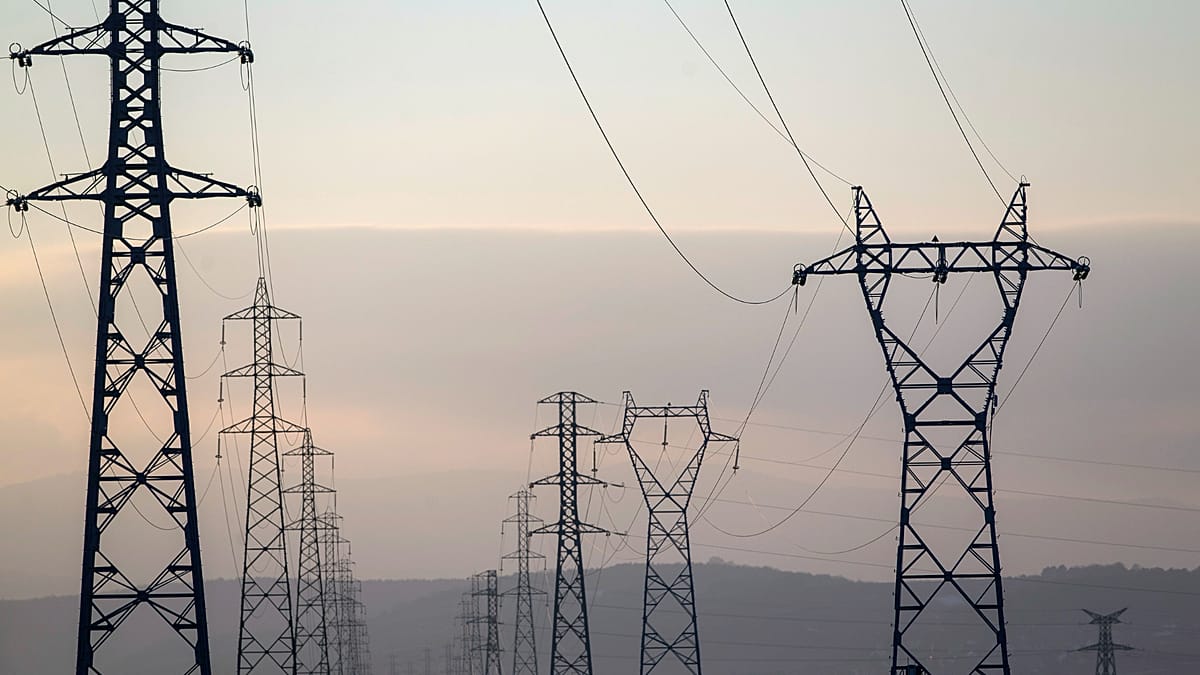
European Union governments are pushing back against a European Commission drive to centralise control over electricity network costs, according to a Council document seen by Euronews. The resistance threatens to dilute plans for coordinated tariffs as the bloc grapples with the political and financial burden of modernising its power grids.
The negotiations come as electricity moves to the heart of the EU's economic strategy. The bloc aims to shift homes and businesses away from fossil fuels, while data centres, heat pumps, electric vehicles and new manufacturing are all expected to surge demand. But the cost of expanding and operating grids is increasingly visible in household and corporate bills.
Network charges and taxes often exceed the price of the electricity itself. EU data show that grid charges account for 27% of household electricity bills and 21% for businesses, while national taxes and levies add another 24% for households and 16% for firms.
The European Commission proposed new rules in July to lower energy bills, partly in response to the closure of the Strait of Hormuz, which has disrupted global energy markets. The Commission also unveiled an electrification plan targeting 46% of final energy use from electricity by 2040.
The Irish Presidency, which mediates between the Commission, the Council and the European Parliament, is trying to preserve the Commission's ambition while giving national governments and regulators more flexibility. Its compromise would require tariffs to encourage consumers to reduce peak demand, shift usage to off-peak times, and consider the location of new connections.
But preparatory talks among EU ambassadors on 23 September revealed deep reluctance to make such tools mandatory across the bloc. A Council document dated 16 September states that "the rules on the application of a reference tariff methodology for electricity shall allow regulatory authorities to deviate from the reference tariff methodology in duly justified cases."
Poland, Italy, Czechia, Luxembourg, Lithuania and Latvia want regulators to use tools like cheaper off-peak electricity or incentives for locating projects where the grid has spare capacity—but only when suitable for their national power systems, not as EU-wide requirements. Spain, the Netherlands, Sweden and Cyprus have raised stronger concerns about the effectiveness and social consequences of these measures.
Francesco Sassi, Assistant Professor at the University of Oslo, told Euronews that centralised control by the Commission could "work towards easing the isolation of the Iberian Peninsula or drive more investments in low-carbon energy interconnections in Eastern and Southeastern Europe." He added that these countries "are showing increasing unease about ceding power to Brussels amid the second energy crisis under the presidency of Ursula von der Leyen and repeated market shocks the European Commission appears unable to control."
National flexibility versus EU coordination
The Commission argues that common rules would make the bloc's fragmented power market more transparent and efficient. But many member states resist anything that could force them to redesign national tariff systems that reflect very different grids, industries and consumer bases.
The clearest battleground is a provision allowing the Commission to establish a common structure and reference methodology for electricity tariffs. The Irish Presidency stresses this would "harmonise the methodology"—not the actual tariffs—and that national regulators could depart from the reference approach where justified.
Yet France, Germany, Italy, Poland, Finland, Spain and the Netherlands want the Commission's powers significantly reduced or removed. They argue that guidelines, not binding rules, are preferable. The outcome will ultimately hinge on how the costs of the EU's energy transition are distributed.
"The elephant in the room that nobody wants to discuss directly, preferring to debate techno-economics applied to grid systems, grid control, interconnections, and tariffs, is that the nature of these issues is intrinsically political and geopolitical," Sassi added.
The fight over who gets the grid first
The political stakes become even clearer when it comes to new grid connections. The EU faces growing queues for grid access as factories, renewable projects, data centres and other electricity-intensive investments compete for limited capacity. The proposed rules would allow EU countries to establish priorities when the network is congested.
The latest compromise would strengthen the role of member states in setting general policy direction, leaving regulators freedom to implement the rules. A large group of countries—including Germany, France, Spain, Portugal, Poland, Sweden, Denmark, Finland, Belgium, Lithuania and Latvia—broadly supports giving governments a stronger role.
They argue that deciding which projects get scarce grid capacity is not merely technical; it involves political choices about industrial competitiveness, energy security and social priorities. The Commission maintains that setting technical criteria and network charges is fundamentally a regulatory task.
Denmark has already taken unilateral action, announcing an emergency grid law that gives data centres the lowest priority for grid connections after Copenhagen was forced to stop new connections. This highlights the growing tension between national measures and EU-wide coordination, a theme also visible in Bulgaria's battery storage boom and startups tackling the AI power crunch.
The dispute over grid tariffs is part of a broader pattern of capitals asserting control over energy policy, as seen in Berlin's push on procurement rules and tariffs affecting Europe's LNG supply. How the EU resolves this standoff will shape not only electricity bills but also the pace of its clean-energy transition.