The European Union is bracing for another potential shock to its liquefied natural gas (LNG) supplies, as President Donald Trump's latest sanctions on Russian energy could disrupt the remaining flows that the bloc still depends on. The new law, signed by Trump and named after the late Senator Lindsey Graham, allows him to impose tariffs of up to 100% on countries that continue to buy Russian oil or natural gas, with a particular focus on those accused of helping Moscow evade sanctions—China and India being the most prominent.
While the legislation does not automatically target the EU, its practical application remains unclear, creating a fresh risk for European governments and companies that still have exposure to Russian gas. The EU has welcomed the sanctions as a tool to weaken Moscow's war machine, but they come at a delicate moment. According to real-time intelligence platform Global Energy Flow, the bloc is struggling to refill storage to at least 80% by November, with winter gas reserves at their lowest level for this time of year since records began in 2011. Intense competition from Asian buyers is also leaving Europe behind in the race for LNG cargoes.
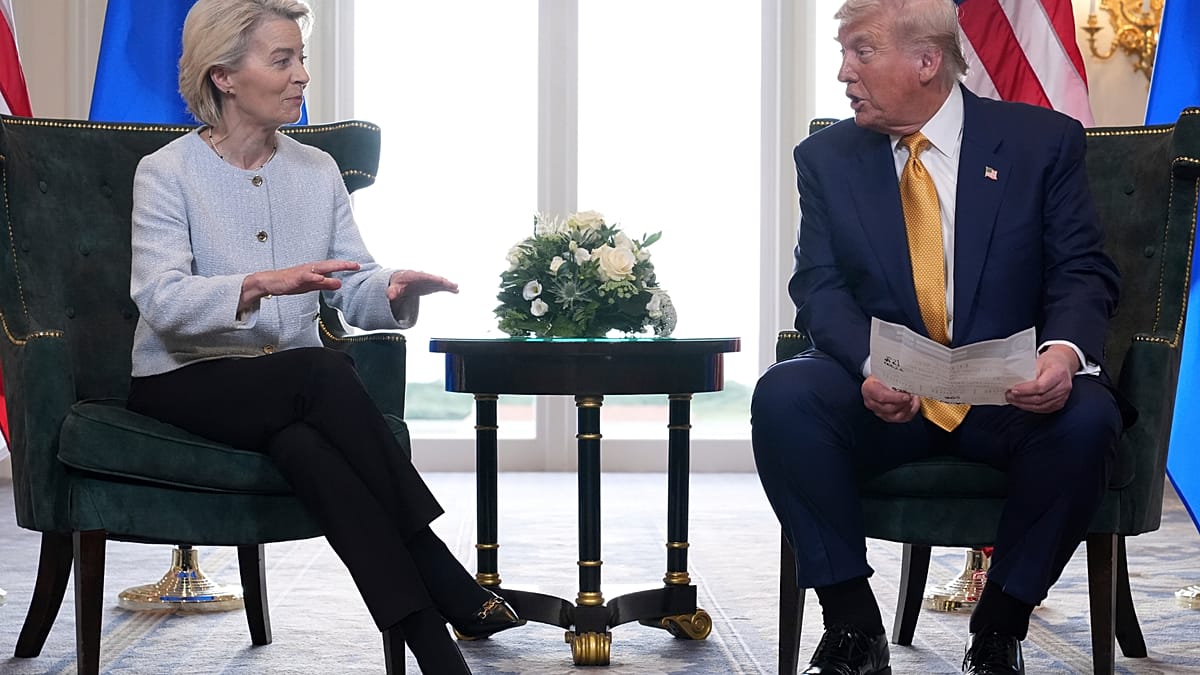
When asked whether the Lindsey Graham bill could harm European partners, EU Foreign Affairs chief Kaja Kallas said she "didn't think" of that, adding that she hopes it isn't true. She made the remarks on the sidelines of the United Nations General Assembly on 22 September. Meanwhile, a European Commission spokesperson said that the EU has "clear expectations" that the Graham law "should not impose new commercial barriers in the bilateral EU-US relationship." The spokesperson told Euronews on Wednesday: "We will engage with the US with a view to ensuring this outcome."
A fragile supply chain
The sanctions come on top of an already fragile supply chain. Since the US and Israel bombed Iran on 28 February, escalation in the Middle East has led to the closure of the Strait of Hormuz and damage to a vital Saudi pipeline, ultimately disrupting LNG transit. At the same time, the EU is trying to phase out Russian LNG, although imports from Moscow actually rose to 17% as landlocked countries were granted exemptions, and some member states with long-term contracts feared legal challenges from Gazprom. A full ban on LNG imports from Russia is scheduled for 1 January 2027.
Washington's move to punish major Russian energy buyers with tariffs of up to 100% could create friction with countries still exposed to Russian gas, such as France, Belgium, the Netherlands, and Spain. Ben McWilliams, an affiliate fellow at the Brussels-based think tank Bruegel, said that Trump's new tariffs "should not change too much" since no Russian LNG should come into the bloc after the 2027 ban. "I think Russia will be able to reach alternative markets, and do not expect a huge market impact. There has been plenty of time for utilities and traders to prepare," McWilliams told Euronews.
Maritime services at risk
But if Washington sanctions all tankers found carrying Russian LNG, the consequences could extend beyond the vessels themselves, according to Urgewald, the German non-profit environmental organisation. "The new US law covers foreign vessels determined to knowingly transport Russian-origin LNG, although designations are not automatic and national-interest waivers are permitted," reads the Urgewald press statement. The new US sanctions, which will be reviewed by Congress on 18 October, could also target the owner or operator of a foreign port that allows a US-sanctioned vessel supporting Russia to call or receive services—including those in Europe, such as the Danish port of Odense Havn.
Fayard, a major Danish ship repair shipyard, has faced intense scrutiny and political pushback for servicing Russia-linked Arctic LNG carriers. Swedish MEP Jonas Sjöstedt (The Left group) criticised the maintenance of a Russian Arc7 LNG tanker currently being repaired in Fayard. "These vessels are a critical component in Russia's arctic LNG export, transporting billions of Euros worth of Russian LNG. This must stop. European companies must not be allowed to keep Russia's fossil-fuel lifeline running. Every repair helps sustain Putin's illegal war against Ukraine," said Sjöstedt. Echoing his words, German MEP Hannah Neumann (The Greens/EFA group) urged Fayard to stop carrying on "business as usual."
The situation underscores the delicate balance the EU must strike between maintaining energy security and upholding its sanctions regime. As the bloc debates its approach to Russia, the new US tariffs add another layer of complexity. With winter approaching and storage levels low, European leaders will be watching closely to see how Washington implements the law—and whether it inadvertently tightens the squeeze on the continent's LNG supply.