It has been over thirteen years since the European Union last welcomed a new member. Now, with nine official candidate countries—from Albania to Ukraine—the bloc is poised for its next wave of enlargement. But beyond the political headlines, what does this mean for investors and businesses across the continent?
Jan Růžička, Chief External Affairs Officer at PPF Group, a Czech-founded investment firm, argues that the commercial opportunities are substantial. He points to the 2004 enlargement, when ten countries, including the Czech Republic, joined the EU. Those with cheap labour, skilled workforces, and traditional industries—like Poland and the Czech Republic—have since boomed. Růžička sees similar potential in Moldova and Ukraine, which share those attributes.
“Five-six years ago, people said, ‘Do we need defence? Do we need heavy machinery? Do we need steel factories?’ Now again, it's very important,” he notes. In Ukraine, the war has spurred a defence tech sector that Europe lacks. “I see Ukrainians not only asking for investments, but I see Ukrainian investors coming to Europe,” he adds.
The single market as a growth engine
Růžička stresses the importance of the single market for small and medium-sized enterprises (SMEs), which form the backbone of the European economy. “Sixty-five percent of our economy, including EU 15, EU 27, candidate countries, are small businesses. They are driving our economies and they are the reason for which we, bigger companies, are successful,” he says. EU enlargement would allow these SMEs to expand, which in turn would boost valuations of larger firms like PPF.
PPF Group is already voting with its wallet. “We are divesting from Asia and investing much more here,” Růžička explains. The firm has stakes in businesses in Serbia, Moldova, and Ukraine. “Not only because this is a great single market, but rule of law, democracy, predictability, all of this is positive. The European market is the best market in the world.”
Risks and the need for speed
Despite his enthusiasm, Růžička warns that the slow pace of negotiations is a major risk. “The biggest risk is to lose the momentum,” he says. He notes that EU decisions require unanimity among 27 members, and that public support in candidate countries is waning. He cites Iceland, which suspended its accession talks in 2013 and later rejected resuming them in a referendum.
To keep enthusiasm alive, Růžička suggests granting candidate countries partial access to the single market or freight agreements before full membership. “Maybe it's only the single market, maybe it's some freight agreement plus, but this is better than to wait for full enlargement.”
Such interim steps could also help maintain momentum for the strategic alignment that the EU now demands from candidates. As the bloc links enlargement to broader geopolitical goals, the commercial stakes are rising.
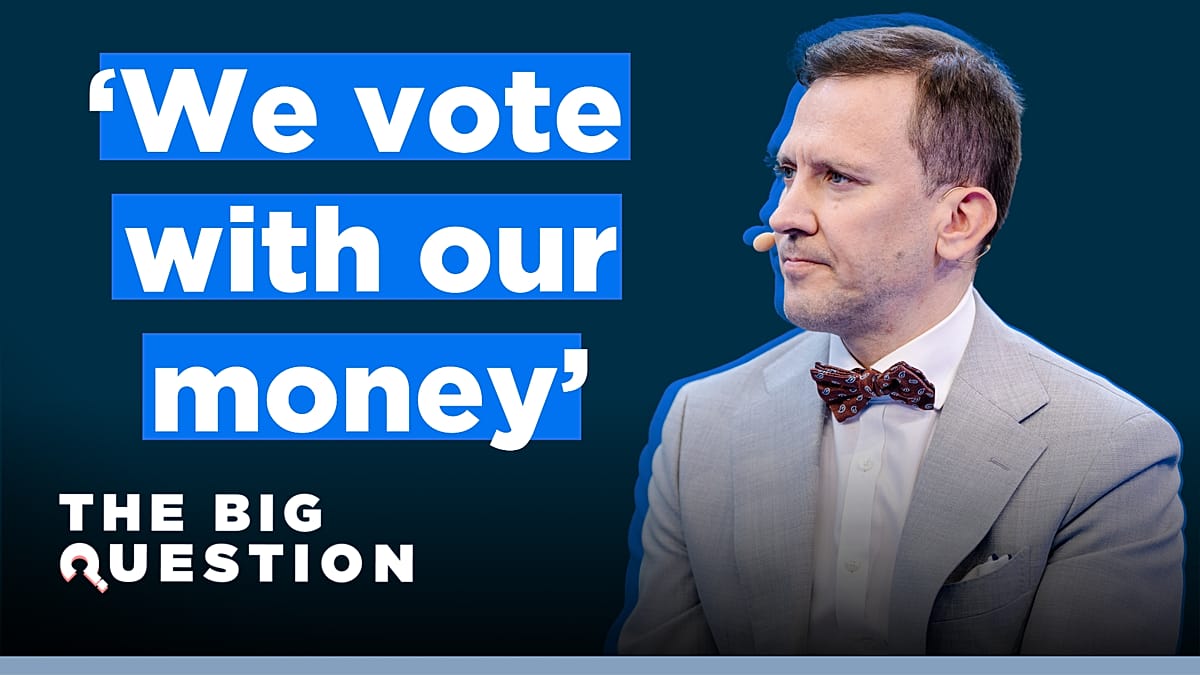
For investors, the message is clear: the next big opportunities lie in the east, but only if the EU acts decisively. As Růžička puts it, “We vote with our money.”