Retirement planning is a growing concern across Europe, and new data from the OECD shows that many workers are not on track to maintain their living standards after they stop working. The organisation's Pensions Outlook 2026 calculates how much extra employees on average wages would need to save over a full career to retire on 70% of their gross pay – a common benchmark for a comfortable retirement.
The so-called contribution gap – the additional share of earnings that must be put into a voluntary pension plan on top of mandatory contributions – exceeds 10% in ten European countries. Lithuania tops the list with a gap of 20.7%, followed by Ireland (19.4%), Poland (17.3%), and Croatia (15.7%). In Switzerland, the gap is 12.1%, and in Germany it is 11.1%.
In monetary terms, the extra monthly savings required can be substantial. At 2025 average gross wages, a man in Switzerland would need to set aside more than €1,084 a month, while in Ireland the figure is €974, in Iceland €716, and in Germany €617. Even in the UK, the estimated extra contribution is €494 a month, and in France it is €238.
Why do gaps vary so widely?
The differences are directly linked to how much income workers can expect from mandatory pension systems. Stéphanie Payet, a policy analyst at the OECD, explained that a lower replacement rate from the mandatory system means workers must contribute more voluntarily to reach the target. “A lower replacement rate from the mandatory pension system means that you will need to contribute more on a voluntary basis to reach the target replacement rate,” she said.
Professor Traute Meyer of the University of Southampton linked Poland's large gap to state pension cuts after the transition from state socialism, and Ireland's to its traditionally low mandatory pensions as a liberal welfare state. She pointed to Sweden's strong public pension mandates as a reason for its smaller gap of 2.2%. However, she cautioned that low gaps may also mean only formal workers are protected, leaving many outside mandatory coverage, as in Turkey.
Professor Lauri Leppik of Tallinn University added that a small contribution gap tells us little about what a mandatory pension can actually buy in countries such as Turkey. Professor Iain Clacher of the University of Leeds emphasised that the contribution gap alone does not give a clear picture, as the purchasing power of money in retirement is also crucial.
Pension income varies widely across Europe. In 2023, EU spending on old-age pensions averaged about €1,440 a month per beneficiary, according to Eurostat. That figure covers people already receiving a pension, including those with shorter careers, whereas the OECD benchmark is for employees entering the labour market who complete a full career.
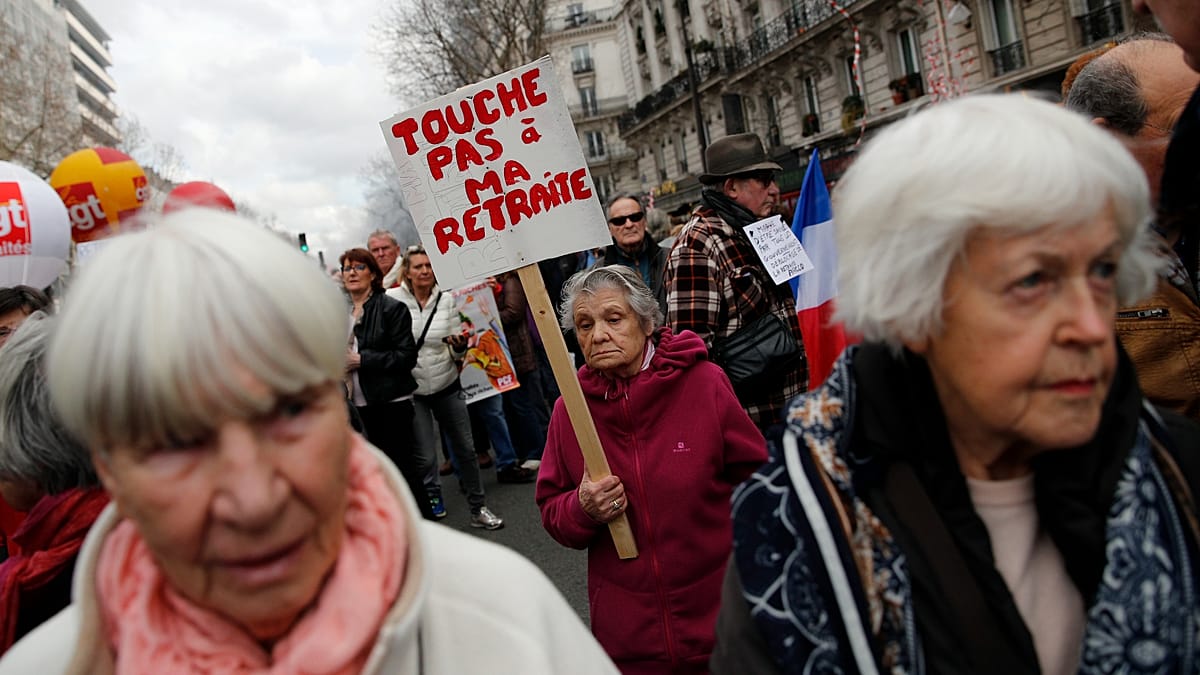
Retirement poverty remains a real risk. Meyer noted that “research consistently shows that voluntary retirement saving is insufficient, especially among lower earners. People underestimate future needs, prioritise current demands, distrust private schemes or lack the means to save.”
The contribution gap is a forward-looking measure, based on expected replacement rates for workers entering the labour force today, assuming current rules remain unchanged. However, projections include changes already written into law, such as scheduled increases in retirement ages. Professor Marek Góra of the Warsaw School of Economics suggested that further changes could affect how much workers need to save – higher retirement ages would reduce the need for extra savings, while lower replacement rates would increase it.
For many Europeans, the message is clear: relying on state pensions alone may not be enough. As the cost of living continues to rise, particularly in areas like housing, workers may need to start saving earlier and more aggressively to secure a comfortable retirement.