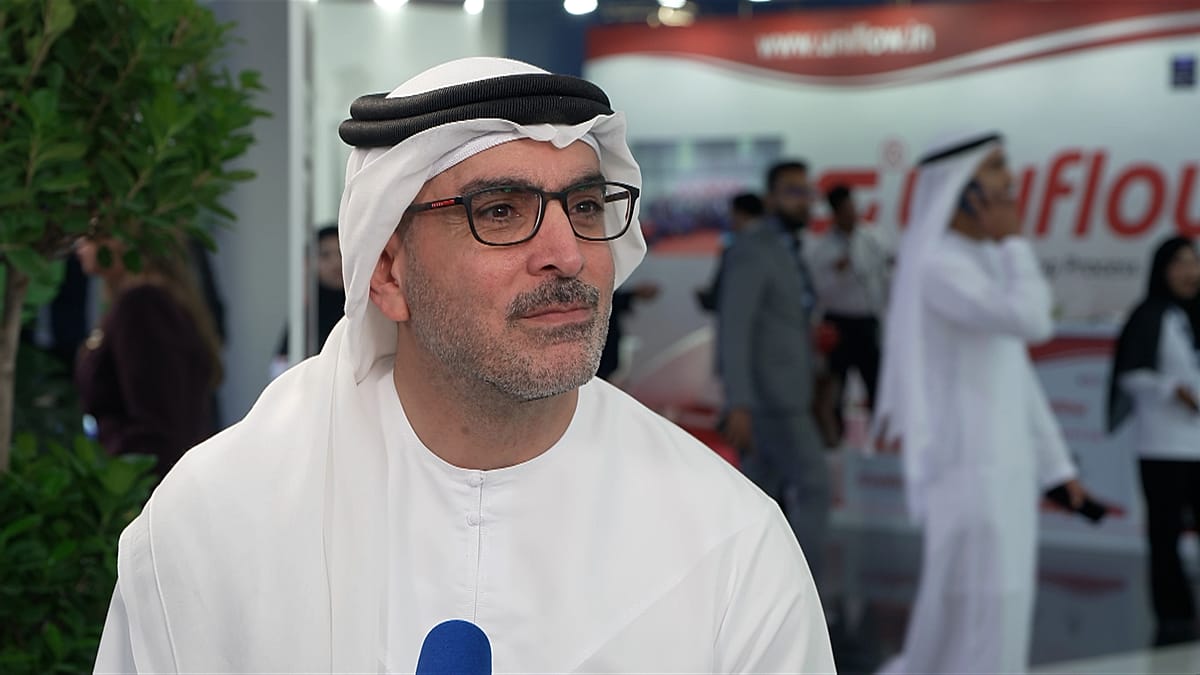
Abu Dhabi — The United Arab Emirates has reaffirmed its commitment to remain a dependable energy supplier to Europe and global markets, even as the Middle East grapples with ongoing military tensions. Speaking on the sidelines of the ADIPEC energy conference in Abu Dhabi, Sharif Al Olama, Undersecretary of Energy and Petroleum Affairs, told Euronews that the country's oil exports never stopped during the crisis.
“I'm glad to say that we have proven ourselves during this crisis,” Al Olama said, acknowledging the strain on the sector. “This is not a big secret. We are going through a crisis. The first few months were very difficult.”
Al Olama attributed the UAE's resilience to a long-term strategy of diversifying its energy mix, which now includes nuclear power, renewables, and fossil fuels, with hydrogen and other future fuels in development. “To diversify the energy sources was the right decision to make and it has helped in terms of making sure that our systems continue to operate and the services were uninterrupted during the entire period of the crisis,” he explained.
Investment in export routes and infrastructure
The UAE has also invested heavily in diversified export routes, ensuring that oil continues to reach international customers. Al Olama said further improvements are expected “as time goes by,” and that lessons from the crisis are being incorporated into the design of new facilities, the capacities under construction, and the redundancy built into the system.
“We have learned a lot from the current crisis when it comes to the design of our facilities, when it comes to the capacities that we are building, when it comes to the redundancy in the systems itself,” he said.
On renewables, Al Olama noted that the UAE now has around 8.2 gigawatts of solar capacity, with plans to expand to 20 gigawatts and beyond. “We are getting some of the cheapest kilowatt-hours that renewable energies can produce in the world here in the UAE and we're only expanding on that,” he said. “So there are massive projects coming on their way over the next few years.”
AI demand and European cooperation
The rapid growth of AI data centres was a recurring theme at ADIPEC, and Al Olama described it as a global challenge for energy planners, one that Europe also faces as it builds its own AI capacity. “The growth you're seeing is no longer even exponential. It's a vertical growth. That's massive,” he said.
The UAE's approach starts with efficiency, citing examples where AI tools have cut power consumption at some data centres by 40%. Planning for expansion, cooling, and the use of existing infrastructure follows. “This is a challenge that we're living through, but we are planning properly for the future,” Al Olama said.
Asked whether Europe could learn from the UAE, Al Olama framed it as a two-way exchange. “I think, to be honest, it's not about teaching, I think how governments interact. We learn from each other.” He said the UAE is looking at rating data centres for energy efficiency and climate neutrality, and is sharing practice with European governments. “I'm 100% sure there are excellent practices in Europe that we are actually exchanging views on with our counterparts in other governments.”
Al Olama's message to Europe and the wider world was one of reliability and partnership. “The UAE has and will remain a very reliable energy supplier,” he said. “We believe in partnerships, in successful strategic partnerships that add value both at both ends.”
As Europe seeks to secure its energy future amid geopolitical uncertainty, the UAE's assurances come at a time when EU energy plans are targeting winter bills and the bloc is diversifying its sources. The UAE's role as a stable supplier could help ease concerns, though questions remain about the long-term impact of the crisis on global energy markets.