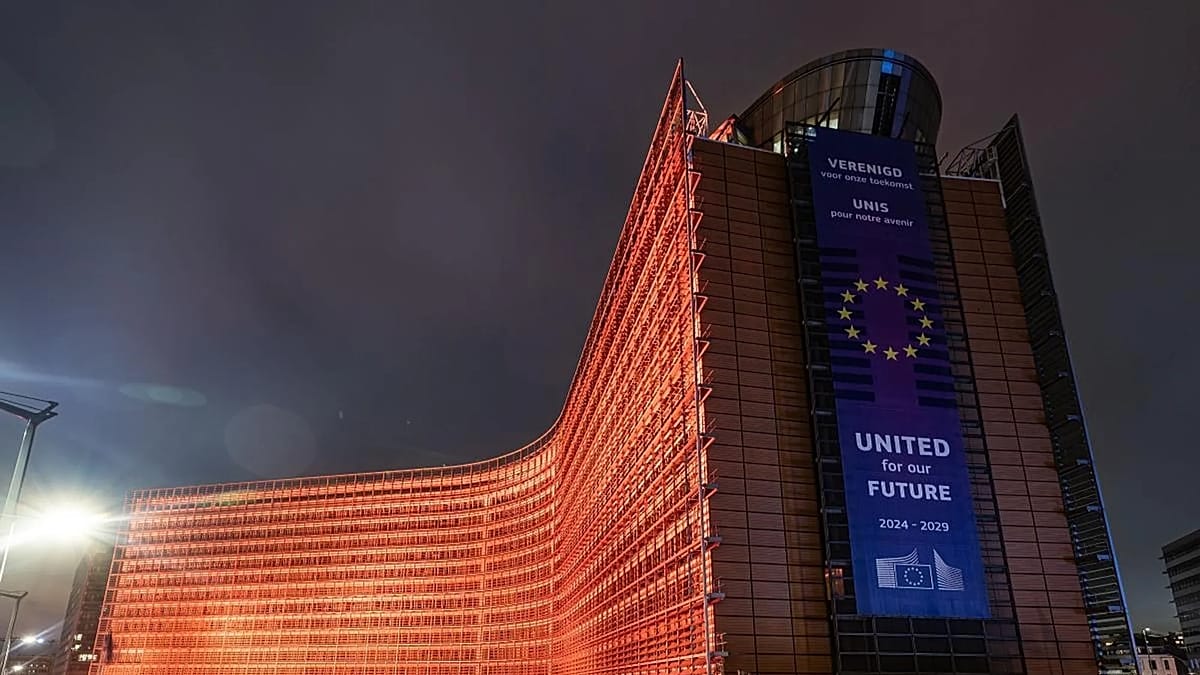
Brussels is bracing for a leaner future as a majority of EU member states push to trim the budgets of the bloc's core institutions. According to a confidential note circulated ahead of Wednesday's meeting of EU ambassadors and seen by Euronews, the so-called Heading 4 – which covers the European Public Administration – is emerging as a prime target for cuts.
The document, prepared by the Irish presidency of the Council, reveals that many governments question "the justification of the proposed increase in staff levels contained in the Commission proposal while many member states are constraining expenditure and headcount in their own national civil services." This sentiment reflects a broader mood of fiscal restraint across the continent, where national budgets are stretched by rising defence spending, energy costs, and support for Ukraine.
A budget battle between ambition and austerity
The negotiations over the Multiannual Financial Framework (MFF) for 2028-2034 are proving contentious. The European Commission originally proposed a budget of around €2 trillion, but member states are split. A camp led by France and Spain argues for a more ambitious budget, while the so-called "frugals" – including Germany and the Netherlands – want to cut the total by "several hundred billion euros."
In June, the Cypriot presidency put forward a compromise that would reduce the overall size by 2%, with the deepest cuts falling on the Competitiveness Fund (for defence and industry) and the Global Europe Fund (development aid). Now the Irish presidency is working on a new proposal, expected in early October, ahead of a European Council summit on 15-16 October.
The note asks ambassadors for their views on the "volume of expenditure proposed by the current Negotiating Box" and what they see as "the potential landing zone for these discussions." It also highlights that funding for National and Regional Partnership Plans – which cover support for poorer regions, agriculture, and fisheries – remains "the most important priority for the majority of member states."
On the Competitiveness Fund, the presidency acknowledges broad support for its goals of boosting European research and defence industries, but notes "there is a degree of openness by some to more moderated increases." Enlargement support, particularly for Ukraine, is also seen as a priority within the international aid programme.
The area of broadest consensus, according to the note, is the budget for the EU institutions themselves. Many capitals are already tightening their belts, and they see the bloc's civil service as a place to save. The European Commission is undergoing an internal review that could lead to reorganisation, and the European External Action Service is under pressure to reform. A German-led proposal suggests the EU's diplomatic service could be placed directly under the Commission's remit, with a significant presence of seconded national diplomats.
These discussions come as the EU faces a host of external pressures, from Arctic security challenges to the ongoing war in Ukraine. The outcome of the budget talks will shape the bloc's ability to act on the world stage.
Meanwhile, some member states are exploring new sources of revenue. EU leaders are pushing for new bloc-wide taxes to help fund the next budget, but such proposals are likely to face resistance from the frugal camp.
The Irish presidency is expected to present its revised negotiating box in early October, setting the stage for a decisive summit. With the clock ticking, the question of how much Brussels should spend – and on what – remains unresolved.