The Trump administration is reallocating $52 million in military assistance originally earmarked for European and Middle Eastern countries, redirecting the funds to bolster allied governments in the Americas. The State Department informed Congress on Tuesday that the money would be shifted from Iraq, Tunisia, and NATO members Slovakia and North Macedonia to Colombia, Ecuador, Peru, and Panama.
The department framed the move as part of a broader strategy to combat "narcoterrorism in our backyard" and to "continue to secure the Panama Canal," while also aiming to "prevent adversaries from establishing strategic footholds in our hemisphere." The affected nations will still receive some assistance, though the exact amounts remain unclear.
Washington's renewed focus on the Americas
Since returning to the White House in January 2025, President Donald Trump has increasingly turned his attention to Latin America. The administration has conducted strikes on suspected drug-trafficking vessels and launched an operation targeting former Venezuelan leader Nicolás Maduro. In August, Washington struck a major oil deal with Caracas, seeking access to Venezuela's petroleum industry.
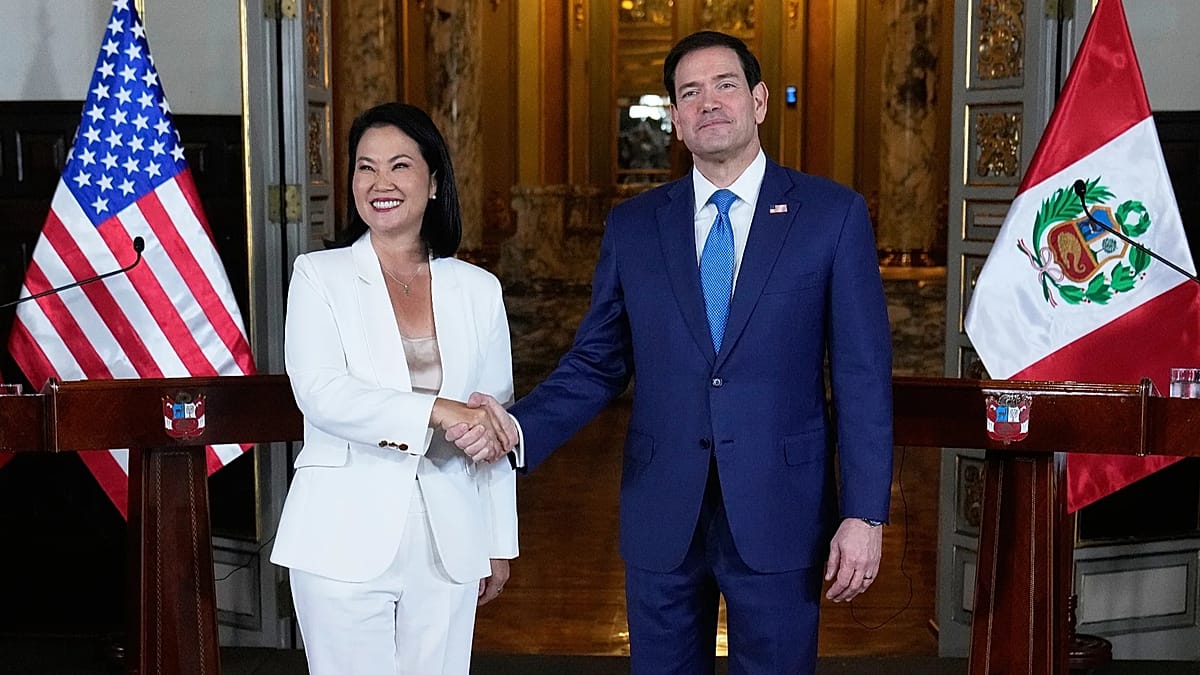
Trump has also worked to deepen ties with governments he views as aligned with his agenda. Secretary of State Marco Rubio visited South America last week, meeting with the conservative leaders of Peru, Colombia, and Ecuador to pledge further support and cooperation. The trip underscored the administration's commitment to building a stronger US presence in the region.
In a related development, the State Department announced in August plans for a $1 billion security package for the new Colombian administration of President Abelardo de la Espriella. A department spokesperson said the package aims to help Washington and Bogotá achieve "our shared goals." Trump has praised de la Espriella as a "smart, strong, and tough leader," promising "the total support and strength of the United States behind him."
European allies face reduced US engagement
The diversion of funds comes amid Trump's repeated criticism of European NATO allies over their defence spending. He has threatened to withdraw American forces from the continent and has made no secret of his desire to reduce the US military footprint in Europe. The reallocation of aid from Slovakia and North Macedonia—both NATO members—highlights this shift in priorities.
For European observers, the move signals a potential recalibration of transatlantic security commitments. While the amounts involved are modest compared to overall US military aid, the symbolic weight is significant. It reinforces concerns in European capitals that Washington's focus is drifting away from the continent, particularly as the war in Ukraine continues to demand attention and resources.
The decision also comes at a time when the US military faces its own challenges, including a reported ammunition shortfall after the Iran war, as noted by a recent watchdog report. This has raised questions about the sustainability of US commitments across multiple regions.
European leaders have been pressing for greater strategic autonomy, but the pace of change remains slow. The reallocation of aid may accelerate discussions about burden-sharing within NATO and the need for Europe to bolster its own defence capabilities.
Meanwhile, the Trump administration's focus on the Americas is not limited to military aid. The president has also pursued economic and diplomatic initiatives, including the oil deal with Venezuela and efforts to expand US influence in the region. These moves are part of a broader strategy to counter Chinese and Russian influence in the Western Hemisphere.
For the affected European countries, the reduction in US aid, while small, is a reminder of the shifting dynamics in transatlantic relations. Slovakia and North Macedonia, both relatively new NATO members, may view this as a signal to accelerate their own defence spending and reduce reliance on US support.
As the Trump administration continues to prioritize the Americas, European allies will be watching closely to see whether this represents a temporary adjustment or a longer-term trend. The coming months may bring further clarity on the future of US engagement in Europe.