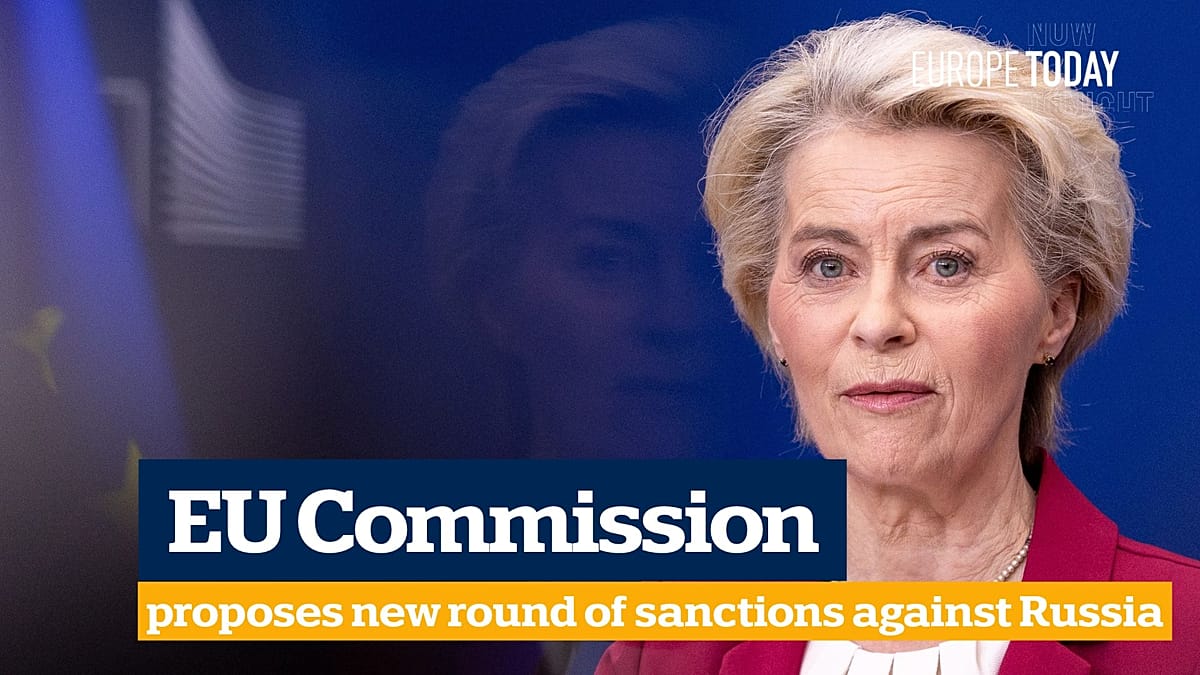
The European Commission has formally proposed a new round of sanctions against Russia, marking the 22nd package since the full-scale invasion of Ukraine began in February 2022. The measures are designed to further constrain Moscow's ability to fund its war effort and to increase pressure on the Kremlin to engage in meaningful negotiations.
If approved by the EU's 27 member states, the package would extend restrictions to additional Russian banks, target vessels in the so-called shadow fleet used to circumvent oil price caps, and impose sanctions on athletes and sports officials linked to the Russian state. The proposal also includes measures to tighten export controls on dual-use goods and to close loopholes that have allowed Russia to obtain critical technology.
Ukraine's envoy urges speed and ambition
Vladyslav Vlasyuk, the Presidential Commissioner for Sanctions Policy of Ukraine, welcomed the proposal but stressed that implementation must be swift and comprehensive. Speaking to Europe Today, Vlasyuk said that every delay in enforcement gives Russia time to adapt and find new ways to evade restrictions. He also called for the EU to go further, particularly in targeting Russia's liquefied natural gas exports and its nuclear energy sector.
"Sanctions work best when they are fast, broad, and unpredictable," Vlasyuk said. "The EU has shown leadership, but the pace must accelerate if we are to force real concessions from Moscow."
The proposal comes as reports indicate that the package will also include measures against Russian athletes, a move that has sparked debate among member states about the role of sport in international diplomacy.
Hungary's rule-of-law review
In parallel, the European Parliament is set to debate on Tuesday the state of rule of law and fundamental values in Hungary. After more than sixteen years under Viktor Orbán, the new government in Budapest faces scrutiny over whether it has taken sufficient steps to address concerns about judicial independence, media freedom, and corruption.
Daniel Freund, a German Green MEP, said that while some initial reforms have been made, much more is needed. "The new government has inherited a deeply eroded system," Freund said. "Restoring trust will require concrete actions, not just promises."
The debate comes amid broader tensions between Brussels and Budapest over migration policy and Hungary's stance on Russia. The EU has withheld billions in cohesion funds from Hungary pending compliance with rule-of-law conditions.
Litvinenko case still resonates
Twenty years after the poisoning of Alexander Litvinenko in London, his widow Marina Litvinenko continues to seek justice. Speaking to Europe Today, she said that the UK's inquiry, which concluded that the Russian state was likely responsible, has not led to accountability. "My husband was killed by the Russian state, and the world looked away," she said. "We must not forget that this is part of a pattern of aggression that continues today."
The case remains a stark reminder of the Kremlin's willingness to use lethal force abroad, a theme that resonates as the EU considers further sanctions.
Nvidia's sudden leadership reversal
In a surprising corporate development, US chipmaker Nvidia has reinstated Jensen Huang as president, chief executive, and board member, effective immediately. The decision comes just six days after the board had publicly ruled out his return. Following the announcement, Nvidia's share price surged, reflecting investor confidence in Huang's leadership.
Dennis Veltrop, Professor of Corporate Governance and Behavior at the University of Groningen in the Netherlands, said the reversal raises questions about board decision-making. "Such a quick turnaround suggests either a change in circumstances or a failure in the initial assessment," Veltrop said. "It also highlights the outsized influence of charismatic founders in tech companies."
The move has implications for European tech markets, as Nvidia's chips are critical for AI development across the continent. The company's leadership stability is closely watched by European firms and regulators alike.
As the EU navigates its sanctions policy and internal governance challenges, the need for coordinated action remains paramount. The proposed package will now be discussed by member states, with approval expected in the coming weeks.