Ukraine is pushing the European Union to go further in its sanctions against Russia, urging Brussels to tackle sectors that have so far escaped restrictions due to political sensitivities. Among the targets are Rosatom, Russia's state-owned nuclear energy giant, and alumina exports from an Irish refinery linked to Moscow's military-industrial complex.
Vladyslav Vlasiuk, Ukraine's presidential commissioner for sanctions policy, expressed frustration that the latest EU package, the 22nd round of measures, did not include a ban on alumina produced by Aughinish Alumina in western Ireland. The refinery, owned by a company with ties to Russian oligarch Oleg Deripaska, has been under scrutiny since an investigative consortium exposed its role in supplying material used in Russian weapons.
"There are plenty of ideas," Vlasiuk told Europe Today on Tuesday. "We may be facing some difficulties with having those ideas accepted by the majority of member states."
He welcomed the European Commission's proposal for the 22nd sanctions package, which targets banks, crypto platforms, soldiers, and athletes, but insisted that more is needed to force Russian President Vladimir Putin to the negotiating table. "We expect to maximise the economic pressure on him. So at some point, maybe, that will lead to the result of him being forced to the negotiations," he said.
Political sensitivities block action
Ukraine has long campaigned for sanctions on Rosatom, but resistance from EU member states that operate nuclear power plants with Russian-made parts has kept the sector off the sanctions list. Similarly, a proposed ban on maritime services for oil tankers remains stalled due to objections from Greece, Malta, and Cyprus, whose shipping industries are heavily involved in transporting Russian crude.
The alumina issue is particularly contentious. Aughinish Alumina, located in County Limerick, produces alumina, a white powder used to make aluminium, a lightweight metal commonly found on the battlefield. Earlier this year, a media consortium revealed links between the refinery and Russia's military-industrial complex. Under pressure, the Irish government launched an investigation, but it concluded without a definitive finding on whether Irish-made alumina directly ends up in Russian weapons.
Instead of an export ban, as Kyiv demanded, Brussels has reportedly proposed a monitoring and mapping mechanism for Aughinish's alumina sales. Vlasiuk called the exclusion a "clear example" of political sensitivities obstructing a "rightful measure."
"This is not exactly about just Ukraine. This is about alumina being exported from an EU member state to Russia, where it is being used for the production of weapons. And then you'll be facing these weapons all across different regions," he said.
He pointed to last week's incident in Poland, when two missiles and a jet drone crashed in the country during a major Russian attack on Ukraine. "Be sure that some good part of Irish alumina was used to produce those exact cruise missiles," he claimed.
European components still in Russian weapons
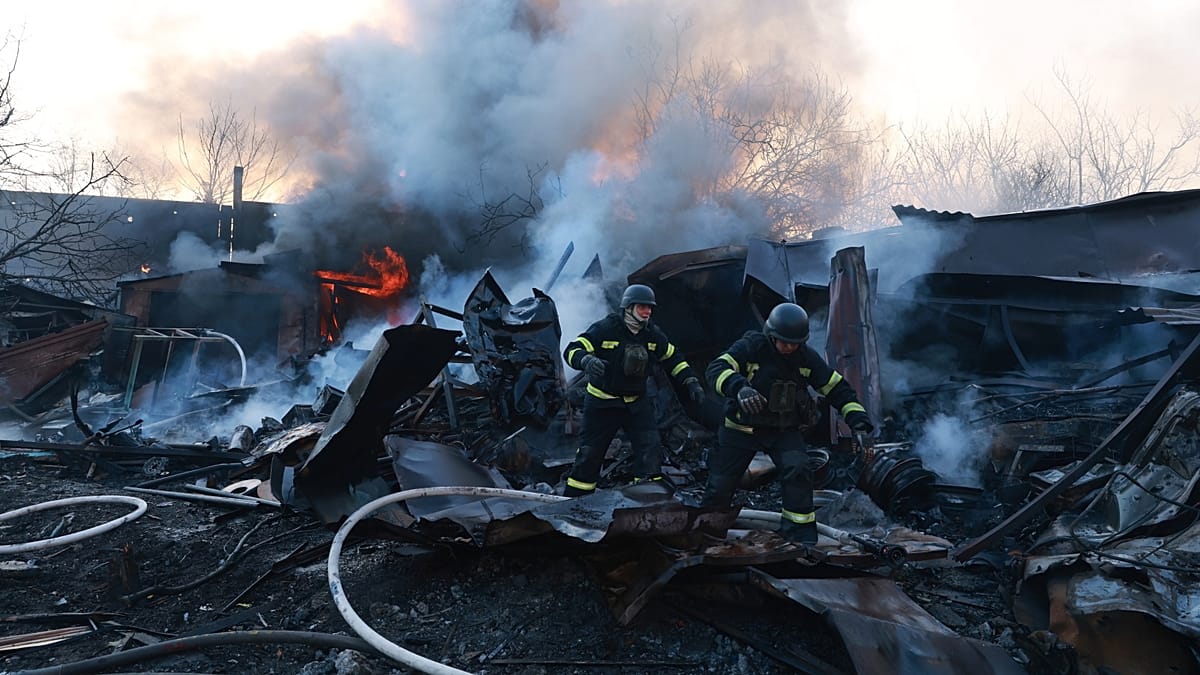
The issue extends beyond alumina. Despite 21 sanctions packages, and another on the way, European-made components continue to find their way into Russian weapons, exposing a dangerous loophole. Vlasiuk said this is a major concern for Ukrainians, who are being hit by Russian drones and missiles containing European parts.
"That is a really big question for all the Ukrainian people. We certainly don't like being hit with these Russian UAVs and missiles with European parts inside," he said. "It's less than it used to be in the first years of the full-scale invasion, but it's still happening."
The EU's 22nd sanctions package, unveiled by the European Commission, targets Russian banks, the shadow fleet, and athletes, but critics argue it falls short of the bold action needed to cripple Moscow's war economy. As diplomacy stalls and strikes escalate, Ukraine is calling on Brussels to close the loopholes and take on the politically sensitive sectors that remain shielded.
For more on the latest EU measures, see our coverage of the 22nd sanctions package and the targets in the new round.