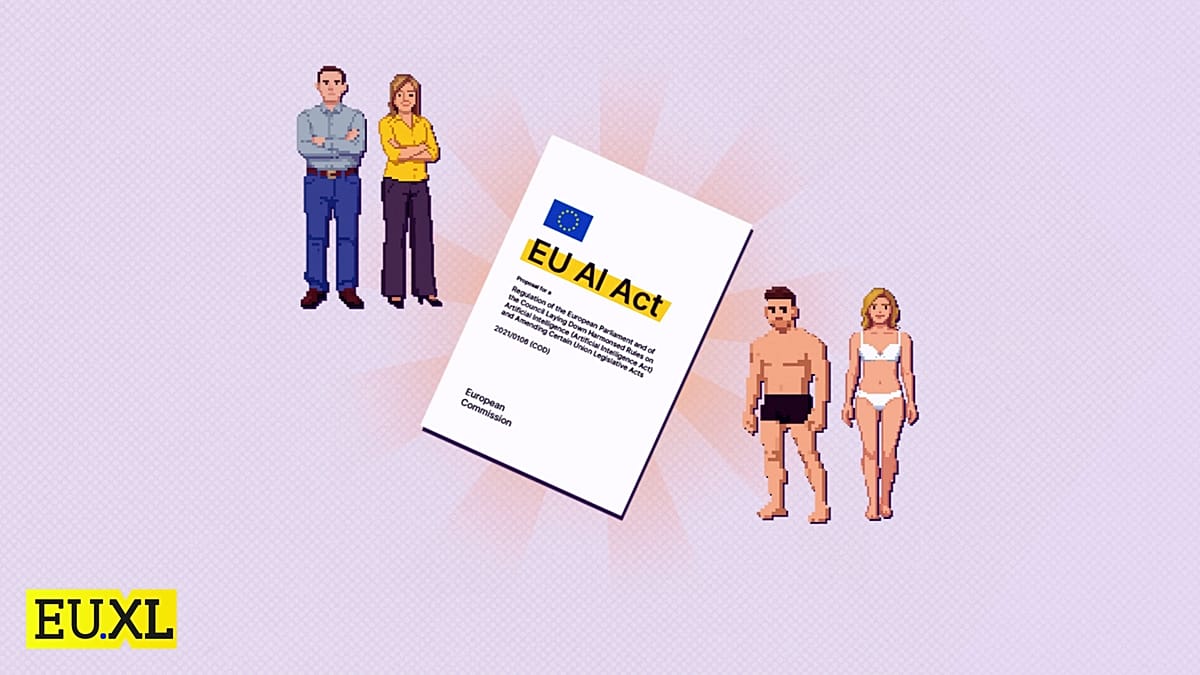
European Union lawmakers reached a provisional agreement on May 7th to amend the bloc's landmark AI Act, which entered into force in August 2024. The deal pushes back enforcement of the most stringent rules on high-risk artificial intelligence systems by 16 months, now set for December 2027. At the same time, it introduces a total ban on so-called nudifier apps—tools that create fake explicit images of real people without their consent.
Delayed enforcement for high-risk AI
The amendment postpones compliance deadlines for AI systems used in biometric identification, critical infrastructure, law enforcement, and employment decisions. Supporters, including many business groups, argue the delay gives European companies much-needed breathing room to compete with American and Chinese rivals. Critics, however, contend that the move hands a victory to Big Tech at the expense of workers and fundamental rights.
The original AI Act was hailed as a world-first regulatory framework, but its implementation has proven complex. The European Commission, the European Parliament, and the Council of the EU have been negotiating adjustments since late 2025. The new timeline aims to balance innovation with oversight, though some member states, particularly France and Germany, pushed for a more lenient approach to avoid stifling startups.
Ban on nudifier apps
The agreement also introduces a blanket prohibition on nudification applications—AI tools that generate non-consensual explicit images, videos, or audio of individuals. The ban explicitly covers AI-generated child sexual abuse material. Violations carry fines of up to €35 million or 7% of a company's global annual turnover, whichever is higher. The measure will take effect on December 2, 2026.
The ban was championed partly in response to a high-profile incident in early May 2026, when AI-generated intimate images of Italian Prime Minister Giorgia Meloni circulated on social media. The deepfakes sparked outrage across Europe and renewed calls for swift regulatory action. Meloni's office condemned the images as a violation of her dignity and privacy, and Italian authorities launched an investigation.
This is not an isolated case. Across the continent, women in politics, journalism, and public life have increasingly been targeted by similar tools. The European Parliament's women's rights committee had been pressing for a dedicated ban since 2025. The new rules close a loophole in the original AI Act, which classified nudifier apps as limited-risk but did not explicitly prohibit them.
Broader implications
The dual-track approach—delaying high-risk rules while fast-tracking a ban on specific harmful applications—reflects the EU's evolving strategy. Lawmakers are trying to foster innovation without leaving citizens vulnerable to the most egregious abuses of AI. The European Data Protection Supervisor welcomed the ban but warned that enforcement will require robust cooperation between national authorities and platforms.
Some digital rights groups have criticized the delay on high-risk AI, arguing it weakens protections for workers and consumers. "Postponing rules on biometric surveillance and automated hiring decisions is a gift to corporations that prioritize profit over people," said Ella Jakubowska, a policy analyst at the European Digital Rights network. Others, like the tech industry lobby DigitalEurope, praised the move as "pragmatic and necessary" to avoid a competitive disadvantage.
The agreement now heads to the European Parliament for a final vote, expected in June 2026. If approved, it will mark the first major revision of the AI Act since its adoption. The European Commission has indicated that further adjustments may follow as technology evolves.
For more on the EU's crackdown on deepfakes, see our earlier coverage: EU Bans Non-Consensual Nudifier Apps Under New AI Rules and EU Bans AI Nudification Apps in Landmark Deepfake Crackdown.