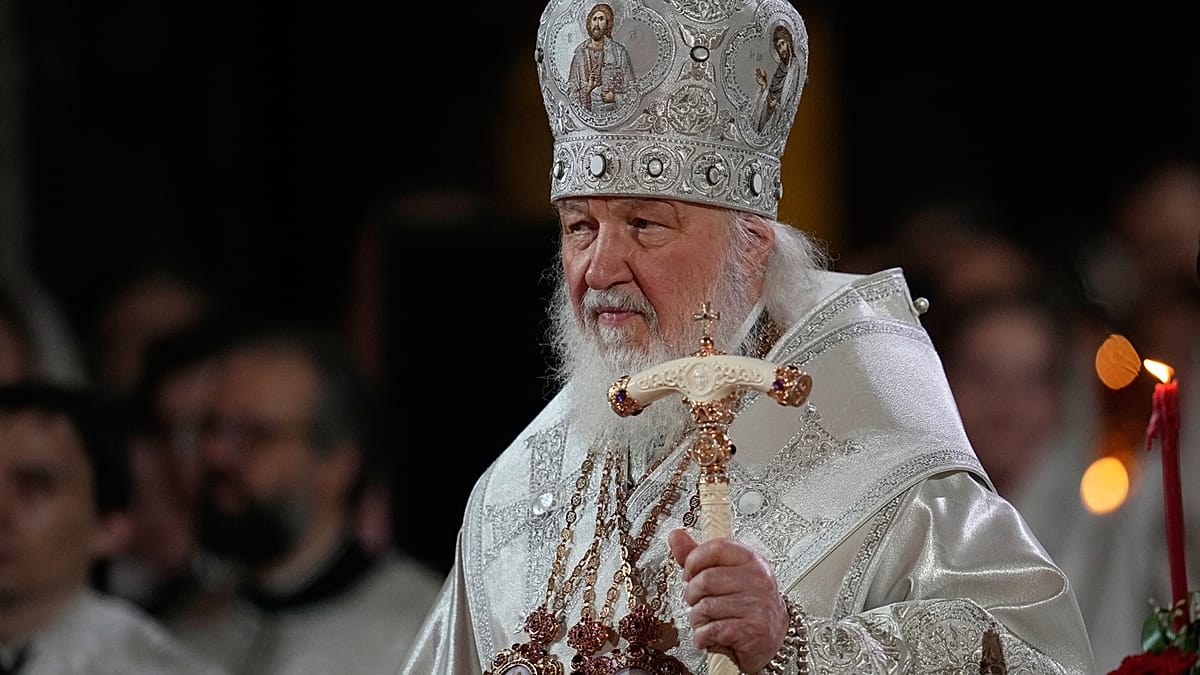
The European Union will not include Patriarch Kirill, head of the Russian Orthodox Church, in its upcoming round of sanctions against Russia, despite a change in Hungary's political leadership that could remove a long-standing veto. The decision reflects Brussels' cautious approach to maintaining unity among member states while gradually tightening the screws on Moscow.
Kirill, a figure who wields both religious and political authority, has been accused of endorsing the Kremlin's narrative of the war in Ukraine. Under his leadership, the Russian Orthodox Church approved a document that called for the annihilation of Ukrainian independence and described the invasion as a 'Holy War.' His rhetoric has drawn comparisons to propaganda efforts that justify aggression, making him a target for EU sanctions since 2022.
However, the current draft of the so-called 'mini package' focuses on individuals linked to Russia's military-industrial complex, diplomats confirmed. Ambassadors held initial discussions on Friday, and the package is expected to be approved by foreign affairs ministers on 15 June. Adding Kirill to this list, officials argue, could attract excessive attention and delay the swift adoption of measures that Brussels sees as urgent.
Hungary's New Stance
The EU first attempted to blacklist Kirill in 2022, but Hungary under then-Prime Minister Viktor Orbán blocked the move, citing religious freedom. Orbán's defeat in April by Péter Magyar, who campaigned on restoring ties between Budapest and Brussels, has opened the door to revisiting the issue. Magyar has signaled a break from Orbán's frequent use of the veto power, though with caveats.
'Sanctions which would undermine Hungary's economic stability are an absolute no-go,' Márton Hajdu, a close ally of Magyar who chairs the foreign affairs committee of the Hungarian parliament, told Euronews. 'But in cases where the previous government used the power of the Hungarian State to cut private deals, I expect the new government not to block joint EU efforts at increasing the pressure on Russia to end this war.'
This shift could prove pivotal for the EU's broader sanctions strategy, which has relied on unanimity among member states. The bloc has already imposed 20 rounds of sanctions since Russia's full-scale invasion of Ukraine in 2022, targeting individuals, entities, and sectors of the Russian economy. The EU Economy Chief Dombrovskis has emphasized that there will be no easing of sanctions despite inflation pressures.
Expectations now turn to the 21st sanctions package, which will be broader in scope and require more negotiation. The legislation, still in early stages, is set to be presented next month with the goal of approval in July. It is within this larger framework that Kirill's name could finally appear, diplomats suggest.
The delay underscores the delicate balance the EU must strike between demonstrating resolve against Russia and maintaining internal cohesion. While Hungary's new government offers a potential path forward, the bloc remains wary of overreaching. Meanwhile, the war in Ukraine continues to escalate, with Russian drone barrages hitting residential areas in Kharkiv and other cities, keeping pressure on European leaders to act decisively.
For now, Patriarch Kirill remains off the sanctions list, but the door is open. The coming months will test whether the EU can turn Hungary's political change into concrete action against one of the most prominent defenders of Russia's war effort.