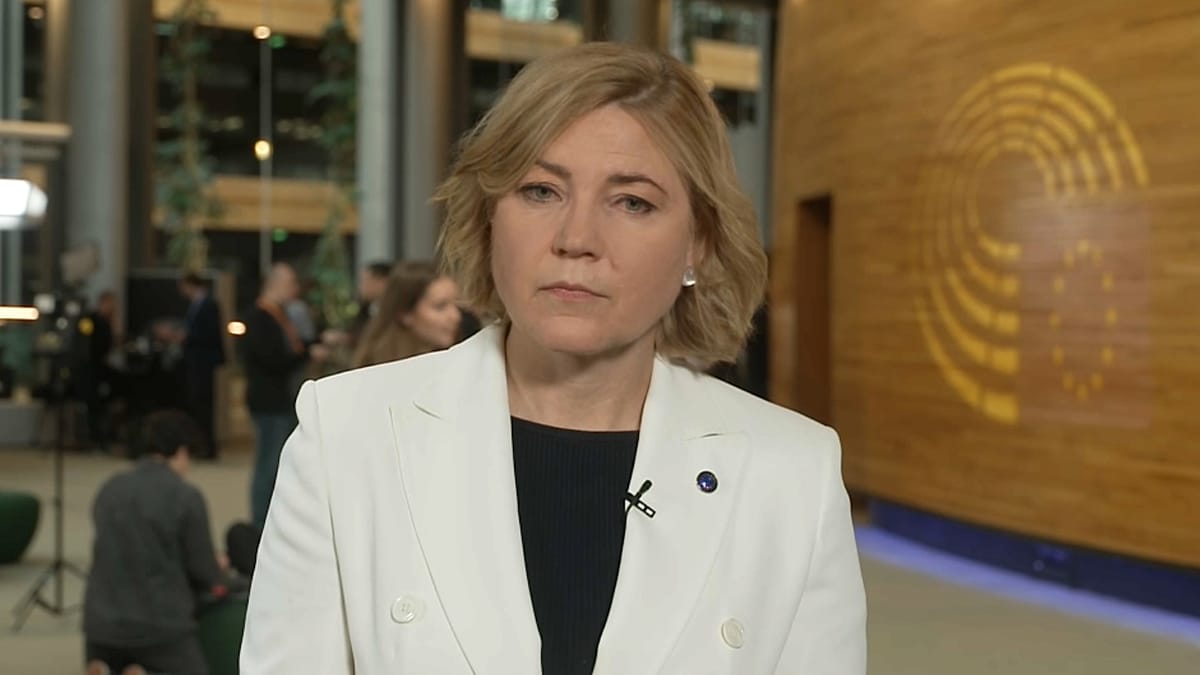
Henna Virkkunen, the European Commission's Executive Vice-President for Technological Sovereignty, Security, and Democracy, has clarified that the much-debated concept of 'technological sovereignty' is not about retreating from global markets. In an interview with Euronews, she stressed that the goal is to build capacity in critical sectors and reduce risky dependencies, not to pursue isolation.
'Technological sovereignty doesn't mean that we are planning to work somehow in isolation in the future,' Virkkunen said. 'It's very important that we have a certain capacity in a critical field. And then we are also working, of course, with like-minded partners to make sure that we don't have risky dependencies and we are not too dependent on one company or one solution.'
The concept of tech sovereignty has proven divisive among EU member states and businesses, particularly regarding how open the bloc should be to foreign companies from allied countries such as the United States and the United Kingdom. For Virkkunen, the objective is not protectionism but creating alternatives to critical chokepoints in vital supply chains. One immediate step is redirecting public procurement contracts toward European vendors.
Legislative Proposals on Semiconductors and Cloud Services
The Commission is working on legislative proposals to strengthen resilience in semiconductor supply chains and cloud services. These efforts aim to make Europe more competitive in the global race to develop artificial intelligence. The push comes as geopolitical tensions, including conflicts in Ukraine and the Middle East, underscore the risks of over-reliance on a single supplier or region for key technologies.
Virkkunen's remarks align with broader EU strategies to bolster digital sovereignty, which include initiatives like the European Chips Act and the Data Governance Act. The EU has also been exploring ways to reduce dependence on non-European cloud providers, a concern highlighted by recent incidents such as Iran's Strait of Hormuz cable tariffs, which could raise Europe's digital costs.
The debate over tech sovereignty is not limited to Brussels. In Berlin, policymakers have debated the balance between openness and strategic autonomy, while Paris has pushed for stronger European champions in digital infrastructure. Meanwhile, London, though outside the EU, remains a key partner in many tech initiatives, including semiconductor research and AI safety.
Critics of the sovereignty agenda argue that it could lead to higher costs and slower innovation if Europe tries to replicate capabilities that already exist in the United States or Asia. Supporters counter that the current dependencies are unsustainable, especially in light of supply chain disruptions during the pandemic and the war in Ukraine.
Virkkunen's comments suggest a pragmatic middle path: building European capacity while maintaining openness to trade and cooperation with like-minded partners. This approach is reflected in the EU's recent Digital Omnibus regulation, which aims to simplify digital rules while enhancing user control.
As the EU moves forward with its legislative agenda, the challenge will be to ensure that sovereignty measures do not inadvertently create new barriers or inefficiencies. For now, Virkkunen's message is clear: technological sovereignty is about resilience and choice, not walls.