Two elections on Europe's periphery over the weekend have underscored the continent's ongoing struggle against Russian interference and the pull of EU integration. In Kosovo, Prime Minister Albin Kurti's Vetëvendosje party secured around 43% of the vote in a snap election, but fell short of an outright majority, likely necessitating coalition talks. The social democratic, pro-EU party's performance comes as the small Balkan nation seeks closer ties with both the EU and NATO, though a political impasse with Serbia over normalization remains unresolved.
European Council President António Costa visited the Western Balkans last week, urging Kosovo and Serbia—the latter often viewed as having pro-Russian leanings—to mend relations. Such a step is seen as crucial for both countries' EU membership bids, which have stalled amid mutual distrust and regional tensions.
Armenia's Pro-European Path Under Russian Pressure
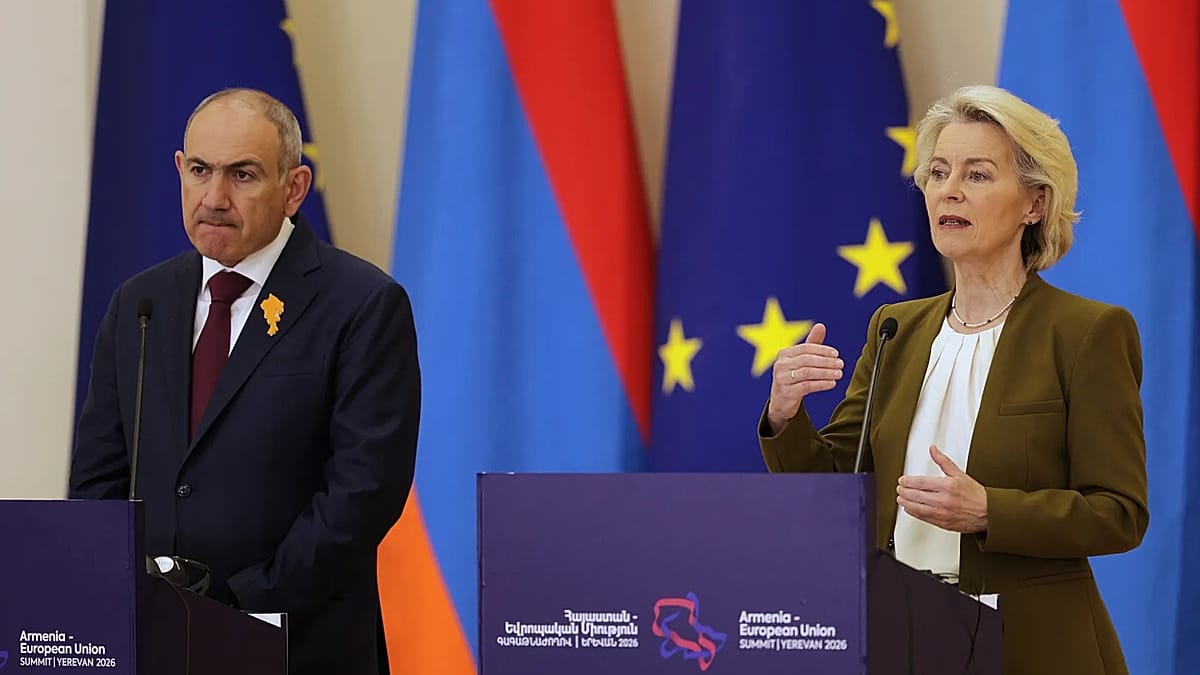
In Armenia, Prime Minister Nikol Pashinyan's Civil Contract party secured over 50% of parliamentary votes, according to poll aggregator Europe Elects. Pashinyan, who has pursued closer ties with the EU, stated while casting his ballot: "The European Union is our main partner in democratic reform implementation, and we will continue that path." His comments come as Russia ramped up pressure before the election, imposing import restrictions on Armenian goods and threatening to suspend gas supplies. Kremlin officials, including President Vladimir Putin, drew parallels between Armenia's trajectory and Ukraine's, a thinly veiled warning of potential conflict.
The elections in both countries serve as a bellwether for Russian influence operations, with Moscow seeking to maintain its grip on former Soviet states and Balkan nations. The EU's response—offering integration prospects while countering disinformation—remains a key test of its soft power.
Ukraine's EU Accession Gains Momentum
Meanwhile, Ukraine's bid to join the EU has seen a notable acceleration. After years of slow progress, largely due to a veto by former Hungarian Prime Minister Viktor Orbán, the new Hungarian leader Péter Magyar instructed Budapest's ambassador to drop the objection. This paved the way for the expected opening of Ukraine's first negotiation cluster. European Commissioner for Enlargement Marta Kos visited Kyiv on Monday to announce €2.8 billion in funding under the EU's Ukraine Facility, praising Kyiv's reform progress. "The closer Ukraine moves towards the EU, the more desperate Russia becomes. And with that desperation come more threats, more missiles and more attacks," she said.
Ukraine's drone strikes have recently hit major Russian cities, including Saint Petersburg, sending a symbolic message during the St. Petersburg International Economic Forum. However, Russia launched 13 attacks on Ukraine on Saturday alone, including a Shahed drone strike on energy infrastructure near the decommissioned Chernobyl Nuclear Power Plant.
Defense Talks in Cyprus Focus on Funding and Shadow Fleet
Support for Ukraine topped the agenda at an informal EU defense meeting in Lefkosia, Cyprus, on Monday. European Commissioner for Defence and Space Andrius Kubilius stressed the need to release €6.6 billion from the European Peace Facility, which Hungary has blocked for years. "That is how peace can be brought," he told reporters. The meeting also addressed cracking down on Russia's shadow fleet of oil tankers that circumvent EU sanctions, and discussions on a European Security Strategy that may invoke Article 42.7, the EU's mutual defense clause. EU ambassadors recently wargamed scenarios for triggering the clause, with one source noting the exercise went well but required practice.
The EU's battle of wills extends beyond immediate security concerns. A recent analysis of European Commission President Ursula von der Leyen's 2021 "de-risking" speech on China highlights how governments initially ignored her warnings about export controls and economic dependency. Now, with a growing trade deficit, leaders like France's Emmanuel Macron and Belgium's Bart De Wever have hardened their stance on Beijing, echoing her earlier calls for protective measures.
As Europe navigates these challenges, the outcomes in Kosovo and Armenia will be closely watched for signs of whether the EU can effectively counter Russian influence and maintain its enlargement momentum.



