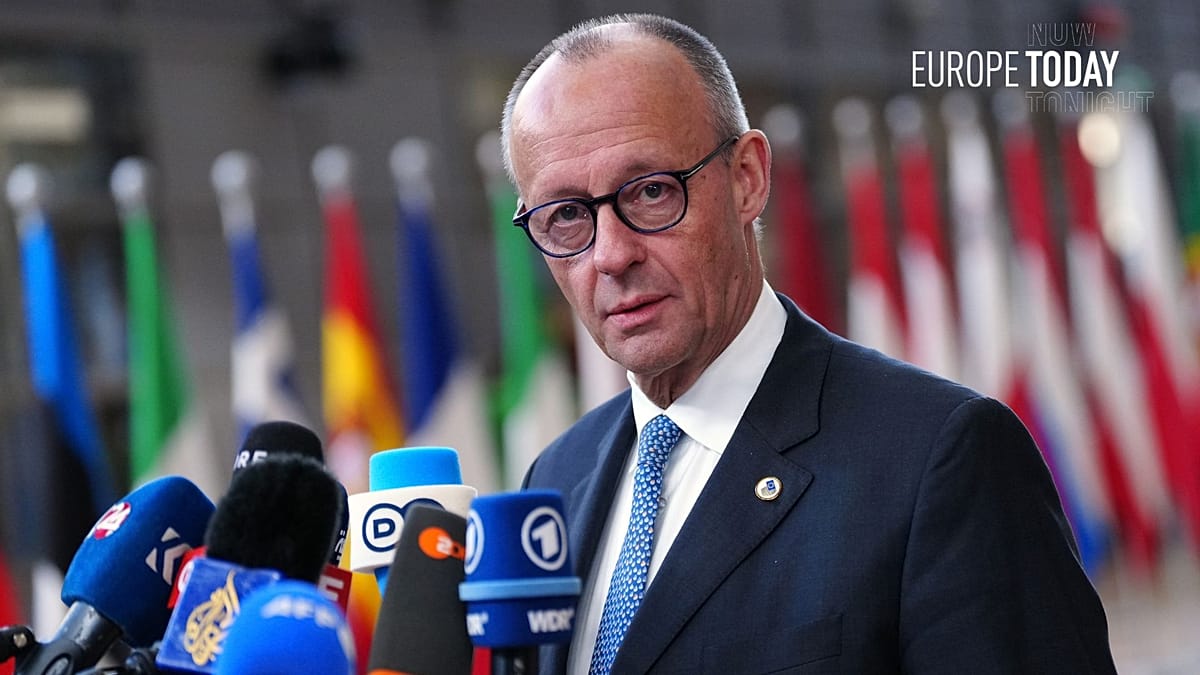
The European Union's 27 heads of state and government gathered in Brussels on Tuesday for a summit explicitly convened to break the deadlock over the bloc's next long-term budget. By the end of the day, they had little to show for it. The meeting ended without a deal, and several leaders openly questioned whether an agreement could be reached by the December deadline.
The summit exposed deep fault lines between member states. On one side, the so-called 'frugal' nations—led by the Netherlands, Austria, and Denmark—insist on capping the budget at 1% of EU gross national income and prioritising modernisation over traditional spending. On the other, a coalition including France, Spain, and several central and eastern European countries argues that a stronger budget is essential to address climate change, defence, and social cohesion. As one diplomat put it, 'the red lines have only hardened.'
The failure to agree has immediate consequences. The current budget framework expires at the end of next year, and a new one must be in place by January 2027. But the most pressing issue is Ukraine. The EU has pledged billions in macro-financial assistance and military support, but that aid is now tied to the budget negotiations. Without a deal, the flow of funds to Kyiv could be disrupted, a prospect that alarms many member states, particularly those in the east.
Despite the impasse, leaders did manage to reach one significant agreement: the appointment of Spain's Pablo Hernández de Cos as the next president of the European Central Bank. Hernández de Cos, a former governor of the Bank of Spain and currently head of the Bank for International Settlements, will take over from Christine Lagarde in February. The choice was widely expected, but it still marks a shift in the ECB's leadership, with a focus on financial stability and banking supervision.
Francesco Papadia, a senior fellow at the Brussels-based think tank Bruegel, told our correspondent that Hernández de Cos's appointment signals continuity rather than change. 'He is a safe pair of hands, but the challenges ahead—inflation, fragmentation, and the green transition—will test his mettle,' Papadia said. The ECB's next president will also have to navigate the delicate balance between supporting growth and maintaining price stability.
Budget divisions run deep
The core of the dispute is not just the size of the budget, but what it should fund. The European Commission has proposed a package worth around €2 trillion, including funds for the green and digital transitions, as well as a new mechanism for Ukraine aid. But the frugal camp wants to see a leaner budget, with less money for agriculture and cohesion, and more for competitiveness and defence.
Belgian farmers, who have been protesting in Brussels for weeks, are watching the negotiations closely. They fear that any cuts to the Common Agricultural Policy (CAP) would undermine their livelihoods. The protests, which have drawn thousands to the streets, have become a symbol of the broader tensions between rural and urban Europe, and between old and new priorities.
The summit's failure also raises questions about the EU's ability to act decisively. As one MEP warned, 'If we cannot agree on a budget, how can we expect to fund our ambitions in defence, health, or climate?' The warning echoes a broader concern that the EU's internal divisions are weakening its global standing, particularly at a time when the United States is imposing tariffs and China is expanding its influence.
Hosuk Lee-Makiyama, director of the European Centre for International Political Economy, noted that the budget impasse could have knock-on effects on trade. 'The EU's credibility as a partner depends on its ability to deliver on its promises,' he said. 'If we cannot fund our own priorities, how can we ask others to trust us?'
The next opportunity for a breakthrough comes at the December summit, but few are optimistic. As one senior official admitted, 'We are running out of time, and the gap between the camps is as wide as ever.' The risk is that the EU enters 2026 without a budget, forcing it to operate on a provisional basis and undermining its long-term planning.
For now, the focus shifts to the European Parliament, which must also approve the budget. MEPs have their own red lines, including demands for new own resources, such as a digital levy or a carbon border tax. Without those, they say, the budget will be too small to meet the EU's ambitions.
The summit may have ended in disarray, but the underlying issues are not new. They reflect a fundamental debate about what the EU is for: a market and a regulatory body, or a political union with shared ambitions. Until that question is resolved, the budget will remain a battleground.
As the leaders left Brussels, the mood was sombre. 'We have a lot of work to do,' said one prime minister, echoing the sentiments of many. The clock is ticking, and the stakes could not be higher.



