European Commission President Ursula von der Leyen is wrapping up a two-day visit to Nuuk, the capital of Greenland, to bolster ties with the Arctic territory and gather insights as Brussels prepares a revamped Arctic policy. The trip comes at a critical juncture: the EU's current strategy, published in 2021, barely touched on security threats, focusing instead on climate change, raw materials, and geostrategic influence.
Since then, the geopolitical landscape has shifted dramatically. The Commission now acknowledges that the policy must be updated to reflect a more militarised Russia and China's growing economic ambitions in the region, where melting ice is opening new shipping routes. A Commission spokesperson told Euronews that the revised document will aim to promote "peace, stability, and sustainable development" and that Brussels is committed to a constructive role in the Arctic.
However, the publication has been delayed, and the spokesperson could not provide a date. Experts warn that getting this right is crucial, particularly on security and defence. "If you look at the Arctic, this is the place where all the superpowers meet," said Estonian MEP Urmas Paet, who has drafted reports on EU foreign policy and the Arctic. In a 2025 report, he urged the Commission to update its strategy, noting that Russia's militarisation and China's Polar Silk Road have turned the region into a major flashpoint.
Paet cautioned that without a robust response, Europe risks being sidelined. "The Americans, Chinese, and Russians will be more and more active, and well, Europe, less and less relevant," he said. He has called for closer cooperation with Greenland on critical raw materials and energy, and for the EU's next long-term budget to fund activities like fishing, icebreakers, and infrastructure. "The important point for this new strategy is that it clearly reflects adequately what is ongoing, and also shows the way how the European Union, also through its budget should react to all those changes we have witnessed," Paet added.
Why the Arctic matters now
Arctic warming is nearly four times the global average, with over 10,000 cubic kilometres of sea ice lost in the past 40 years. This has made the region more accessible, attracting global powers. In 2018, Chinese President Xi Jinping outlined his Polar Silk Road initiative to build shipping infrastructure through the Arctic Ocean, linking Europe and Asia. In August, Russian Foreign Minister Sergey Lavrov highlighted the arrival of a Chinese container ship in Murmansk via a once-impassable route, while outlining Russia's plans for further international cooperation.
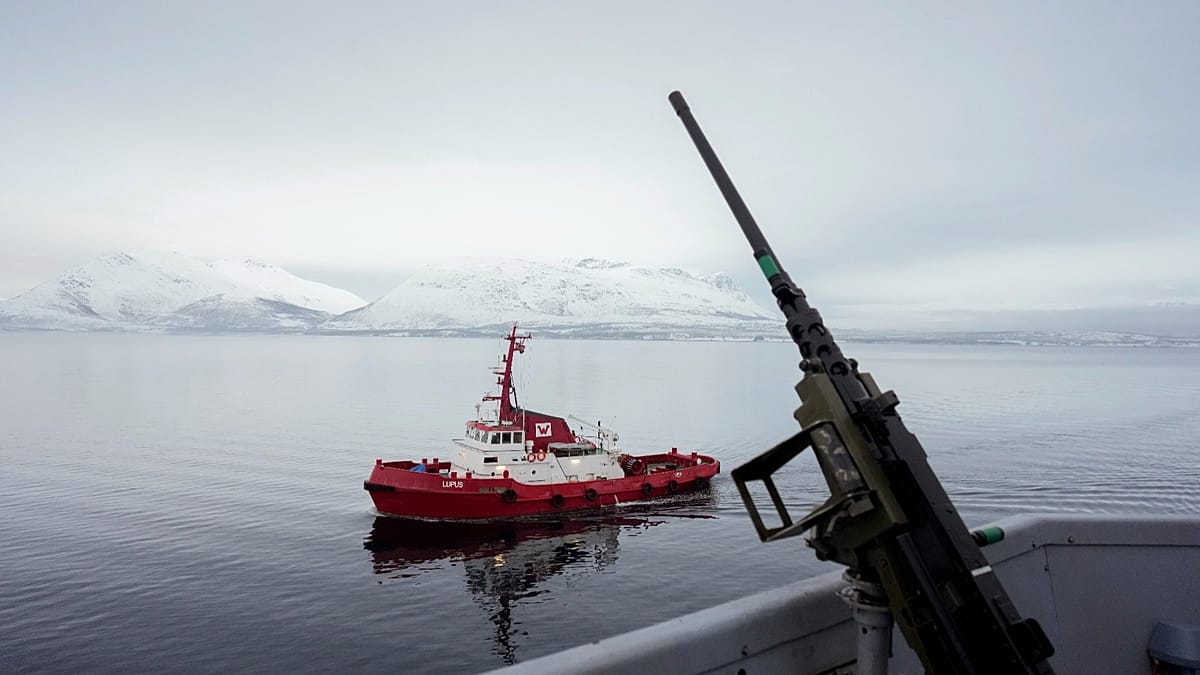
EU foreign policy chief Kaja Kallas said in February that the Arctic can no longer be viewed as a quiet corner of the map. "It is the front line of the global power competition," she said at a conference in Tromsø, Norway. Kallas warned that hybrid threats are growing in intensity and frequency, tied to Russia's "enduring military build-up" in the High North. "In response, European allies are stepping up on Arctic security, and the European Union is ready to do its part," she said.
The EU's Arctic policy update comes amid broader debates about the bloc's role in the region, including a potential shift on oil and gas drilling bans. Meanwhile, NATO has launched Arctic Sentry, a multi-domain activity to strengthen the Alliance's posture. Secretary-General Mark Rutte stressed that "it was crucial that we do more" in response to China's interest and Russia's military activity. A senior NATO official told Euronews that success would be measured by how Russia and China react to NATO's increased footprint.
Linda Solstrand Dahlberg, a senior representative of the Arctic University of Norway, suggested the EU policy could serve as a blueprint for greater EU-NATO coordination, particularly to safeguard subsea cables and other critical infrastructure. The EU's engagement with Greenland is also part of a wider effort to secure access to rare earth minerals, which are vital for the bloc's green transition and digital ambitions.
The delay in publishing the new policy has frustrated some in Brussels. Paet noted that the strategy must "clearly reflect" the current situation and show how the EU, through its budget, should respond to the changes. As the global power grab intensifies, the EU's ability to act cohesively in the Arctic will be a test of its geopolitical credibility.