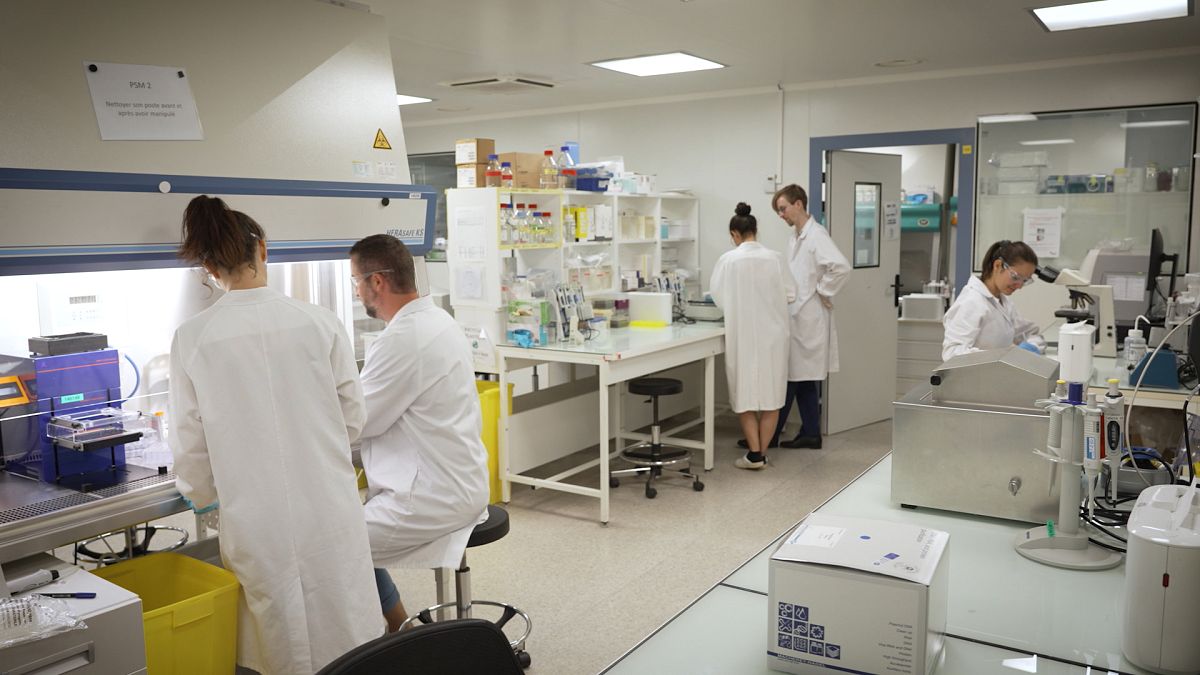
In a laboratory in Marseille, researchers at Innate Pharma are working on a new generation of cancer therapies. Their approach, known as cancer immunotherapy, aims to train the body's own immune system to recognize and destroy tumour cells. "We try to stimulate this immune system so that in return, it can take care of cancer," explains Eric Vivier, the company's Scientific Director. "All cancers; whether leukemia, lymphoma or solid tumors."
Founded in 1999, Innate Pharma is developing several oncology treatments. One candidate, targeting lung cancer, has reached phase three clinical trials — the final stage before potential market authorization. The journey has been arduous. CEO Mondher Mahjoubi notes that drug development typically takes around ten years, costs at least €1 billion from preclinical to market, and carries a failure rate so high that only four or five molecules out of every hundred succeed.
Europe's Sliding Position in Global Pharma Innovation
Innate Pharma is part of a broader European pharmaceutical ecosystem that invests €37 billion annually in research and supports roughly 800,000 direct jobs. Yet the continent is losing ground. According to a report by the European Federation of Pharmaceutical Industries and Associations (EFPIA), the number of new chemical and biological entities originating in the EU fell from 75 in 2011-2015 to just 64 in 2016-2022. Over the same period, the United States saw its count rise from 89 to 138.
The trend is alarming for European policymakers. "Already today we've lost about 25% of our global R&D investment in Europe in the last 20 years. It has decreased by one quarter in the last 20 years, and it has gone to the US and China," says Nathalie Moll, Director General of EFPIA. She argues that Europe must offer investors "conditions of predictability and attractiveness" to reverse the outflow. "Where research happens, matters. Because research means clinical trials, means patients getting access straight away to medicines."
The decline in European pharmaceutical R&D mirrors broader challenges in the continent's innovation landscape. For instance, Ukraine's rapid drone innovation has exposed Europe's slow defence adaptation, highlighting a pattern where bureaucratic hurdles and fragmented markets stifle progress across sectors.
New EU Regulatory Incentives for Health Innovation
In response, the European Commission has proposed a package of regulatory incentives designed to make the ecosystem more attractive for both large pharmaceutical companies and smaller SMEs. The reforms aim to create a more adapted, accessible, flexible, simple, and cost-efficient environment for investment. A key focus is on Advanced Therapy Medicinal Products (ATMPs), where the European Medicines Agency (EMA) would receive enhanced regulatory support.
EMA Director General Emer Cooke describes the agency's proactive approach: "We try to do some horizon scanning. That means that we look and see what might be coming: are we ready for it? Is the regulatory system ready for it? Have we got the right expertise?" The EMA engages early with developers through "business pipeline meetings" and an "Innovation Task Force" that invites anyone with a new idea to discuss the optimal regulatory pathway.
These efforts are part of a wider push to strengthen Europe's health resilience. The UK's recent generational tobacco ban sets a precedent for proactive health policy that could influence EU member states. Meanwhile, the rise of synthetic drugs is reshaping global markets and straining Europe's health systems, underscoring the need for robust innovation in treatment and prevention.
Back in Marseille, the researchers at Innate Pharma await the results of their lung cancer trial. "We are in the final phase. We are testing the effectiveness of a molecule that we've been producing for years on a very large number of patients," says Eric Vivier. "We expect the results in the coming months. But indeed, it has been a long time coming." Whether the EU's regulatory reforms can shorten that wait for future innovations remains an open question.