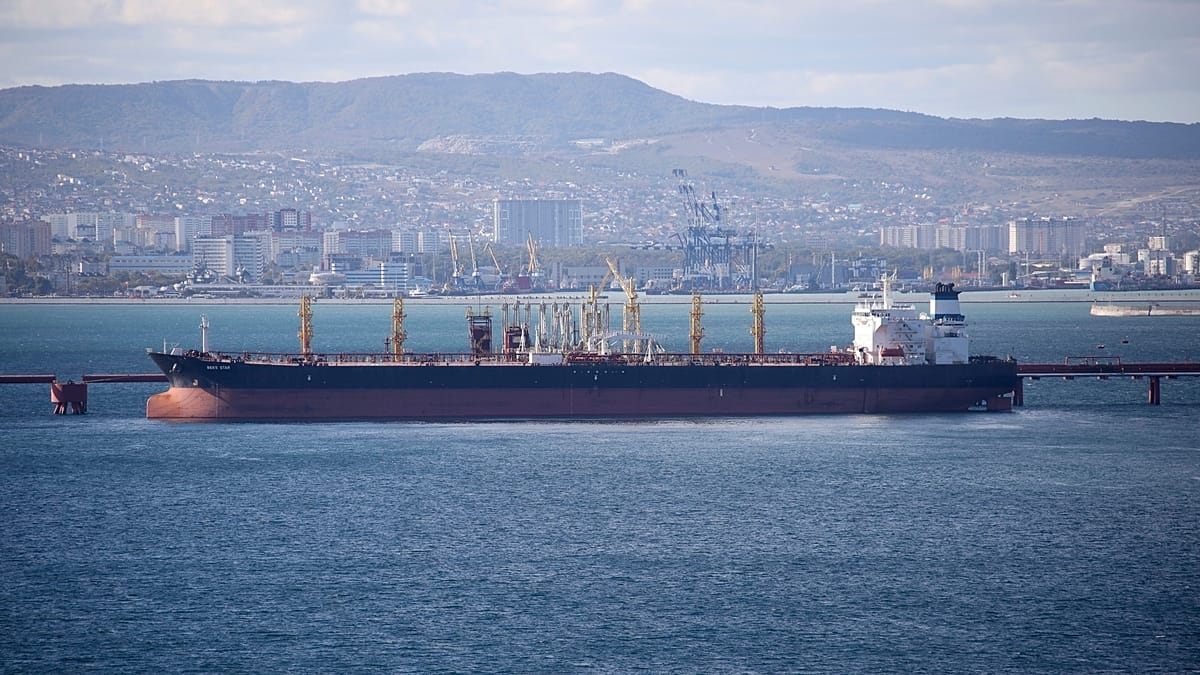
Brussels is racing against the clock to finalise the European Union’s 21st package of sanctions against Russia, with a 15 July deadline looming. After Monday’s meeting of foreign ministers failed to break the deadlock, the matter now rests with EU ambassadors, who are scheduled to convene again at 16:00 CET. Failure to reach a unanimous deal by midnight would cause the price cap on Russian oil to automatically rise from €44 to €58 per barrel — a scenario that would allow Moscow to earn significantly more revenue.
LNG transit ban remains the main obstacle
While the oil price cap is no longer a point of contention, member states remain divided over a proposed ban on the transit of Russian liquefied natural gas (LNG) through EU waters. Greece, in particular, is pushing for an exemption to protect its powerful maritime industry, which continues to service Russia’s energy sector. The dispute comes as new data reveals that EU countries spent nearly €6 billion on LNG from Russia’s Yamal facility between January and June — a record sum for the period.
At least one element of the sanctions package has been settled: the EU will not blacklist Patriarch Kirill, head of Russia’s Orthodox Church, nor Vagit Alekperov, the billionaire founder of Lukoil. Both names were definitively removed from the draft list after diplomats acknowledged that Bulgaria’s opposition was insurmountable. This marks the second time the EU has failed to target Kirill.
Bulgarian Foreign Minister Velislava Petrova-Chamova, in an exclusive interview with our correspondent Angela Skujins, explained Sofia’s stance: “When you have sanctions that have purely symbolic measures but no economic consequence on Russia, what you are risking is that in a country particularly that is Eastern Orthodox — such as Bulgaria — you create the environment for brewing anti-European rhetoric.” She added, “We’re really happy that, in the end, the name was dropped from the sanction package and now the package is in a way that we can really support.”
Petrova-Chamova is set to travel to Kyiv on Wednesday as part of a wider delegation of Eastern Balkan nations, a trip that coincides with the oil price cap deadline. She said she is “not afraid” of arriving empty-handed, regardless of whether the cap is adjusted. “I’m more thinking about how we can work more together to help Ukraine face the challenges in front of it, which are going to be even higher as the winter approaches,” she told us.
Israeli settlement trade ban gains traction
Separately, EU foreign ministers on Monday expressed the “most support” for a full import ban on goods manufactured in Israeli settlements, according to foreign policy chief Kaja Kallas. The European Commission last week presented a range of options to restrict settlement trade, with the boldest being a complete trading ban. A large cohort of member states — including Belgium, France, Ireland, Luxembourg, the Netherlands, Spain and Sweden — backed framing the measures as a trade rather than a foreign policy tool, which would avoid the need for unanimous approval. Proponents pushed back against the Commission’s argument that any measures should require unanimity.
Gaza recovery pledge and Kushner’s role
On Monday, the European Commission launched a “Team Gaza Initiative” during a meeting of the Palestine Donor Group, pledging around €900 million for the Gaza Strip’s recovery. Several EU and non-EU governments contributed to the collective pledge. Notably, Jared Kushner, President Donald Trump’s son-in-law and envoy, joined the conference by video link, welcoming cooperation between the donor group and the Board of Peace — the controversial body chaired by Trump that oversees Gaza’s reconstruction. European Commissioner for the Mediterranean Dubravka Šuica, who sparked controversy in February by attending a Board of Peace gathering in Washington, said, “We also want to have them on board because we see that we have to work together.” The first two recovery projects will focus on water and solid waste management. The EU and UN estimate that rebuilding Gaza over the next decade will cost over $71 billion.
Enlargement ‘super Tuesday’ for Albania, Moldova, Ukraine
Later today, three EU candidate countries — Albania, Moldova and Ukraine — will open a new phase in their accession process. This marks another symbolic breakthrough for Ukraine and Moldova, whose bids had been stalled for two years due to the previous Hungarian government’s opposition. Both countries opened the first phase of talks, known as the Fundamentals cluster, in June. The EU’s 27 member states unanimously backed the opening of Cluster 6, covering external relations, last week. Kyiv has been pushing for all outstanding clusters to be opened by summer, but Hungarian Prime Minister Péter Magyar has expressed strong reservations, arguing that moving at such a pace would amount to “fast-tracked accession.”
In related news, the UK has joined the EU’s €90 billion support loan for Ukraine after weeks of closed-door negotiations, promising a “fair” contribution. For more on Ukraine’s military efforts, see Ukraine Strikes Over 100 Russian Vessels in Sea of Azov in Eight Days, Isolating Crimea.