The European Union's latest attempt to renew its sanctions regime against Russia has hit a familiar wall: national red lines. As US President Donald Trump and Ukrainian President Volodymyr Zelenskyy meet in New York on the sidelines of the UN General Assembly, EU ambassadors in Brussels are wrestling with a package that would extend restrictive measures on 2,600 individuals and entities for another three years.
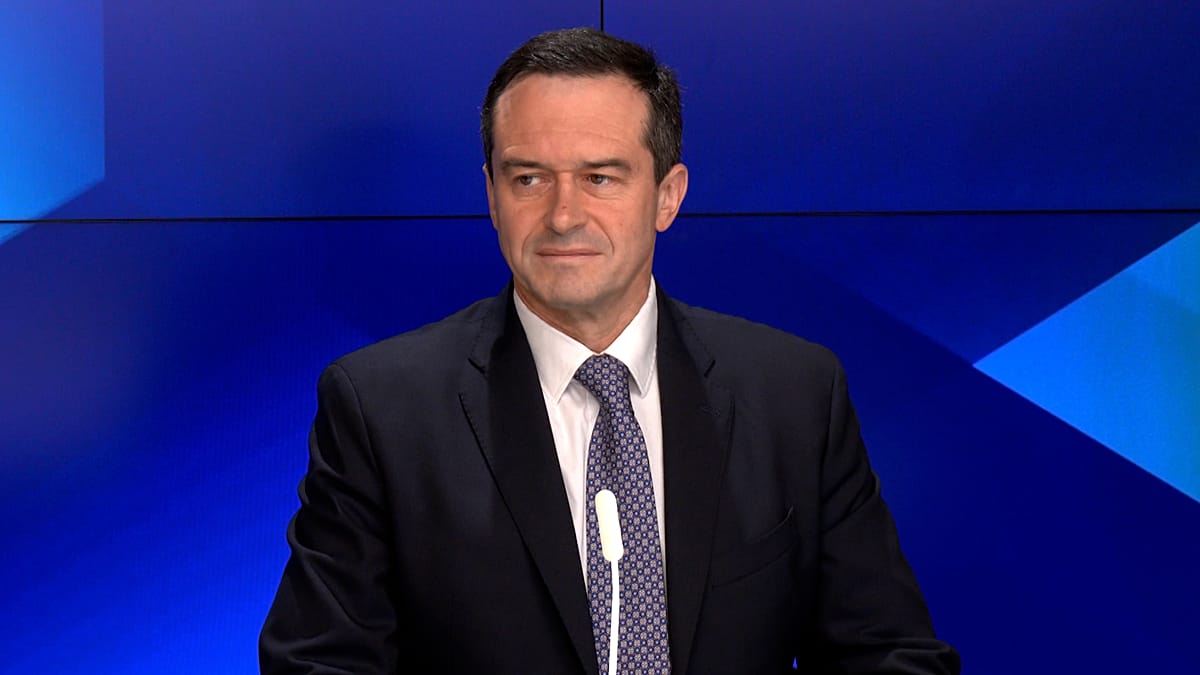
Ukrainian Deputy Prime Minister for EU Integration Vsevolod Chentsov told Euronews that Kyiv is firmly against any political delistings. "We are definitely against political de-listings," he said. "In this situation, we expect the EU to keep the unity, to continue the sanctions regime, to have the rollover for the next period."
Talks stretched late into Monday night and resumed early Tuesday, but a breakthrough remains elusive. The core dispute centres on a French proposal to remove Russian-Uzbek billionaire Alisher Usmanov from the list, reportedly as part of a deal that could secure the release of two French nationals imprisoned in Azerbaijan. Paris has also floated delisting Mikhail Fridman, another Russian businessman.
Latvian Prime Minister Andris Kulbergs has firmly rejected the trade-off. In a statement posted late Monday, he said the unprecedented 36-month extension cannot be bought by dropping names. "Latvia cannot accept such an offer," he wrote, adding that he would meet representatives from Paris and Brussels to seek a way forward.
The Irish presidency of the EU Council, which holds the rotating chair for six months, proposed the compromise as a way to avoid a repeat of the annual deadlock over sanctions renewals. But the move has exposed deeper fractures among member states, with some fearing that delisting sets a dangerous precedent. As one Brussels insider put it, the negotiations are "high drama 'til the end."
Return hubs: who foots the bill?
Beyond sanctions, migration is back at the top of the EU agenda. Five member states—Austria, Denmark, Greece, Germany, and the Netherlands—are pushing to accelerate plans for offshore return hubs for migrants without the right to stay in the bloc. The recent surge of arrivals in the Spanish enclave of Ceuta has sharpened the urgency, and migration is set to be a defining issue ahead of several national elections in 2027.
The group will meet again in Munich on Saturday, on the margins of a conference expected to draw 17 EU migration ministers and the EU's migration chief, Magnus Brunner. Sources close to the capitals say the focus is on finalising the first bilateral deals with third countries, with a target of 2027. Unofficial reports suggest talks are ongoing with Rwanda and Uganda, though the five governments have remained tight-lipped about locations.
Under the EU's new migration rules, approved in June, member states are expected to finance the hubs themselves, but they may also provide additional funding or incentives to encourage third countries to participate. Greece's deputy foreign affairs minister, Tasos Chatzivasileiou, told Euronews that "innovative solutions" require adequate resources. "If we decide to implement any innovative ideas, that means that Europe has to find the adequate resources," he said, adding that the next long-term budget could "provide a solution to the problem."
That budget—the Multiannual Financial Framework (MFF) for 2028-2034—is now the subject of intense negotiation. EU affairs ministers gather in Brussels today for a General Affairs Council meeting, with the Irish presidency aiming to table a compromise text by mid-October. European Council President António Costa has just completed a tour of capitals to gauge leaders' priorities, but Berlin has already bristled at the European Commission's €2 trillion proposal, even organising a rival meeting in August.
Despite the friction, an EU official close to the talks said there is political will to finalise the budget by the end of the year. But with Germany's Chancellor Friedrich Merz and other frugal nations pushing back on overall spending, a deal is unlikely before the European Council summit in December. Journalists covering the EU should brace for a long autumn and a working Christmas.
The sanctions impasse and the budget battle are intertwined, as both test the EU's ability to act collectively. As the bloc faces external pressures from Russia's war and internal divisions over migration and money, the coming weeks will reveal whether unity can hold. For now, the only certainty is that the negotiations will go down to the wire.