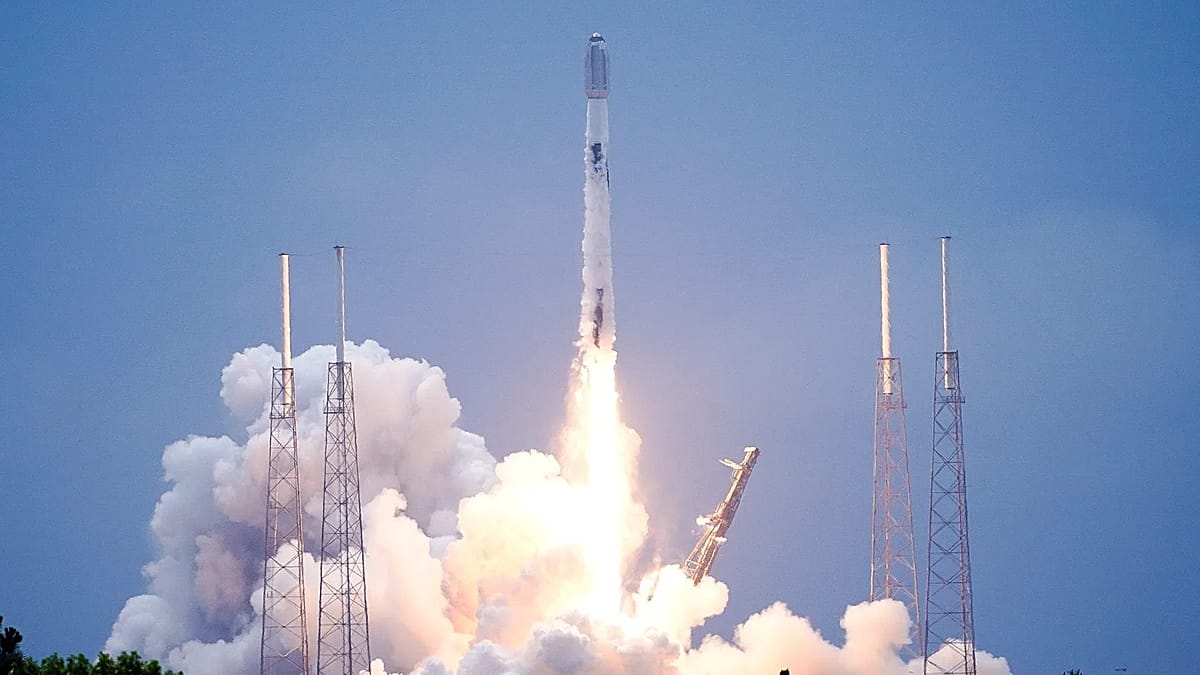
The European Commission will this week adopt a decision to privilege European satellite operators in the allocation of the 2 GHz radio spectrum, a move designed to curb the expansion of Elon Musk's Starlink and other non-European satellite internet services. The decision, expected on Wednesday, aims to bolster the EU's technological sovereignty and reduce strategic dependence on foreign providers, particularly in the wake of Russia's full-scale invasion of Ukraine, which underscored the critical role of satellite communications.
Starlink, operated by SpaceX, currently dominates the global satellite internet market with over 10,000 low-orbit satellites. Its closest competitor, Amazon's Project Kuiper, recently launched its first commercial constellation. However, European policymakers have grown wary of relying on US-controlled systems for such essential infrastructure. The war in Ukraine demonstrated both the utility and the risks: Starlink provided a lifeline to Ukrainian forces after physical networks were destroyed, but also raised concerns about dependency on a single private company.
Strategic Shift in Spectrum Allocation
The 2 GHz frequency band is the only radio spectrum harmonized across the EU. Since 2009, it has been allocated to two European operators, Viasat and EchoStar, primarily for limited use cases like emergency calls when mobile networks are unavailable. The Commission now plans to expand its use for direct-to-device communications, allowing smartphones to connect directly to satellites. This would enable Starlink and Kuiper to compete directly with European mobile operators, potentially rendering terrestrial infrastructure obsolete.
By favoring European satellite operators, the Commission aims to protect the business models of European telecom companies, which prefer to interact with operators they do not see as direct threats. The decision aligns with the upcoming Tech Sovereignty Package, an initiative to free the EU from strategic dependence on foreign technology providers. Thomas Regnier, the Commission's spokesperson for tech sovereignty, stated: “Satellite connectivity is a key piece of our technological sovereignty, our security, and our defence, as also highlighted by IRIS². In the changing geopolitical situation, EU-wide satellite connectivity becomes synonymous with resilience, security, and capability.”
The EU's own satellite-based secure connectivity system, IRIS², is also part of this push. However, internal tensions persist: EU digital chief Henna Virkkunen leans toward telecom operators' interests, while Defence Commissioner Andrius Kubilius has advocated for reserving a slice of satellite frequencies for military use. Spectrum is a scarce resource, and its allocation remains a delicate balancing act.
Potential US Backlash
The decision risks provoking a backlash from the Trump administration, which has been assertive in protecting American companies abroad. At the Mobile World Congress in March, Brendan Carr, chairman of the US Federal Communications Commission, warned: “Europe has national champion satellite providers that do substantial business in the US. And I think we have all benefited from a fair and even-handed approach. And whether we get to continue to do that, frankly, is in the hands of European regulators right now. If Europe insists on going down a path of satellite sovereignty that excludes providers that are not based in the continent, then the US will have to be taking that into account with respect to the reciprocal treatment that we provide.”
Despite these warnings, the Commission believes the worst-case scenario has been avoided after EU policymakers reached a political agreement on the controversial EU-US trade deal last week. The decision also comes as Europe seeks to strengthen its own capabilities, such as through initiatives like Greece's new laser ground station to boost satellite connectivity.
The move underscores a broader European push for technological autonomy, but it also highlights the tension between commercial and defence interests. As the Commission navigates these competing priorities, the outcome will shape the future of satellite communications in Europe and its relationship with the United States.