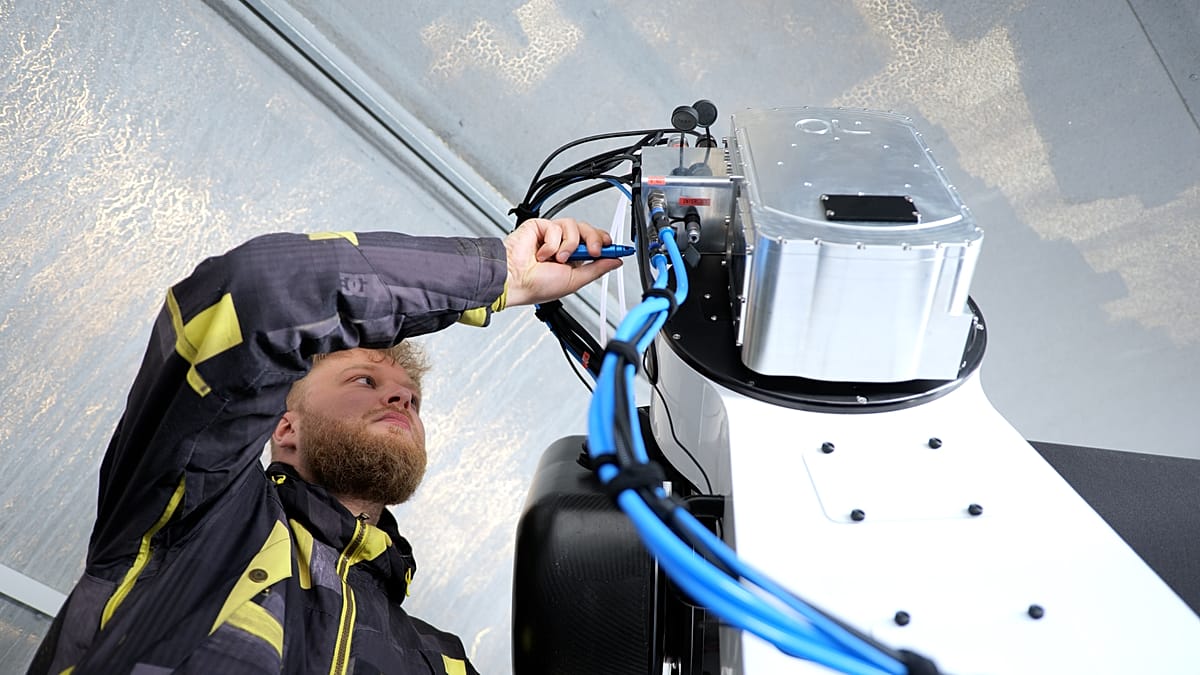
A new laser ground station has commenced operations in northern Greece, marking a significant step in Europe's efforts to build a continent-wide network for faster and more secure satellite communications. The Holomondas Optical Ground Station, developed through a collaboration between the European Space Agency (ESA), the Greek Ministry of Digital Governance, and Aristotle University of Thessaloniki, will support a new generation of Greek satellite missions using high-speed optical communications.
The facility, located at the Holomondas site, was originally an astronomical observatory but has been transformed into an optical communications hub as part of ESA's Greek Connectivity Programme. This initiative aims to strengthen optical connectivity infrastructure in Greece and across Europe, addressing the growing demand for reliable satellite links.
How Laser Communications Work
Unlike traditional radio-based satellite communications, laser systems use narrow beams of infrared light to transmit information. This technology can send data far more quickly than conventional radio methods and is more difficult to interfere with because the signals travel in tightly focused beams. Astrolight, the Lithuanian company that supplied the optical communications equipment, says the system can support data reception speeds of up to 2.5 Gbps under various weather and operating conditions. The company also claims that laser communications can provide more than 10 times faster and safer communications at lower cost than conventional systems.
This could dramatically reduce the time needed to download large amounts of satellite data. Information that currently takes hours to transmit could eventually be delivered in less than a minute, while the higher capacity would allow satellites to send back more images and scientific measurements without compressing or discarding them.
The station is designed to maintain accuracy during temperature changes and small mechanical shifts, making it easier to use with more compact and less costly infrastructure. It will support two Greek missions, PeakSat and ERMIS, which were launched into orbit on 30 March 2026. These satellites are part of Greece's in-orbit demonstration programme and will test laser-based data transmissions between space and Earth.
“The commissioning of the Holomondas Optical Ground Station marks an important step towards enabling faster, more secure, and resilient connectivity, while strengthening Greece’s role within Europe’s expanding optical communications ecosystem,” said Frederic Rouesnel, Greek Connectivity RRF Project Manager at ESA. “As the Greek CubeSats move into their demonstration phase, they will help validate innovative laser communication technologies that will provide alternatives to scarce radio frequencies, and shape the future of high-capacity connectivity in space.”
Europe's Growing Network of Ground Stations
The development comes as satellite traffic in low Earth orbit continues to grow rapidly. According to a World Economic Forum report, the number of satellites in low Earth orbit is expected to increase by 190 per cent within the next decade. Due to increasingly crowded orbital traffic, which makes traditional radio communication tricky, Astrolight aspires to expand its laser technology globally. The company is currently building a station in Greenland as well, with plans to complete it this year.
Europe has dozens of satellite ground stations, most of them older radio-based sites, with a smaller but growing number of newer optical stations. These stations help satellites send data back to Earth and support missions such as weather forecasting, climate monitoring, navigation, and emergency response. Key radio sites include Kiruna in Sweden, Redu in Belgium, and Santa Maria in the Azores, while newer optical sites include Tenerife in Spain's Canary Islands, Almería in Spain, and Nemea in Greece.
Their location matters because Europe's space network depends on how well these stations connect across the continent. The stronger the links between northern, western, southern, and eastern sites, the easier it is to share satellite data quickly, avoid gaps in coverage, and keep services running if one route or region is disrupted. This is particularly relevant as Europe faces challenges like the EU's efforts to finalize defence omnibus, which underscores the need for resilient infrastructure.
The Holomondas station represents a strategic addition to this network, enhancing Greece's role in Europe's space ecosystem. As the continent races to strengthen satellite links, such investments are crucial for maintaining technological sovereignty and ensuring reliable communications for both civilian and security applications.