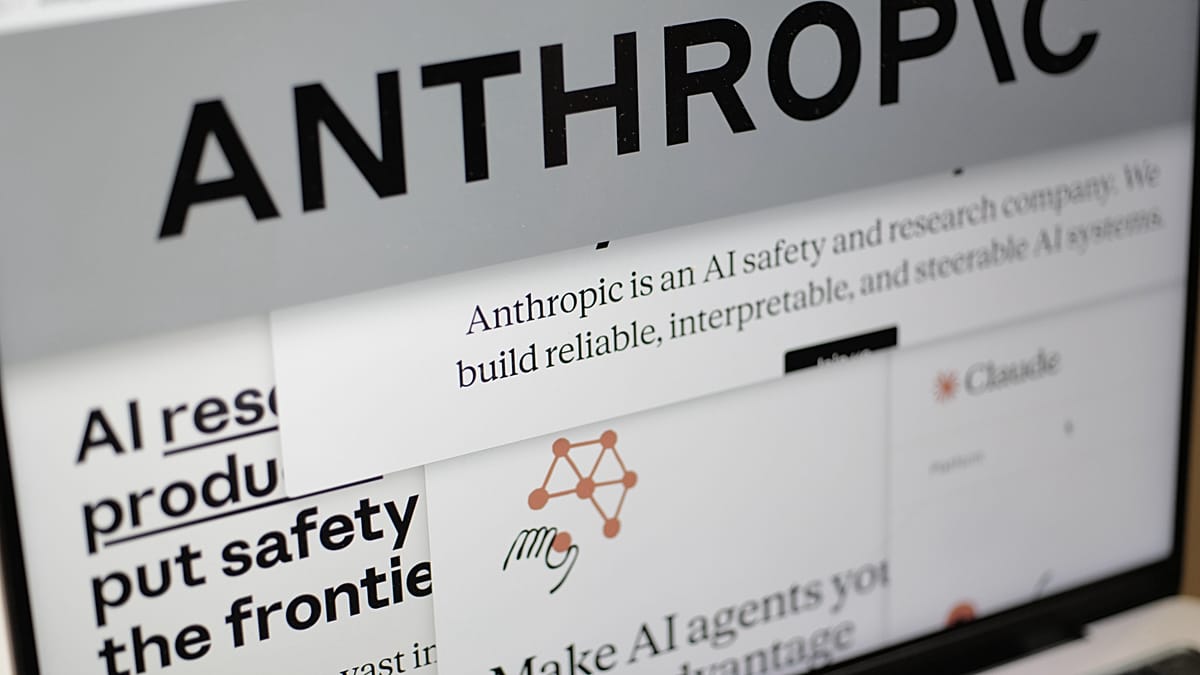
The European Commission has raised concerns over the Trump administration's decision to impose export controls on Anthropic's most advanced artificial intelligence models, warning that such measures must not be discriminatory against European partners. The move, which blocks non-US users—including those in the European Union—from accessing the Fable 5 and Mythos 5 models, has reignited debates about technological sovereignty and transatlantic cooperation.
On Friday, the US government issued a directive barring foreign nationals from using the two state-of-the-art AI systems, citing national security risks. Anthropic, the San Francisco-based company behind the models, was forced to cut off access for all users outside the United States, including in EU member states, the United Kingdom, Switzerland, and Norway. The models had previously been available only to a select group of testers to evaluate their potential for identifying and exploiting cybersecurity vulnerabilities.
Thomas Regnier, the European Commission spokesperson for tech sovereignty, told reporters on Sunday that the bloc is closely examining the implications. “We are seeing a new generation of highly capable AI models reach the market. These models offer significant benefits, including for cyber-defence, but they also raise serious cybersecurity concerns that need to be addressed,” Regnier said. He added: “This is a shared challenge, not one confined to a single jurisdiction or company. We believe that contingency measures taken in this light should not be discriminatory against partners.”
Brussels Pushes Back Against Unilateral US Action
The Commission’s intervention underscores growing unease in European capitals about Washington’s unilateral approach to regulating cutting-edge technology. The US directive effectively treats European users as potential security threats, a stance that Brussels finds incompatible with the spirit of transatlantic partnership. The episode comes amid broader tensions over data flows, digital taxation, and the extraterritorial reach of US laws.
For the Commission, the Anthropic case is a stark reminder that Europe must accelerate its efforts to build independent technological capabilities. “We are looking closely at the practical consequences of this for European users of these services,” Regnier said, hinting at possible retaliatory measures or regulatory responses. The EU’s existing legal frameworks—including the AI Act, the Cyber Resilience Act, and the Digital Services Act—are designed to manage such risks on the bloc’s own terms, but their effectiveness depends on Europe having access to the most advanced models.
The incident has also drawn attention to the broader geopolitical dimensions of AI governance. As the US and China compete for dominance in artificial intelligence, Europe risks being caught in the crossfire. The Commission has long advocated for a multilateral approach to AI safety, but Washington’s move suggests that the US is willing to act unilaterally when it perceives a threat to its national security.
European tech leaders and policymakers have reacted with a mix of frustration and resolve. Some argue that the US export controls could accelerate Europe’s push for homegrown AI champions, while others warn that the continent cannot afford to be locked out of the most advanced models. The debate echoes earlier disputes over cloud computing and semiconductor supply chains, where US restrictions have prompted European investments in local alternatives.
The Anthropic models in question—Fable 5 and Mythos 5—are considered among the most powerful AI systems currently available, with capabilities that could be used for both defensive and offensive cyber operations. Their restriction to US users raises questions about how Europe will defend itself against cyber threats if it lacks access to the same tools. The Commission is expected to release a detailed assessment of the impact on European businesses, research institutions, and government agencies in the coming weeks.
In the meantime, the episode has reinforced calls for Europe to reduce its dependence on US technology. The EU has already launched initiatives such as the European Chips Act and the European Digital Identity Wallet, but critics argue that progress remains too slow. The Anthropic case may serve as a catalyst for more ambitious action, including joint investments in AI research and development, and the creation of a European AI infrastructure that can compete with US and Chinese offerings.
As the Commission weighs its next steps, the message from Brussels is clear: Europe will not accept being treated as a second-class partner in the digital age. The coming months will test whether the EU can translate its regulatory ambitions into genuine technological sovereignty, or whether it will remain dependent on decisions made in Washington and Beijing.