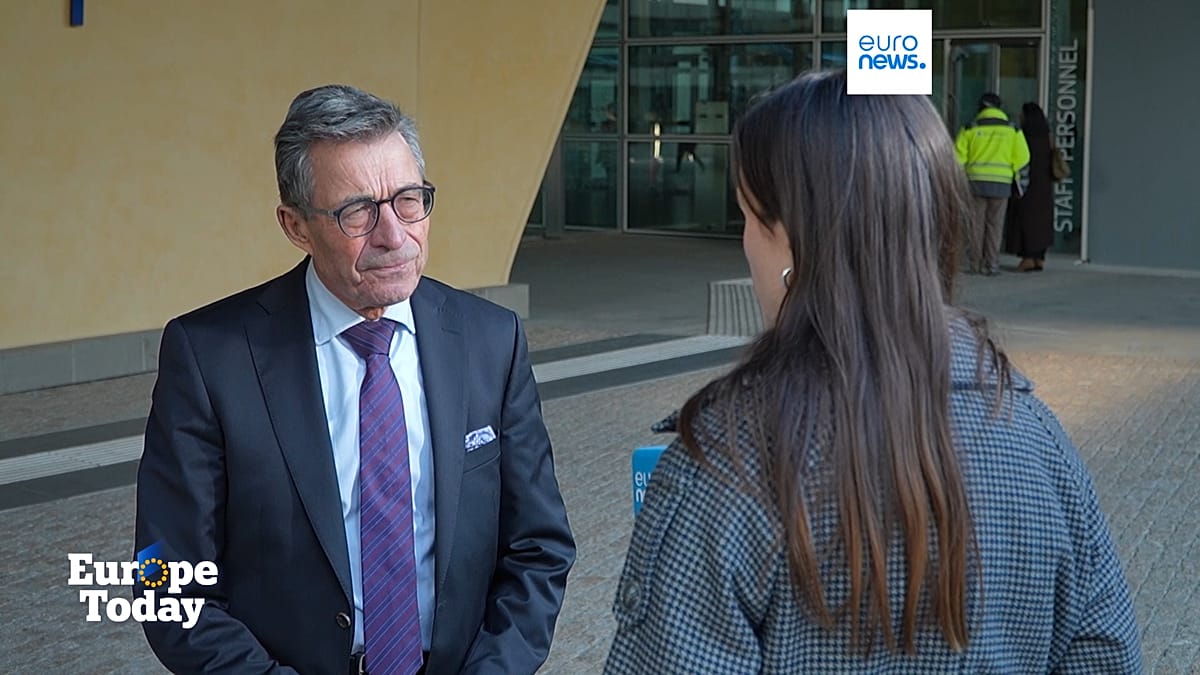
Europe must stop pleading for a role in the US-brokered negotiations between Russia and Ukraine and instead demonstrate its strategic value, according to Anders Fogh Rasmussen, the former NATO Secretary-General. Speaking to Euronews, Rasmussen argued that the continent's current approach is self-defeating.
“Europe is already in a weak position. Europe is begging for a place at the table,” he said. “You have to make yourself indispensable by bringing assets to the table, so I hope Europe will now wake up.”
His remarks come as Russian, Ukrainian, and US negotiators gather in Abu Dhabi for two days of talks aimed at ending Russia's full-scale invasion of Ukraine. Senior European officials from the EU, NATO, Britain, Germany, Italy, and France are also travelling to the United Arab Emirates, but they will not join the main trilateral session. Their presence underscores Europe's determination to influence negotiations that could reshape the continent's security order.
Jared Kushner, an adviser to US President Donald Trump, said last week that a “new European security architecture” would be a focus of the talks. Russian officials have echoed similar language, calling for a reduced NATO presence in Europe. Rasmussen, who led the alliance from 2009 to 2014, expressed deep concern about the direction of US policy.
“We have seen US President Donald Trump chose Moscow,” he said, “and siding with Putin. This is a situation we have to take seriously. The Europeans must wake up. If we don't, we will be sleepwalking into a permanent war on the European continent.”
Nordic divisions exposed
A 90-minute phone call with Russian President Vladimir Putin, initiated by Norwegian Prime Minister Jonas Gahr Støre and Finnish President Alexander Stubb, has laid bare divisions among Nordic leaders and highlighted Europe's struggle to speak with one voice. Danish Prime Minister Mette Frederiksen publicly criticised the initiative, saying it was not coordinated with other European leaders.
“I am very sceptical about this independent initiative by Norway and Finland. It was not coordinated with any of us,” Frederiksen said shortly after the call became public. Rasmussen, who served as Danish prime minister from 2001 to 2009, defended the idea of talking to Moscow but stressed the need for coordination.
“And we should understand that we in Europe cannot be neutral mediators. We will side with the Ukrainians,” he said.
Polish Foreign Minister Radosław Sikorski has also insisted that Eastern European countries must have a voice in any peace talks, given their exposure to the spillover effects of Russia's invasion. “The last thing we want is Western Europe dealing with Russia, over the heads of the east Europeans,” he said last week.
Rasmussen, who took over NATO just before the Baltic states of Estonia, Latvia, and Lithuania joined the alliance in 2004, said the West should have heeded their warnings earlier. “We should have listened to the Eastern Europeans,” he said.
US delays on air defence
Beyond the diplomatic manoeuvring, Rasmussen criticised Washington's delays in approving the delivery of US-made air-defence missiles to Ukraine. Ukrainian President Volodymyr Zelenskyy said in late October that he had been waiting almost a month for US approval of Patriot and NASAMS missile deliveries. The holdup has raised concerns about Ukraine's ability to repel Russian ballistic missile attacks and other aerial threats that continue to batter Kyiv.
Rasmussen described the delay as “damning” for Ukraine's defences. “I'm so disappointed that the Americans have not delivered what they have promised to deliver. I'm not going to guess about the reasons why, but it just underlines the need for us in Europe to be able to stand on our own feet,” he said.
Asked whether he had ever seen NATO as divided as it is today, amid US troop reductions, Trump's threats to withdraw from the alliance, and tensions over Greenland, Rasmussen replied: “Not at all. It was an era where we could trust the American ally.”
“When push comes to shove the Americans will come to the aid of Europe, but we have to be able to stand on our own feet. It's high time that we take decisions in Europe irrespective of who is residing in the White House.”
The EU's presence in Abu Dhabi reflects its desire to shape the outcome, but Rasmussen's warning suggests that presence alone is not enough. As talks resume, the question remains whether Europe can translate its concerns into concrete influence.