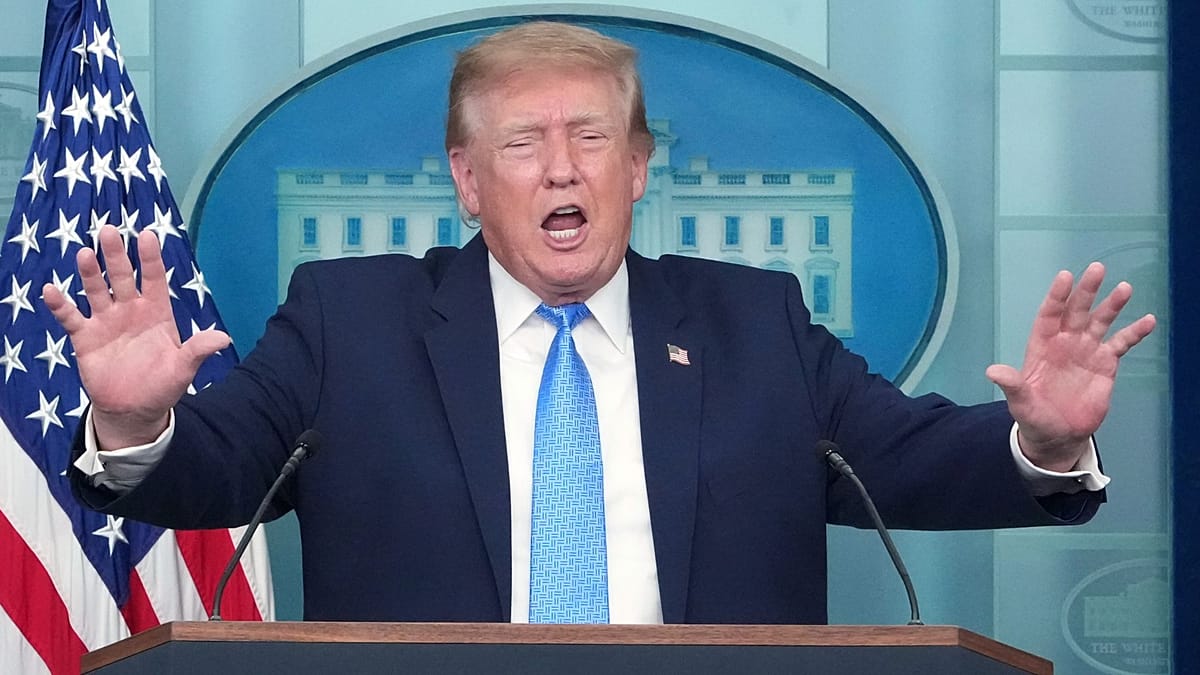
US President Donald Trump said on Monday that the conflict with Iran was effectively over, while cautioning that further military action remained possible. Speaking at a White House press briefing after meeting Qatar's prime minister, a key mediator, Trump declared: "Iran, militarily, is effectively over. We're just keeping it the status quo." He added, "But if we do have to go back in, we are locked and loaded, and ready to go."
The meeting with Qatari Prime Minister Sheikh Mohammed bin Abdulrahman Al Thani was Trump's first with a foreign leader since his party suffered heavy losses in the midterm elections. Trump later posted on Truth Social that the two had "an excellent conversation" and that "much was discussed with respect to the Islamic Republic of Iran."
Trump said Gulf states—Qatar, Saudi Arabia, the UAE, Bahrain, Kuwait, and others—preferred the status quo over further strikes, describing the current operation as "the largest naval blockade in history" alongside the Iron Gate land operation. He reiterated that all parties agree Iran must not obtain a nuclear weapon and that this point is not open to negotiation, but again said further strikes were "quite unlikely."
"We are seeing positive momentum toward an end to this conflict, and will ensure that America's interests are at all times protected," Trump said.
Tehran pushes back
Iranian officials, however, expressed defiance. Mohsen Rezaei, secretary of Iran's Supreme National Security Council, wrote on X that the US "flails like a desperate gambler," telling Washington to "fold your hand. Stop manufacturing fake news about imaginary talks." Tehran's top negotiator, Mahammad Bagher Ghalibaf, claimed Israel was pushing the US deeper into conflict, warning that "unless Washington drops the 'Israel First' mindset, America and its allies are headed straight for a dark age."
On the ground, strikes continue, according to Iranian authorities. The island of Qeshm, located in the Strait of Hormuz, was targeted overnight from Sunday to Monday, the provincial deputy governor stated on state television. Media reports, citing Turkey's intelligence service chief Ibrahim Kalin, suggested Qatar would host a meeting between Vice President JD Vance and Rezaei next week, but Iran's Foreign Minister Abbas Araghchi denied any such meeting was being planned. Tasnim news agency, citing a senior Iranian security official, said Iran's negotiating position had not changed and that it would not hold talks with the US until Washington takes concrete steps within the framework of Iran's seven conditions.
The situation carries significant implications for Europe. European capitals, particularly Paris and Berlin, have watched the escalation with concern, as the conflict threatens energy supplies and regional stability. The recent slide in oil prices on hopes of a diplomatic resolution offers some relief, but the continued strikes on Qeshm, near the Strait of Hormuz, a critical chokepoint for global oil shipments, keep markets on edge.
European Union diplomats have been involved in parallel efforts to de-escalate, with the bloc joining peace talks in Abu Dhabi that touch on broader regional security. The EU has also maintained its commitment to the Iran nuclear deal framework, even as the US has abandoned it. The COP31 summit in Antalya has been overshadowed by the war, with energy security dominating discussions.
For European observers, the key question is whether Trump's declaration of "effectively over" translates into a genuine de-escalation or merely a pause. The denial from Tehran of planned talks suggests that the path to a negotiated settlement remains fraught. European leaders have repeatedly called for restraint and a return to diplomacy, but the lack of a clear European seat at the table has limited their influence.
As the situation evolves, European capitals will be watching closely, aware that the outcome of this conflict will shape the region's security architecture for years to come. The stalled talks and continued strikes underscore the fragility of the current moment.