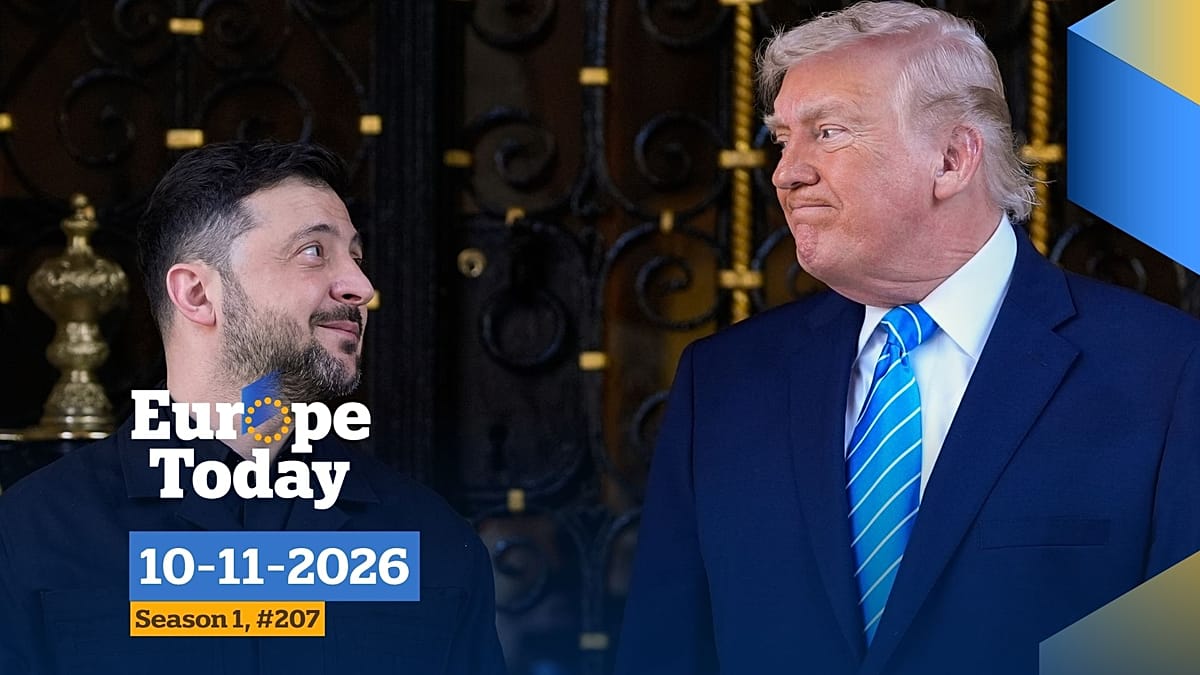
Diplomatic efforts to end the war in Ukraine moved to Abu Dhabi this week, as the United States hosted a new round of talks between Kyiv and Moscow. For the first time, a joint European Union team, alongside officials from France, Germany and the United Kingdom, is present on site, signalling a more unified European approach to the negotiations.
The talks, which began on Monday, are being mediated by the US and focus on security guarantees, territorial questions, and the practicalities of a potential ceasefire. The EU's participation marks a shift from earlier rounds, where European leaders were largely sidelined. The bloc is seeking to ensure that any agreement reflects European security interests and that the reconstruction of Ukraine is anchored in a credible international framework.
Beyond the negotiating table, the agenda includes broader issues such as energy infrastructure, humanitarian access, and the fate of millions of displaced Ukrainians. The EU delegation is expected to press for clear commitments on the protection of civilians and the restoration of basic services in conflict-affected areas.
ECB leadership race takes shape
While the Abu Dhabi talks dominate headlines, a quieter but equally consequential contest is unfolding in Brussels and Frankfurt: the race to succeed Christine Lagarde as President of the European Central Bank. Lagarde's term ends in 2027, but jockeying for the position has already begun, with national governments positioning their preferred candidates.
In an exclusive interview with European Pulse, Eurogroup president and Greek finance minister Kyriakos Pierrakakis discussed the challenges facing the next ECB chief, including persistently high energy prices and the need to balance inflation control with economic growth. Pierrakakis stressed that the ECB's independence must be preserved, but also acknowledged that the institution will need to navigate a more fragmented European economy.
“The next president will have to manage a delicate transition, ensuring price stability while supporting the green and digital transformations,” Pierrakakis said.
Spain has thrown its weight behind Pablo Hernández de Cos, the former governor of the Bank of Spain, who is widely respected for his technical expertise and his role in steering Spain through the post-2008 financial crisis. In a separate interview, Spain's Deputy Prime Minister and Economy Minister Carlos Cuerpo made the case for Hernández de Cos, arguing that his experience in both national and European institutions makes him an ideal candidate.
“Pablo has the credibility and the vision to lead the ECB in a challenging era,” Cuerpo told European Pulse. “He understands the diversity of the euro area and the need for policies that work for all member states.”
Other potential contenders include French central bank governor François Villeroy de Galhau and German Bundesbank president Joachim Nagel, though neither has formally declared. The final decision will be made by EU leaders, likely in 2026, and will require a delicate balance of geography, gender, and political affiliation.
Cyprus reunification talks resurface
In a separate development, the long-stalled Cyprus reunification process has returned to the spotlight. Following a meeting between the Greek Cypriot and Turkish Cypriot leaders with the UN envoy in Geneva, there is renewed hope for a resumption of formal negotiations. The island has been divided since 1974, and previous rounds of talks have failed to produce a breakthrough.
Our correspondent in Athens, Fay Doulgeri, reports that the recent meeting was described as “constructive” by both sides, with a possible new round of talks scheduled for later this year. The EU has repeatedly expressed its support for a bi-communal, bi-zonal federation, but significant differences remain over security arrangements and property rights.
The Cyprus issue is closely watched in Brussels, as it affects EU-Turkey relations and the stability of the Eastern Mediterranean. Any progress would be a major diplomatic achievement, but scepticism remains high given the history of failed negotiations.
As the EU seeks to strengthen its global role, the Abu Dhabi talks and the ECB succession are test cases for its ability to act cohesively. The bloc's credibility depends on its capacity to speak with one voice on foreign policy and to manage its economic institutions effectively. The coming months will reveal whether Europe can rise to these challenges.