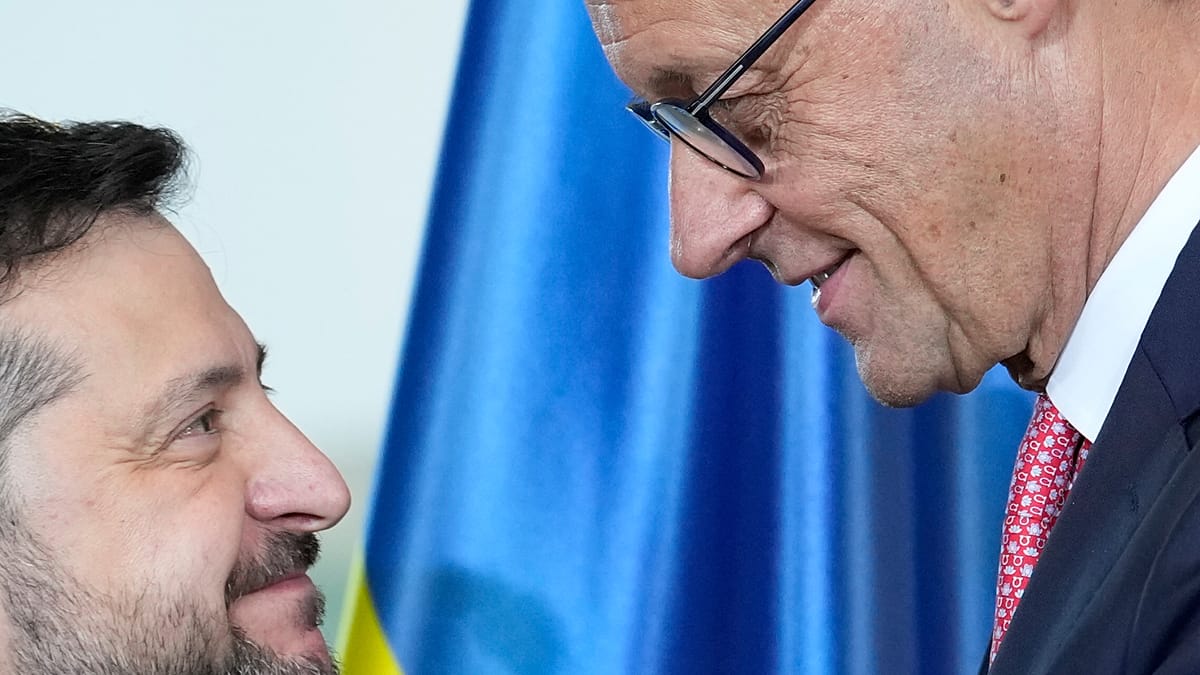
German Chancellor Friedrich Merz has raised the stakes in the European Union's next long-term budget negotiations by linking approval to a unanimous commitment from all member states to finance Ukraine beyond 2027. The move, which could open a new front in the already fraught Multiannual Financial Framework (MFF) talks, is seen as an attempt to force a permanent solution to Kyiv's financial needs.
Berlin is pushing for a durable funding arrangement that would cover the cost of servicing Ukraine-related debt, as Ukraine faces an estimated €70bn funding shortfall next year. The EU has already pledged around €45bn of that gap, on top of the €90bn Ukraine Support Loan agreed for 2026-2027. However, Hungary, Slovakia, and Czechia opted out of that loan, and Bulgaria has signalled it will not contribute further.
Merz's stance is not isolated. Ireland's Finance Minister Simon Harris told Euronews: "To have an honest multi-annual budget for Europe, that has to involve considering the question of the funding for Ukraine. Any other conversation would be an incomplete one."
In a letter, Merz wrote that the solution should be the result of a "collective commitment that all of us, without exception, will contribute fairly," suggesting he is opposing additional opt-outs. Economy Commissioner Valdis Dombrovskis echoed this, saying proposals to cover Ukraine's financing gap should be backed "by the EU27, not by the EU24 or any number of countries."
A gamble that could backfire
Germany, part of the "frugal" countries seeking cuts to the EU budget, had already tried to tie the budget talks to Ukraine financing at the special European Council at the end of the month, to put pressure on the "Friends of Cohesion"—countries that benefit most from EU structural funds. But Merz's gamble raises the stakes further, and it could backfire. Countries that want to opt out of financing Ukraine could feel cornered if they are made to pay for Kyiv and also accept cuts to cohesion funding. In a post-Orbán EU, Slovakia's Robert Fico is expected to play disruptor-in-chief.
The EU's budget negotiations are already complex, with competing interests over agricultural subsidies, regional development, and new priorities like defence and migration. Linking Ukraine funding to the MFF could make an already difficult deal even harder to reach.
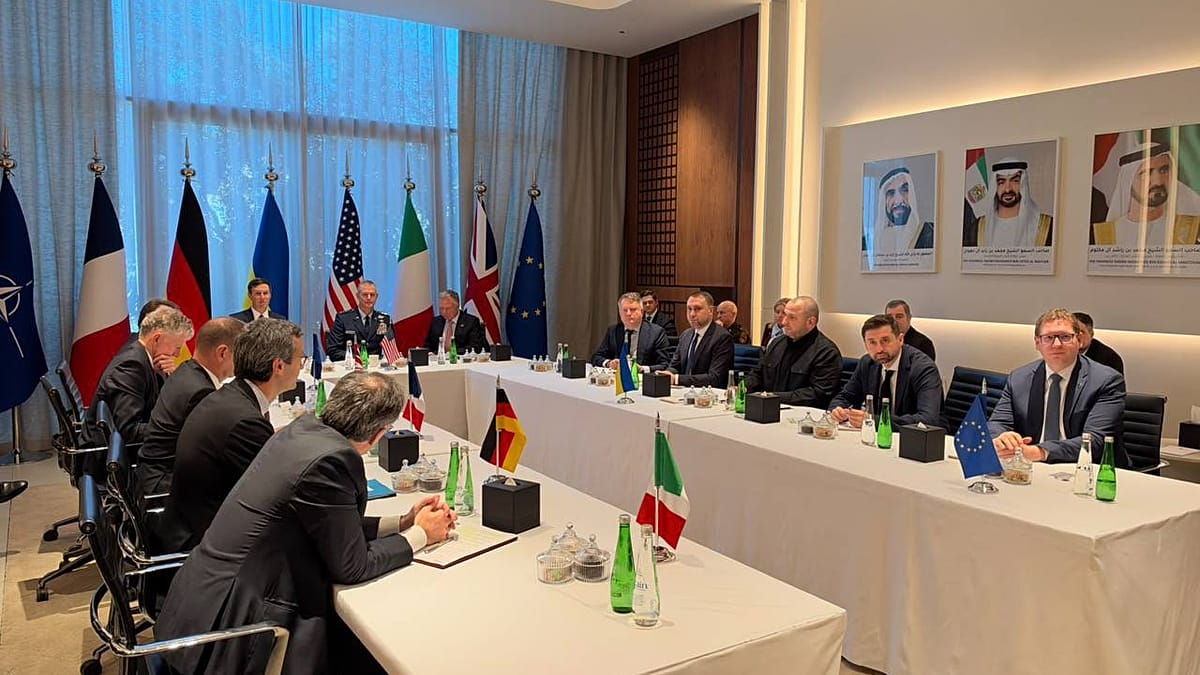
Meanwhile, the EU is also seeking a voice in the US-mediated peace talks between Ukraine and Russia, which begin today in Abu Dhabi. A joint team from the European Commission and the European Council, led by Björn Seibert and Anna-Maria Boura, will be present, joined by national security advisers from France, Germany, the UK, and Italy. NATO will also be represented. The main negotiations remain trilateral, but European officials have left open the possibility of direct engagement with the Russian delegation.
European Commission President Ursula von der Leyen said in Bucharest: "Any meaningful discussions about Europe's security architecture can only be undertaken once a ceasefire in Ukraine has been achieved. It must take place in an appropriate forum, in particular with NATO allies and EU members."
Ukraine's delegation chief Rustem Umerov confirmed that Kyiv will hold separate coordination meetings with its European partners in Abu Dhabi.
Von der Leyen is also completing a two-day tour of Romania and Bulgaria, focusing on Black Sea security after drone attacks on commercial ships killed seafarers. She announced €10m for Romanian search-and-rescue operations and pledged to fast-track the Black Sea Maritime Security Hub, with an additional €50m in funding, though no exact timeline was provided. Former NATO Secretary-General Anders Fogh Rasmussen suggested a Baltic Sea-style maritime mission could ensure free navigation in the Black Sea.
In a separate development, French Foreign Minister Jean-Noël Barrot blamed Iran's Islamic Revolutionary Guard Corps for last month's cyberattacks on supermarket refrigerators, which hit thousands of units across at least 350 French stores. EU foreign policy chief Kaja Kallas indicated the issue could prompt stronger European action.
As the EU navigates these challenges, the ECB succession race is also heating up, with Christine Lagarde's resignation announced ahead of the French presidential elections. The Eurogroup President, Kyriakos Pierrakakis, called the situation "quite unprecedented."