As a fresh round of negotiations aimed at ending Russia's war in Ukraine opened in Abu Dhabi on Tuesday, a senior American official told US media that both Kyiv and Moscow had privately shown "a little bit of flexibility" over disputed territory. The official offered no specifics, but cautioned that any resolution of territorial questions would depend on agreement over post-war security arrangements.
US President Donald Trump suggested that Ukraine could emerge from the conflict with "a little bit different shape," without elaborating on which territorial changes he had in mind. Moscow continues to demand that Ukraine recognise Russian control over Crimea and the four regions it claims to have annexed—Donetsk, Luhansk, Zaporizhzhia and Kherson—and that Ukrainian forces withdraw from all of them, including areas Russia has never occupied. Kyiv has consistently rejected these demands.
The American official stressed that the two issues were inseparable. "They will not solve the Donetsk issue and the territorial issue until they know what the security architecture is going to be after the war," the official said.
European consultations precede trilateral talks
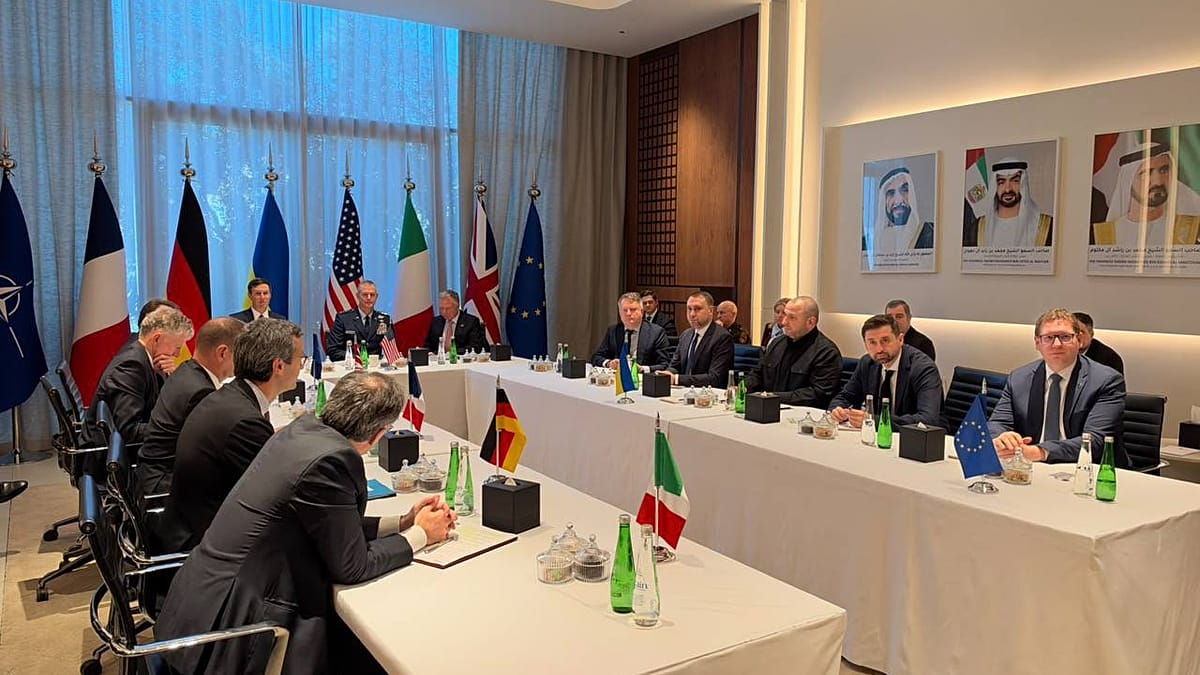
The Abu Dhabi meetings began with a session involving Ukrainian, American and European representatives, ahead of the first trilateral talks between Kyiv, Moscow and Washington since February. Ukraine's chief negotiator, Rustem Umerov, said that envoys from the UK, France, Germany, Italy, NATO and the European Commission attended the initial meeting, alongside US negotiators Steve Witkoff and Jared Kushner.
"We will align our positions and coordinate steps ahead of the next stage of negotiations," Umerov said, referring to the subsequent trilateral format with Russia. He listed Ukraine's priorities as ending hostilities, securing post-war security guarantees, economic recovery and humanitarian measures.
European leaders have pressed for a greater role in the US-led diplomatic process, particularly as Washington considers arrangements that could reshape the continent's security. A senior US official reportedly said before the talks: "In order to end the war, you need to have Europe at the table."
According to US media reports, Washington and Moscow have discussed possible security guarantees for Ukraine resembling NATO's Article 4 and Article 5 provisions, which cover consultations on security threats and collective defence respectively. The official also reportedly raised the possibility of reviving the NATO-Russia Council, suspended since 2022, and introducing a sanctions "snapback" mechanism that would allow restrictions on Moscow to be reinstated if Russia violated a ceasefire.
Meanwhile, Russia's attacks on Ukrainian infrastructure continue. In his evening address on Monday, President Volodymyr Zelenskyy warned that Moscow was seeking to divide Ukraine along the Dnipro River by targeting bridges and the power grid. "Russia is trying to divide Ukraine along the Dnipro River and make life as difficult as possible for people – for our cities and villages," he said.
Zelenskyy also said that Kyiv would propose de-escalatory steps in Abu Dhabi and seek agreement on arranging a trilateral meeting at the leaders' level. "At the meetings in Abu Dhabi, our team will propose de-escalatory steps, and there must be an understanding of how to arrange a trilateral meeting at the leaders' level to bring this war to an end fairly and for real," he wrote on X.
Despite the renewed diplomatic efforts, Washington has cautioned against expectations of an immediate breakthrough. The talks come as European capitals watch closely, with some leaders linking broader EU budget decisions to continued support for Ukraine, as seen in recent discussions in Berlin and Brussels. The outcome of these negotiations will have profound implications for the continent's security architecture.