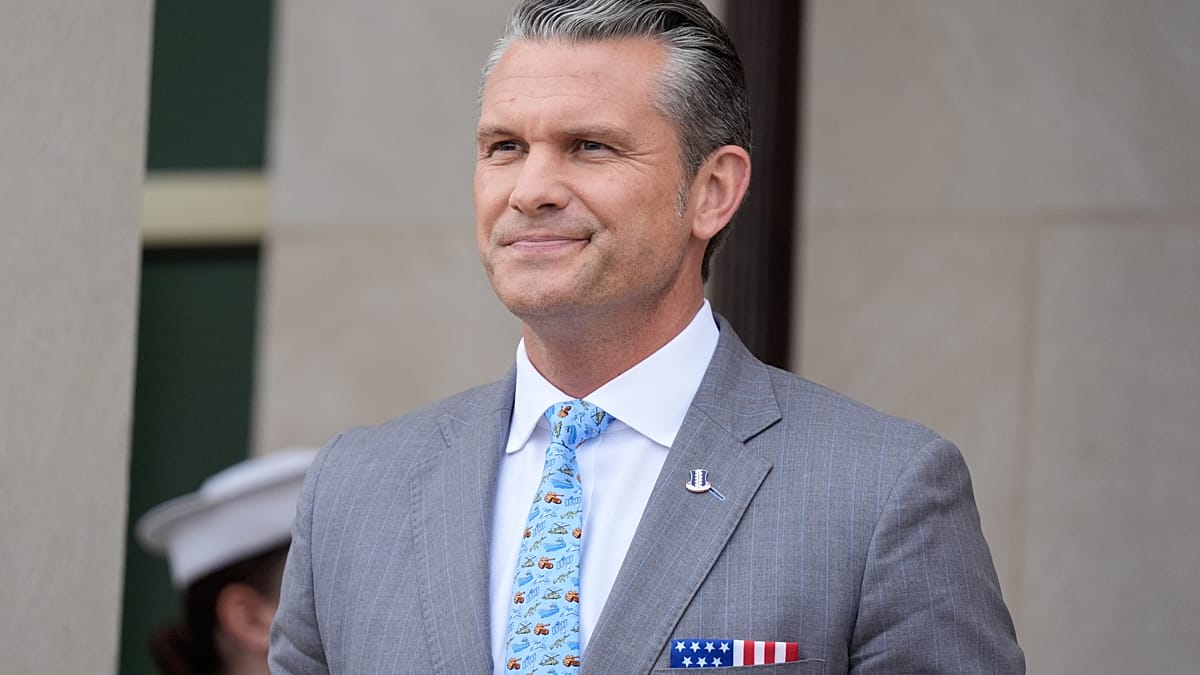
Days after the Republican Party suffered a bruising midterm defeat, a conservative lawmaker has taken the unusual step of moving to impeach US Defense Secretary Pete Hegseth over the conduct of the war in Iran. Representative Thomas Massie of Kentucky filed eight articles of impeachment on Monday, alleging that Hegseth abused his authority and violated the 1973 War Powers Resolution by ordering military action without congressional approval.
Massie, a libertarian-leaning Republican known for breaking with his party's leadership, also cited a strike early in the conflict that killed 120 children at a school. He argued that Hegseth had "knowingly executed and implemented unlawful orders," according to his remarks on the House floor.
Fast-track procedure forces a vote
The congressman is using a privileged resolution, which compels the House to consider the measure within two legislative days. That means a vote could take place as soon as Wednesday in the Republican-controlled chamber. While most Republicans are expected to oppose the impeachment, some may abstain or side with Democrats, given the party's recent electoral setbacks and internal divisions.
If the House approves the articles, Hegseth would not automatically be removed from office. Conviction and removal require a two-thirds majority in the Senate, a high bar that Democrats will not reach even after they take control on 3 January. Still, an impeachment vote would be a significant political embarrassment for the Trump administration.
President Donald Trump has continued to back his defense secretary. On Monday, he said Hegseth had done a "good job" and had "won" wars in Iran and Venezuela, referring to the controversial capture of Venezuelan President Nicolás Maduro. Trump added that he would stand by Hegseth even if he were impeached.
The impeachment effort comes at a delicate moment for transatlantic security. European allies have watched the escalation in the Middle East with concern, and the prospect of a weakened Pentagon leadership could complicate coordination on NATO's eastern flank. The timing is particularly sensitive as Finland's defence minister has accused Washington of stalling Patriot missile deliveries to Ukraine, a sign of fraying trust in US commitments.
Massie's move also echoes broader debates about executive war powers that resonate in European capitals, where parliamentary oversight of military action is often stricter. The War Powers Resolution, passed in 1973, requires the president to notify Congress within 48 hours of committing troops and limits deployments to 60 days without authorization. Critics argue that successive administrations have stretched these rules, but impeachment over war-making is rare.
The articles of impeachment also mention operations in Yemen and Venezuela, where US forces have been involved in covert actions. Massie has long been a vocal opponent of foreign interventions, and his decision to target Hegseth rather than the president may reflect a strategic calculation to focus on the official directly responsible for military orders.
Political analysts note that the impeachment push could further expose Republican divisions. Some lawmakers from swing districts may be reluctant to defend an unpopular war, especially after the midterm results signaled voter discontent. Others, however, see the move as a stunt that could rally the party's base around Trump.
For European observers, the episode underscores the volatility of US defense policy and its potential consequences for allies. The war in Iran has already strained relations with several European governments, and any change in Pentagon leadership could alter the trajectory of the conflict. Meanwhile, European defense firms like Leonardo are expanding their portfolios, partly in response to the shifting security landscape.
As the House prepares to vote, the outcome remains uncertain. Even if the impeachment fails, the debate itself signals a growing unease within the Republican ranks about the conduct of the war and the administration's willingness to bypass Congress. For now, Hegseth retains Trump's support, but the political ground beneath him is clearly shifting.