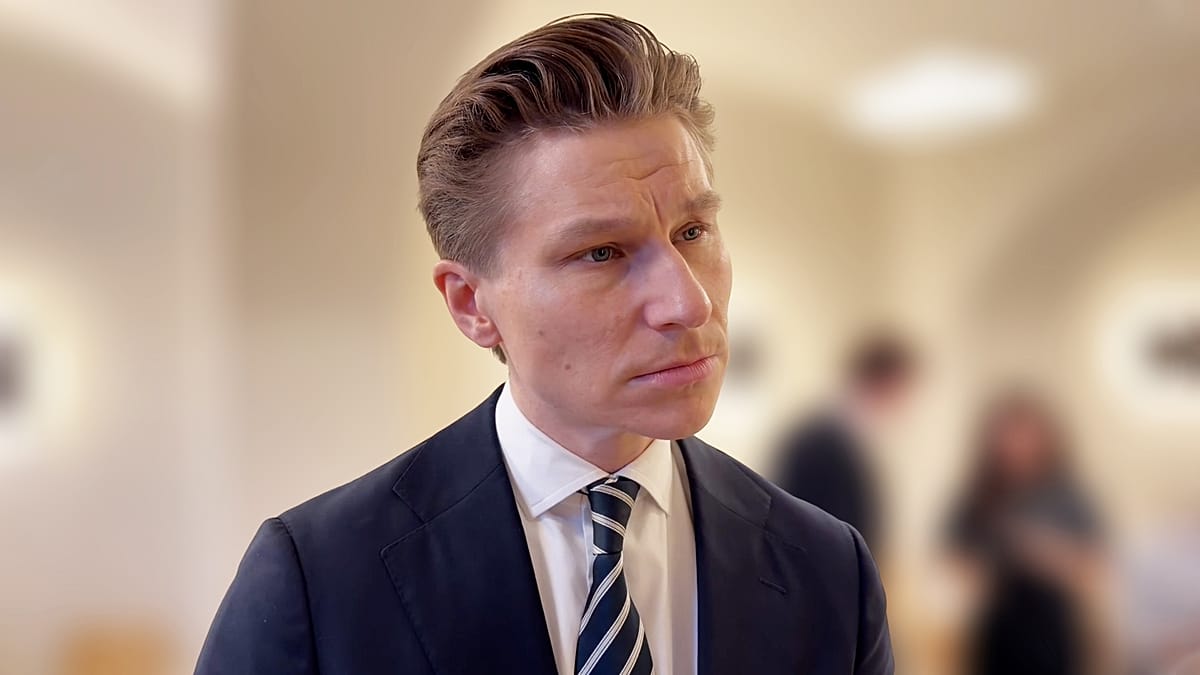
Finland's Defence Minister Antti Häkkänen has accused Washington of political foot-dragging over the delivery of US-made Patriot interceptor missiles to Ukraine, despite European allies having already covered the costs. In an exclusive interview with European Pulse, Häkkänen said the funding is in place but the political will in the United States is missing.
“Winter is coming and Russia is preparing huge attacks on Ukraine's civil infrastructure, energy infrastructure,” Häkkänen said from Helsinki. “Now is the most critical time to have all the air defence capabilities for Ukraine.”
He added: “We have the funding, now we need the stocks to be delivered to Ukraine. But we need the political willingness also from the US side to start the deliveries.”
Ukrainian President Volodymyr Zelenskyy has publicly blamed US Defence Secretary Pete Hegseth for the hold-up. In October, Zelenskyy wrote on social media: “We have been waiting for nearly a month for Mr Hegseth to sign off on missiles for Patriots.”
Funding mechanism and delivery bottleneck
European NATO allies and Canada purchase US-made weapons for Ukraine through a NATO funding mechanism known as the Prioritised Ukraine Requirements List (PURL). These orders require final approval from the US Defence Secretary before transfer. Ukraine receives some of its crucial PAC-3 Patriot interceptors through PURL, while others come from bilateral donations, such as those from Germany.
Häkkänen, speaking at the Finnish Ministry of Defence, stressed that Europe has already paid for the systems and called on Washington to honour its commitments. When asked whether Hegseth was personally responsible for the delay, Häkkänen said he did not know the root cause. “I'm not familiar with what is the main problem, but we know that the Ukrainians need Patriots,” he said. “Europeans have given the funding for that and now it's only a matter of political arrangements.”
The delay comes at a precarious moment. Zelenskyy reported that Russia fired over 100 ballistic missiles at Kyiv and the surrounding region in a recent two-week period, and the lack of interceptors is leaving civilians increasingly exposed.
NATO allies hesitant to dig deeper
A NATO source told European Pulse that the alliance's military chief, the Supreme Allied Commander Europe (SACEUR), is trying to persuade seven other NATO countries that possess Patriots to donate more from their own stocks. However, those nations are reluctant to do so without guarantees that the US will replace what they provide.
“SACEUR is trying to get seven nations who own Patriots to give more to Ukraine, but so far they're not keen to give them unless they're being replaced by newly produced stocks from the US,” the source said. “I think it's merely a matter of production constraints.”
No official explanation has been given for the delay, which Zelenskyy says has lasted about a month. The issue persists amid broader tensions between Washington and Kyiv. The Trump administration recently rolled back newly agreed Russian sanctions and authorised Russian diesel sales in an apparent effort to curb rising oil prices that affected American consumers. Trump also called for Zelenskyy to be replaced. During this period, the Ukrainian army temporarily lost access to the US-controlled Starlink satellite system owned by Elon Musk's SpaceX.
Global Patriot shortage compounds the problem
The global shortage of Patriot systems complicates Ukraine's challenge. The US-Israel conflict in Iran has reportedly consumed vast quantities of US stockpiles. US production capacity for new Patriot systems is complex, time-consuming, and expensive. According to separate Ukrainian sources, the US produces only about 60-65 Patriot interceptors per month—far fewer than the number of ballistic missiles Russia launches.
Demand also comes from the US military itself and the ongoing war in Iran, which US sources told European Pulse may be about to resume, potentially another reason Washington is retaining its supplies. The US also sells Patriots to Israel and Gulf countries.
Häkkänen expressed broad support for diplomatic efforts to end Russia's full-scale invasion, including recent contacts involving Finnish President Alexander Stubb and Norwegian Prime Minister Jonas Gahr Støre. He said Europe must send a clear message to Putin that it will never abandon Ukraine and is willing to remain “tough” for as long as the war lasts.
“We have to deliver the straight, clear messages from Zelensky to Putin” that Europe will be “tough” on Moscow, Häkkänen said. He warned that Russia is advancing its military in all domains, and while there is no conventional threat to the rest of Europe now, that could change if EU countries do not step up deterrence and defence capabilities. “Russia is stepping up its military in all domains, from traditional conventional warfare and also nuclear capabilities, and they are building new infrastructure, increasing their manpower,” he said.
As the debate over Patriot deliveries continues, Kyiv is shifting €1bn of an EU loan into joint defence projects, underscoring Ukraine's determination to bolster its own capabilities. Meanwhile, Zelenskyy has welcomed a US Patriot missile deal but warned of delivery delays, echoing the concerns raised by Häkkänen.