When European space ministers gather in Rome on 15 December, they will confront a question that has hovered over the continent for decades: should Europe be able to send its own astronauts into orbit without depending on others? The meeting, formally the Intermediate Ministerial Meeting 2026 of the European Space Agency (ESA), is set to shape the future of European spaceflight, with multi-billion-euro investments and strategic choices on the table.
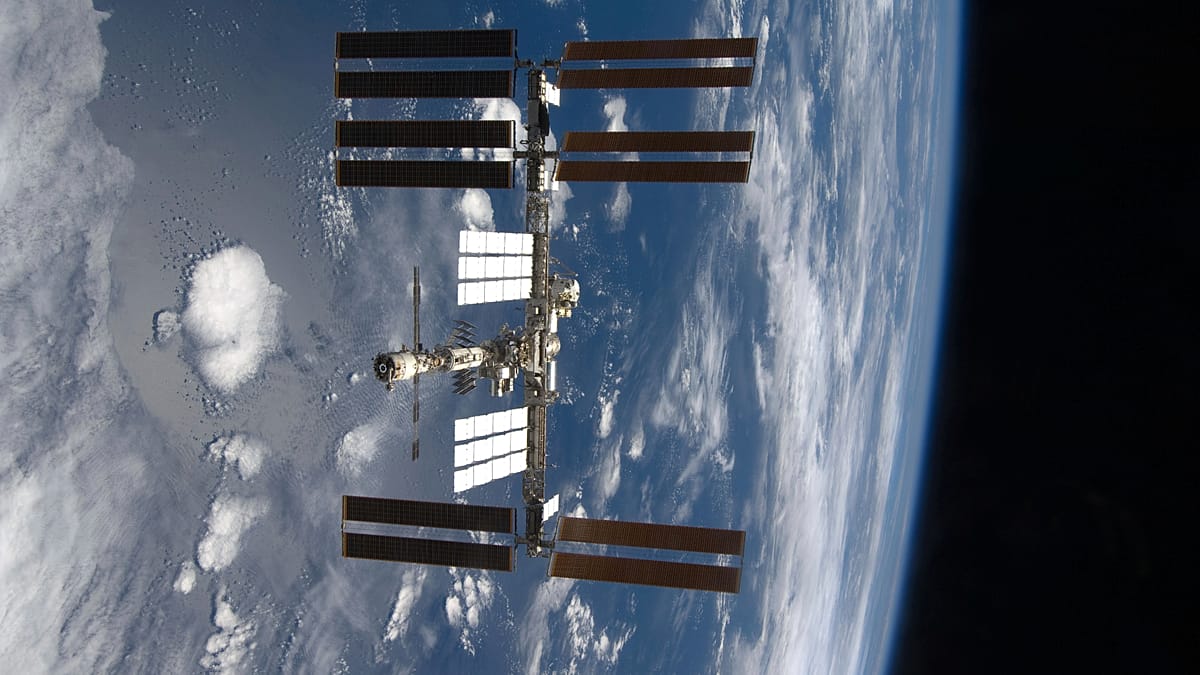
The stakes are high. Europe currently relies on foreign systems—chiefly American—to carry its astronauts to the International Space Station (ISS) and back. That dependence is not just a matter of pride; it affects costs, scheduling, and geopolitical leverage. As ESA Director General Josef Aschbacher has argued, the time has come to build a genuinely autonomous European capability.
A €10bn bet on human spaceflight
Aschbacher has proposed investing roughly €10 billion over ten years to develop a European system for crewed missions. The figure is a projection, not a committed budget; the final decision rests with the member states. His argument is straightforward: continuing to purchase launch services from foreign providers could cost European taxpayers around €5 billion over the same period, with no guarantee of availability or price stability.
But the benefits of autonomy go beyond saving money. An independent crewed capability would keep investment within Europe's industrial base, spur innovation in reusable technologies, and strengthen the continent's hand in international partnerships. As Aschbacher frames it, the choice is between building up Europe's own industrial capabilities or remaining a customer of other operators.
The summit comes at a time of rapid transformation in the space sector, with the ISS nearing the end of its operational life and plans for lunar exploration gaining momentum. Europe wants to be a partner in those efforts, not a passenger.
Launchers: Ariane 6 and Vega-C lead the way
Autonomy also depends on reliable, competitive rockets. Europe's workhorses are Ariane 6, the heavy launcher for institutional and commercial missions, and Vega-C, designed for lighter payloads. Both are essential to maintaining independent access to space. In September 2026, for example, Vega-C successfully placed the FLEX and Sentinel-3C satellites into orbit, part of Europe's Earth observation programme.
Yet the global market is unforgiving. SpaceX has set the benchmark with frequent launches and reusable boosters, dominating the commercial sector. For Europe, having its own launchers is not enough; they must be cost-effective, available, and quick to turn around. That is a tall order, but the continent is responding.
New commercial players are emerging. Germany's Isar Aerospace reached orbit for the first time on 5 September 2026, when its Spectrum rocket delivered five small satellites and an experiment into space. The achievement follows a failed first attempt in March 2025, which ended after about 30 seconds. The progress shows that European start-ups can compete alongside established giants.
Cargo capsules and reusable rockets
Another piece of the puzzle is cargo transport. On 10 September 2026, ESA awarded The Exploration Company a contract worth up to €760 million for the next phase of the ALADDIN programme, which aims to develop the Nyx capsule. The deal includes €310 million for a demonstration mission and an additional €450 million for two further missions, pending confirmation. The goal is to prove that Europe can carry cargo to low Earth orbit and return it safely, starting with a mission to the ISS.
This marks a shift in ESA's role: it is not just funding technology development but also acting as an anchor customer for a private company. That model could help create a commercial European space logistics market.
Meanwhile, industry is working on reusable rockets, which promise to cut launch costs dramatically. French company MaiaSpace and Italy's Avio are among those pursuing such technologies. Avio, in particular, is developing new propulsion and recovery systems, though the results of individual demonstrators will need to be assessed against official timelines.
Italy's space economy push
For Italy, the Rome summit is an opportunity to showcase its ambitions. The country's space sector spans major industrial groups, specialised firms, start-ups, universities, and research centres. To make the most of European programmes and international markets, coordination is key.
In June 2026, the cross-party parliamentary group on space, chaired by Andrea Mascaretti, launched the States General of the Space Economy. The initiative includes twenty events across sixteen Italian regions, aimed at highlighting aerospace clusters and gathering input from the national production system. The goal is to define strategic guidelines for the sector, ensuring that Italy can compete effectively in a rapidly evolving landscape.
The decisions taken in Rome will resonate far beyond Italy. They will determine whether Europe can chart its own course in space, or continue to rely on others. As the continent faces growing competition and shifting alliances, the ability to act independently in orbit is becoming a measure of its broader sovereignty. The outcome of the summit will be watched closely, not just in European capitals but around the world.