Last week, a Russian drone crashed into an apartment block in Romania, an event that Moscow has neither acknowledged nor apologized for. The incident has forced European capitals to confront a pressing question: how can the continent defend itself against the growing threat of unmanned aerial vehicles?
Dmitry Medvedev, Russia's deputy Security Council chairman, issued a stark warning shortly after the crash. He stated that because European governments supply weapons to Ukraine, "the citizens of EU states... will not be able to sleep peacefully." The threat underscores the new reality of drone warfare on European soil.
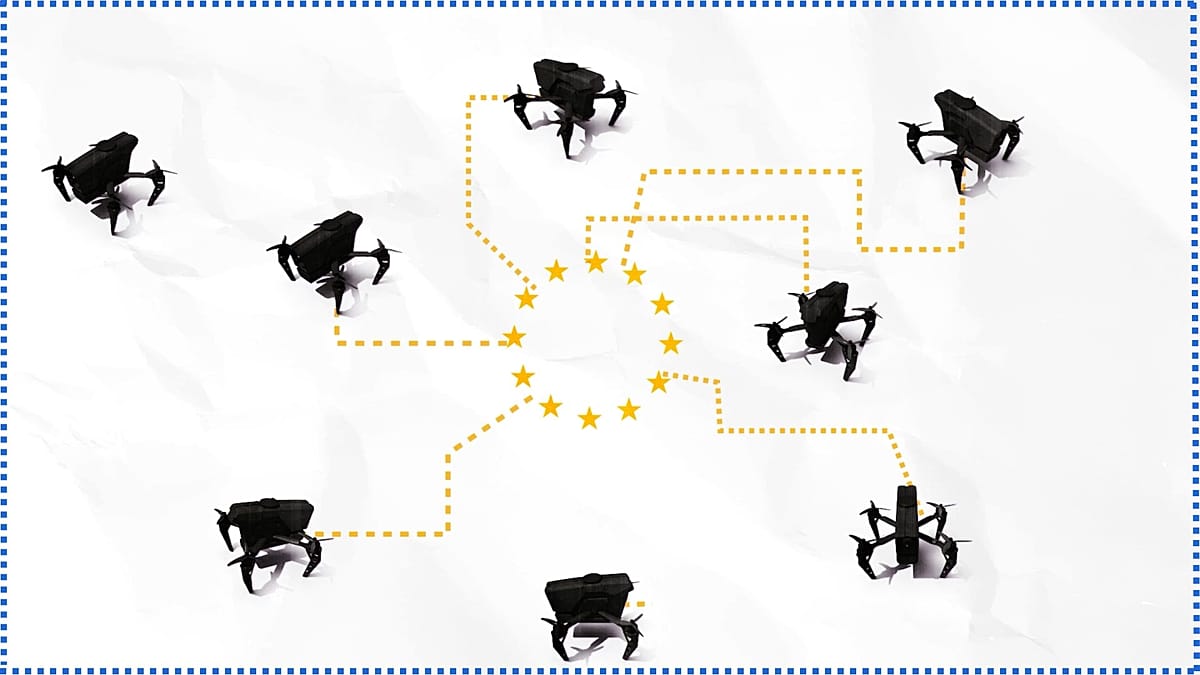
The European Union has an Action Plan on Drone Security, but a leaked document from last week reveals how member states actually intend to implement it. The plan focuses on three key areas: stricter identification, smarter detection, and intelligence sharing.
Three Pillars of the EU's Drone Defense Plan
First, the bloc wants tighter registration rules so authorities can instantly distinguish harmless civilian drones from hostile threats. Second, member states plan to use advanced sensors and artificial intelligence to detect incoming drones near critical infrastructure. Third, Brussels aims to act as a central hub for coordinating data across the continent.
However, a significant obstacle remains: national governments insist that intelligence sharing must remain strictly voluntary to protect classified information and avoid duplicating NATO's efforts. This reluctance to cede sovereignty could undermine the entire initiative.
The Romanian case illustrates the practical difficulties. The ministry of defence acknowledged it could not shoot down the drone due to its proximity to residential buildings, and authorities had just four minutes to act. As long as drone security remains primarily a national competence, European governments will operate in silos, and citizens will see the consequences.
The Baltic region has been particularly affected. At least six suspected incursions were reported in May alone, with one incident in Lithuania forcing the president to take shelter underground. These events are part of a broader pattern of drone incursions that have become a persistent reality across Europe.
The EU's struggle to coordinate a response mirrors the challenges faced by Ukraine, which has pioneered the use of drones in modern warfare. Ukraine's drone revolution has reshaped the battlefield, but European nations are still grappling with how to defend against similar threats at home.
Some experts argue that the solution lies in greater integration. AI-powered drone swarms could potentially safeguard critical infrastructure, but such systems require cross-border coordination that currently does not exist.
As the threat from Russia persists, the EU must build a truly unified defense before it is too late. The four-minute window that Romanian authorities had to act is a stark reminder that in the age of drone warfare, time is the scarcest resource.