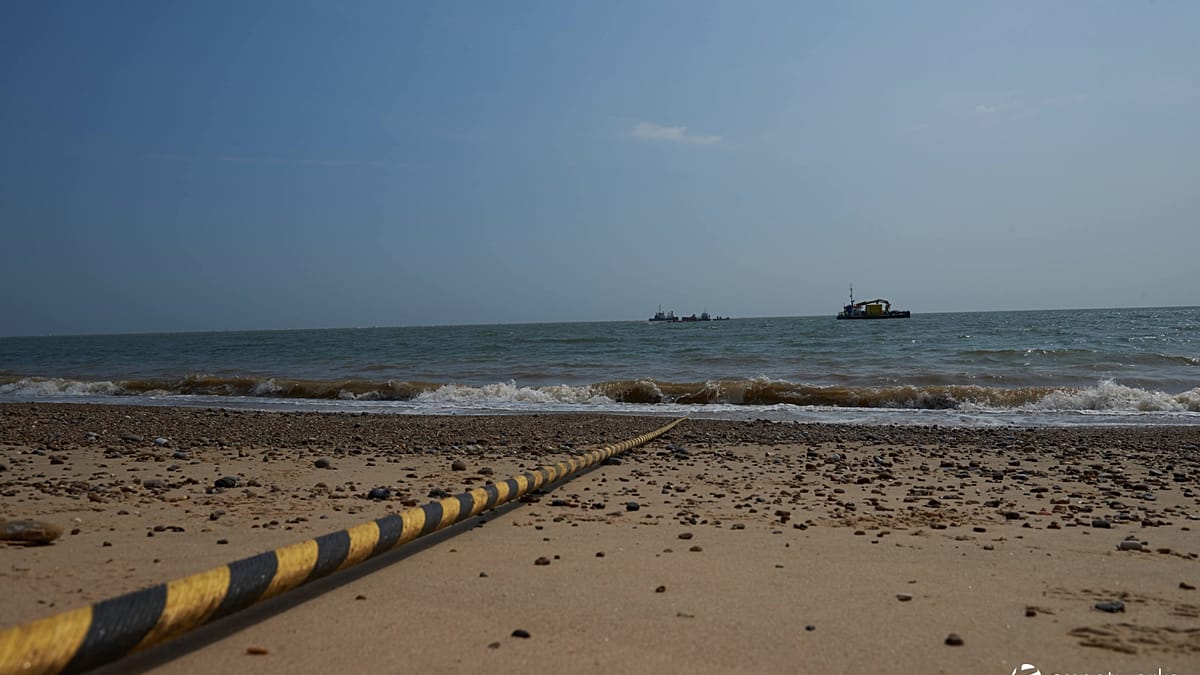
Europe's seabed has become a silent battleground. More than 99% of global data travels through submarine telecommunications cables, while gas pipelines and power interconnectors underpin the continent's energy security. Disrupting this infrastructure could halt billions in banking transactions or cut off entire countries from power. The response from industry and governments is a rapidly growing market for underwater defence, estimated at around €50 billion annually.
From Traditional Subs to Autonomous Swarms
The shift away from conventional submarines is accelerating. Companies like Fincantieri, through its Underwater Hub led by CEO Pierroberto Folgiero, are building integrated ecosystems of dual-use technologies. These systems serve both civilian maintenance of fibre-optic and power cables and military protection. The goal is twofold: support the digital transition—fibre-optic cable deployments are expected to double in the next decade—and safeguard critical infrastructure.
Fincantieri's DEEP system (Dynamic Ecosystem for Enhanced Performance) exemplifies this approach. It combines an early-warning network of seabed sensors with swarms of autonomous underwater drones. When a threat is detected, the drones deploy, using onboard artificial intelligence to identify the danger in real time and trigger mitigation measures. This proactive stance is essential in an era of hybrid warfare, where sabotage often targets infrastructure without clear attribution.
Recent incidents, such as the attempted sabotage of the tanker SeaJewel off Savona—linked to Russia's shadow fleet—have underscored the vulnerability of commercial ports and maritime corridors. Constant monitoring, rather than reactive damage control, is now the priority. States and private operators are integrating seabed sensors with surface drones that patrol inland waters and port access channels.
Quantum Sensors and Acoustic Cables
Emerging technologies are pushing the boundaries of underwater defence. Distributed Acoustic Sensing (DAS) turns standard fibre-optic cables into vast listening devices, detecting submarines or divers through microscopic tension variations. Quantum magnetometers mounted on drones can sense minute changes in the Earth's magnetic field caused by steel hulls tens of kilometres away, overcoming the limitations of sonar in crowded waters.
A key challenge for 2026 and 2027, as highlighted by the National Hub for the Underwater Dimension, is creating common European standards for wireless, real-time communication between surface drones, seabed sensors, and underwater drones from different countries. This interoperability would transform national defences into a shared maritime awareness network aligned with NATO. For context, the AUKUS partners are also deploying underwater drones for subsea cable defence by 2027, illustrating the global race to protect these arteries.
Geopolitical risk is also driving fragmentation. While Western countries strengthen cables in the Mediterranean and Atlantic, China is promoting alternative digital corridors in Asia and Africa. This decoupling could reshape Europe's connectivity strategy, especially as the continent seeks to reduce reliance on fossil fuels—a shift that saved the EU €51 billion in 2025, according to recent data. Protecting the infrastructure that enables this transition is not just a military necessity but an economic one.
The underwater domain is no longer a passive space. Europe's response—combining AI, drones, and quantum sensors—reflects a recognition that security in the 21st century depends on what lies beneath the waves.



