Europe's investment in renewable energy paid off handsomely in 2025, saving the European Union an estimated €51 billion by reducing its reliance on imported fossil fuels. According to a report from the International Energy Agency (IEA), the bloc's accelerated deployment of wind and solar power has not only cut costs but also bolstered energy security at a time of heightened geopolitical instability.
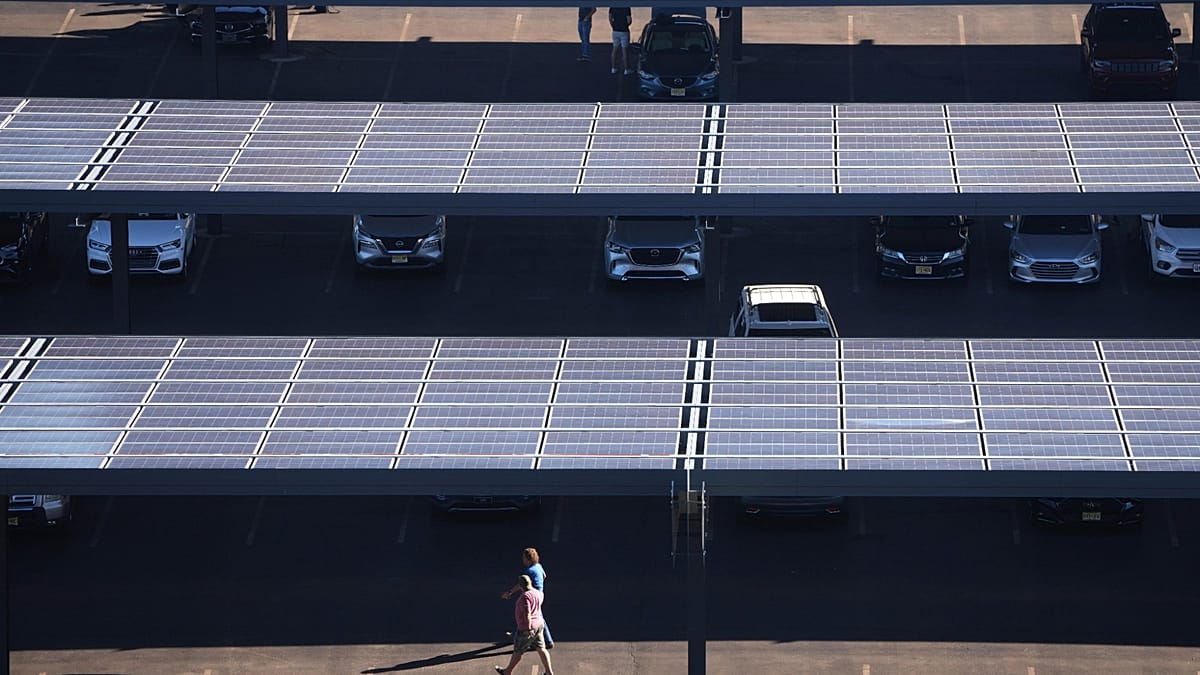
The savings come as the EU imported €336.7 billion worth of energy products in 2025, a decrease of 11.1% in value and 0.6% in net mass compared to the previous year, according to the think tank Strategic Perspectives. Instead, the EU invested €90 billion in renewables, with solar power emerging as the standout performer. Solar generation exceeded 340 terawatt-hours (TWh), accounting for 12.5% of the EU's electricity mix—a year-on-year increase of more than 60 TWh, equivalent to Portugal's entire annual electricity demand.
Energy Security Amid Geopolitical Turmoil
The shift to clean energy has proven crucial as the conflict involving the United States, Israel, and Iran disrupts global energy supplies and drives up costs. A spokesperson from the energy think tank Ember told Euronews Earth: "Europe's energy transition is paying dividends—the $60 billion in fossil savings last year will be eclipsed by the savings this year as prices of all oil, gas and coal surge." The spokesperson added that renewables have insulated the electricity sector from the worst of the price shocks, with most fossil fuel imports now going to transport, heating, and industry rather than power generation.
Marin Gillot, an energy analyst at Strategic Perspectives, emphasized the broader implications: "Clean energy is no longer just about climate, it is also an economic and geopolitical strategy. The faster Europe moves away from fossil fuels, the less exposed European citizens and businesses will be to price shocks and geopolitical instability." This sentiment echoes the need for further electrification, as highlighted by the IEA chief's recent call for the EU to embrace electrification to revive industry and cut fossil fuel dependence.
The savings and security gains are particularly relevant as member states like Italy seek to redirect EU defence loans to combat rising energy costs, and as Hungary unlocks €16.4 billion in EU funds after a breakthrough in Brussels. Meanwhile, a German village has demonstrated how local initiatives can cut energy costs to just 12 cents per kilowatt-hour, even amid the Hormuz crisis.
Global Milestone: Wind and Solar Surpass Gas
The momentum continued into 2026, with wind and solar generating more electricity than gas globally for the first time in April 2026, according to Ember. Combined, they produced 22% of the world's electricity that month, compared to 20% from gas. This milestone occurred during the first full month of the latest global energy crisis triggered by the Middle East conflict, underscoring how rapidly growing renewables are reshaping the power mix even amid fossil fuel market volatility.
Global wind and solar output grew an estimated 13% year-on-year in April 2026, with gains across major markets: China (+14%), the EU (+13%), the UK (+35%), the US (+8%), Australia (+17%), Chile (+24%), and Brazil (+4%). Ember cautioned, however, that this was a single-month achievement and not yet an annual trend. April is typically favourable for renewables due to spring conditions in the northern hemisphere, where most solar capacity is concentrated, combining strong wind output with rising solar generation while electricity demand remains low between heating and cooling seasons.
For Europe, the implications are clear. As the continent continues to invest in renewables and electrification, it is reducing its vulnerability to external shocks. The EU's focus on clean energy is not just an environmental imperative but a strategic economic choice, one that is already delivering tangible benefits to citizens and businesses across the bloc.