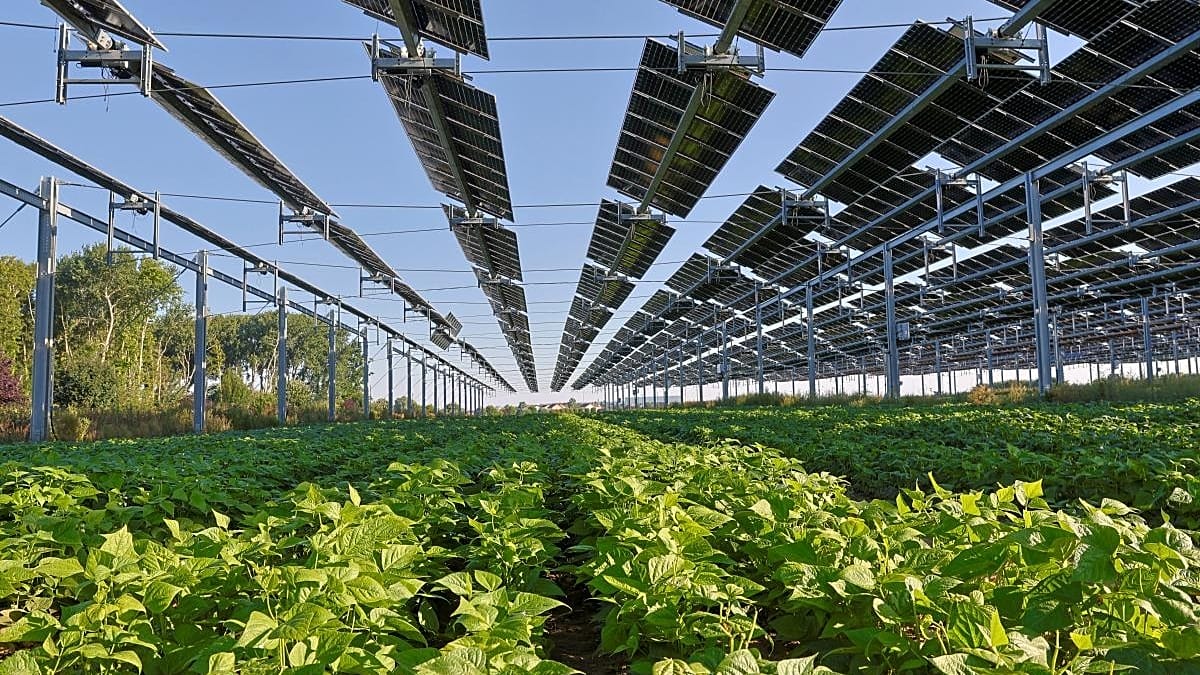
For the first time, solar power accounted for a quarter of the European Union's electricity in a single month. In June 2026, solar generated 52 terawatt-hours (TWh) across the bloc, representing 25% of total generation—up from 47 TWh (23%) in May 2026, according to analysis by the think tank Ember.
Solar outperformed all other sources, including nuclear (21%), gas (15%), wind (14%), and hydro (12%), while coal fell to just 8%. This marks only the third month solar has been the EU's largest power source, following June 2025 and May 2026.
“Solar’s rise has been truly stratospheric, beating prediction after prediction,” said Chris Rosslowe, senior analyst at Ember. “In just a few years solar has gone from a small player to an essential part of Europe’s power system, as governments and citizens look for low-cost, quick-to-install domestic power sources.”
Spain Leads the Renewables Revolution
Spain achieved a milestone in June 2026, with solar providing 34% of its electricity—a record for the country. Since 2019, Spain has doubled its wind and solar capacity, adding over 40 GW, more than any other EU member except Germany, whose power market is twice as large. This investment has translated into lower electricity bills: Ember estimates that Spanish households saved €10 per month on average since the closure of the Strait of Hormuz in March 2026, which disrupted energy markets.
Spain's coal phase-out is accelerating. The country did not use coal-fired power at all in August 2025, a stark contrast to a decade earlier when coal supplied a quarter of its electricity. In 2025, fossil fuels accounted for just 25% of Spain's power generation, and its per capita CO₂ emissions of 0.9 tonnes were below the EU average of 1.3 tonnes.
“You don’t need Spanish sunshine to achieve what Spain has done—every country in Europe could be making better use of its own wind and solar resources to reduce reliance on expensive gas,” Rosslowe argued.
Germany's Balcony Solar Boom
Germany's solar share reached 36% in June 2026, following a record 33% in May. The country hosts Europe's largest operational solar park, spanning over 500 hectares on a former coal mine. But a key driver of growth is plug-in solar panels, commonly installed on balconies, terraces, and shed roofs. More than one million such kits were installed in Germany between 2022 and 2025.
These small panels can be plugged into a standard mains socket, requiring no installation costs. Prices have halved in recent years, with basic models now costing around €200. Experts estimate that users recoup their investment in two to six years, depending on system size and positioning. Adding a battery allows households to store daytime solar energy for evening use, reducing grid strain and further cutting bills.
Germany's approach reflects a broader trend: the EU added 65.1 GW of new solar capacity in 2025, with annual growth exceeding 20% since 2021. Record June output coincided with high summer demand driven by heatwaves, as solar helped sustain power supplies when other sources struggled.
Poland's Rapid Solar Transformation
Poland, traditionally one of the EU's largest coal users, generated nearly a quarter of its electricity from solar in June 2026 (24%). In June 2025, renewables surpassed coal for the first time, with 44.1% of power from renewable sources versus 43.7% from coal and lignite, according to the Energy Forum think tank. Poland's photovoltaic capacity reached 23 GW in 2025, up from just 2 GW five years earlier.
Across the EU, 18 member states set new monthly records for solar's share of generation in 2026. The rapid expansion underscores solar's role as a low-cost, quick-to-deploy energy source, reducing dependence on fossil fuels and cutting emissions. As Rosslowe noted, the technology's growth has consistently outpaced forecasts, reshaping Europe's power landscape.