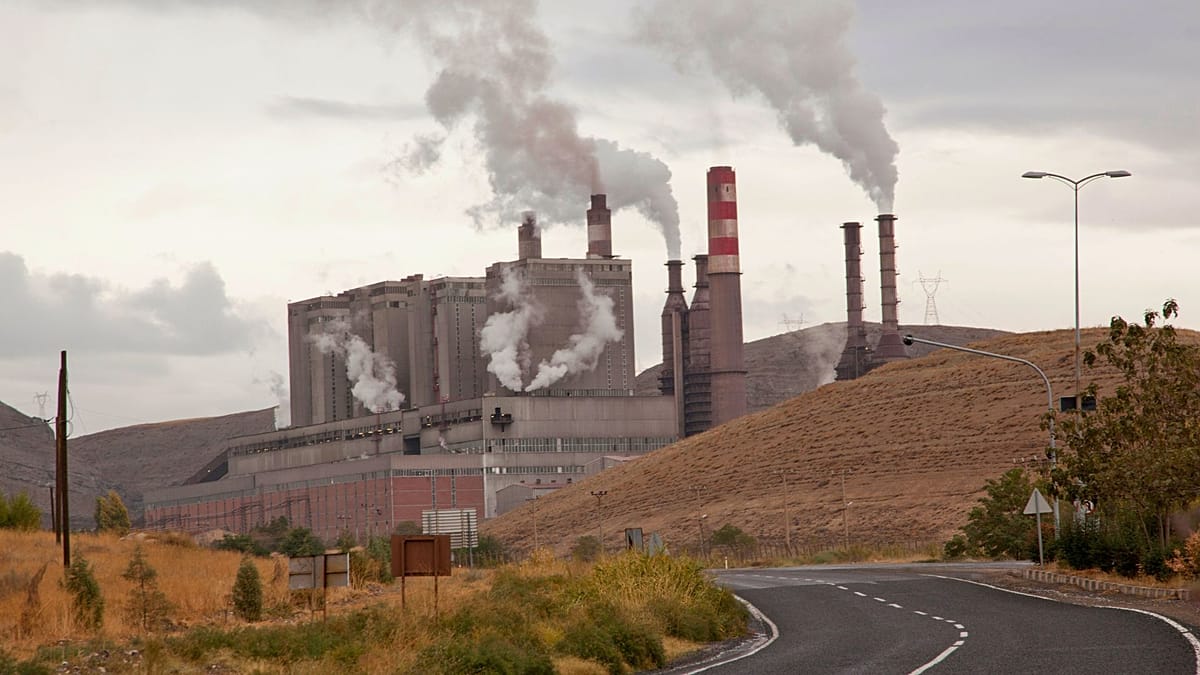
Environmental campaigners in Türkiye are claiming a significant victory after a court in Kahramanmaraş Province annulled the environmental impact assessment (EIA) for expanding the country’s largest coal-fired power station. The ruling, delivered on 8 July, halts plans to add two new units at the Afşin-Elbistan A Thermal Power Plant, a project that had faced fierce opposition from local residents and Greenpeace Türkiye.
The court concluded that the potential negative environmental impacts of the expansion could not be demonstrated to be at acceptable levels, citing insufficient assessments of groundwater, outdated mining licenses, and threats to local livelihoods and cultural heritage. Public health risks, particularly for vulnerable groups, were also deemed inadequately addressed.
“For years, we have been fighting for clean air, fertile land, and the future of our children. This court decision is a victory for the people of Afşin and Elbistan,” said Mehmet Dalkanat of the Afşin Elbistan Life and Nature Protection Platform, which partnered with Greenpeace in the legal challenge. “Now it is time to ensure the closure of all existing coal power plants through a fair transition process that protects both people and nature.”
Coal’s Persistent Grip
The 688 MW Afşin-Elbistan expansion was one of only two active coal plant proposals in Türkiye, a dramatic drop from the 95 units representing 57.5 GW proposed in 2015. The cancellation brings the country’s rate of scrapped coal projects to 97 percent — a global record. Yet Türkiye still lacks a national coal phaseout plan, and the other remaining project — a 1,050 MW expansion of the 1,320 MW Cenal Coal Power Plant — was announced just last month, as the country prepares to co-host the UN’s COP31 climate summit in November.
“Expanding coal power is incompatible with hosting the world’s largest climate summit and sends the message that climate action is not being taken seriously,” said a spokesperson for the campaign group Beyond Fossil Fuels.
Coal remains a significant part of Türkiye’s energy mix, accounting for nearly one-third of electricity generation. The country’s 20.5 GW operating coal fleet has an average age of 24 years and no known retirement dates, according to CAN Europe’s ‘Boom and Bust Coal 2026’ report. Türkiye produces more coal-fired terawatt-hours than any European country, and generation has not yet peaked. Policy support, including a guaranteed-rate power purchase plan for coal plants through 2030, continues to prop up the industry.
Opposition to coal is growing. Some Turkish plants have been accused of operating without proper filtration systems, emitting high levels of CO₂ and pollutants like sulfur dioxide and particulate matter. Separate plans to expand coal mining in the southwest threaten olive groves, residential areas, and cultural sites, civil society groups warn.
Renewables as an Alternative
CAN Europe argues that reallocating coal subsidies toward clean energy and grid modernisation would better support energy and job security in coal-dependent regions. As financing for coal wanes and the cost of coal-fired electricity rises, renewables are becoming cheaper: solar and wind production costs in Türkiye have fallen by 69 percent and 40 percent respectively over the past decade, according to CAN Europe.
A Greenpeace Türkiye report from May 2025 suggests that renewable energy investments could create thousands of new jobs in the Afşin-Elbistan region alone. Türkiye is already one-third of the way to its 120 GW renewable energy capacity target for 2035, according to the Ministry of Energy and Natural Resources.
“At this critical juncture, Türkiye can use its moment as COP host and president to establish an energy transition pathway that meets its existing renewable energy targets, supports communities impacted by pollution, and transitions its workforce toward a coal-free future,” said CAN Europe.
The court’s decision marks a clear win for local activism, but the broader challenge of phasing out coal — and aligning energy policy with climate commitments — remains unresolved. As Europe watches, Türkiye’s next moves will signal whether it intends to lead on climate or cling to a fading industry.