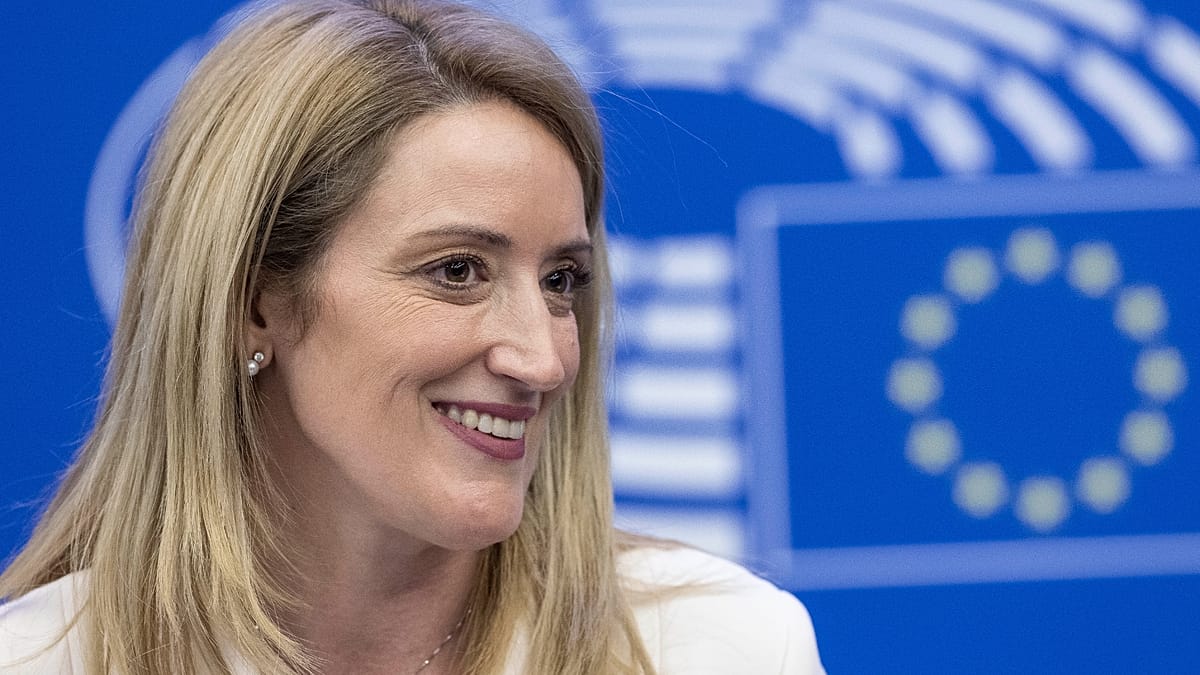
Strasbourg — The European Parliament has adopted its negotiating position for the European Union’s next long-term budget, demanding an increase of nearly €200 billion — roughly 10% above the European Commission’s proposal. The vote, passed with 370 in favour, 201 against and 84 abstentions, signals a readiness for confrontational talks with the 27 member states over the 2028-2034 Multiannual Financial Framework (MFF).
MEPs are insisting that the repayment of Next Generation EU — the €800 billion joint debt issued in 2020 to counter the economic fallout of COVID-19 — be kept entirely outside the regular budget. This demand, if accepted, would free up significant fiscal space but also increase pressure on national treasuries.
New Own Resources as a Bargaining Chip
A central element of the Parliament’s strategy is the push for so-called own resources — revenue collected directly by the EU rather than through member state contributions. The Commission has proposed five new levies: on greenhouse gas emissions (ETS1), carbon-intensive imports (CBAM), electronic waste, large companies with annual net turnover above €100 million (CORE), and tobacco products (TEDOR). Together with reforms to three existing own resources, these could generate an estimated €58.2 billion per year.
“It does not really matter which of these will be approved. What matters is that it would allow EU countries to transfer more money to the EU without raising national contributions,” a Parliament official told Euronews. The logic is that new EU-level taxes could reduce the need for direct national contributions, making a larger budget politically palatable for capitals like Berlin and The Hague.
The Parliament’s stance is expected to clash with EU governments, many of which are reluctant to increase their payments. In previous MFF cycles, the Parliament has often yielded to pressure from the Council. But internal sources indicate a tougher line this time, partly because the centrist majority is slimmer. “Now, a few defections would be enough to reject the budget, as there are many more far-right MEPs who aim to derail the deal,” the official added.
Political Posturing and Red Lines
Parliament President Roberta Metsola warned national leaders not to underestimate the chamber. “Never underestimate the Parliament,” she said when asked about negotiation tactics. Iratxe García Pérez, president of the Socialists and Democrats group, was blunter: “Who thinks that this [budget] could be agreed in the Council and then imposed through phone calls does not know this Parliament.”
The Parliament’s proposal distributes the 10% increase evenly across three main priorities: national plans, a new Competitiveness Fund, and Horizon Europe alongside Global Europe. The Competitiveness Fund is designed to strengthen Europe’s position in the global economy, while Horizon Europe focuses on innovation, education and research. Global Europe covers EU external action, including security, development projects and humanitarian aid.
Notably, the Parliament does not support the Commission’s proposal to expand national plans as the main vehicle for distributing EU funds. MEPs warn that increased flexibility could introduce risks, including a lack of oversight and uneven implementation across member states.
What Comes Next
EU governments are now expected to finalise their own position before interinstitutional negotiations begin. The MFF must be approved unanimously by the Council and by a majority in the Parliament, giving each institution significant leverage. Given the political fragmentation in several national capitals — and the rise of far-right parties in countries like France, Italy and Sweden — the talks are likely to be protracted.
The outcome will shape everything from agricultural subsidies and regional development to border security and climate spending. As the EU faces mounting challenges — from the war in Ukraine to industrial competition with China and the United States — the budget debate is as much about political will as about numbers.
For now, the Parliament has drawn a line in the sand. Whether it holds will depend on the skill of its negotiators and the resolve of member states to defend their own fiscal priorities.