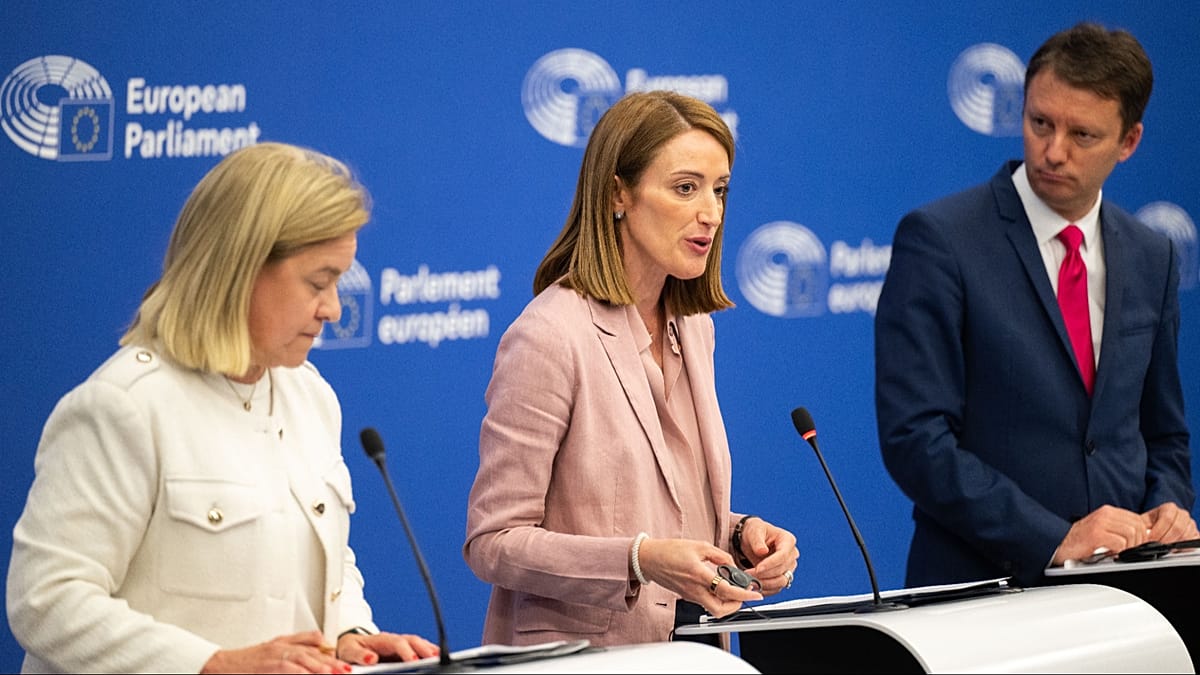
The European Parliament has formally rejected the first draft of the European Union's long-term budget for 2028–2034, a compromise text put forward by the Cypriot presidency of the Council of the EU that would cut €32.8 billion from the European Commission's initial proposal. In a press conference on Tuesday, MEPs Carla Tavares (Portugal, Socialists & Democrats) and Siegfried Mureșan (Romania, European People's Party) called the document “insufficient” and criticised its lack of ambition on revenue reform.
The cuts represent a delicate compromise between member states that demanded significant reductions—often labelled the “frugal” camp, including the Netherlands, Austria, and Sweden—and those that pushed for increases in agriculture and cohesion funds, such as Poland, Hungary, and several southern European countries. The Cypriot text, presented last week, sought to bridge these divides by trimming the Commission's €2 trillion plan, but the Parliament argues this weakens an already inadequate budget.
Parliament Demands a 10% Increase
In its own negotiating position, the Parliament has called for a 10% increase in the overall budget, a stark contrast to the cuts proposed by the Council. Mureșan stated bluntly: “The European Parliament strongly rejects these cuts. It firmly opposes the Council’s proposal to set funding for agriculture and cohesion at an even lower level than the already insufficient amount put forward by the European Commission.” The Parliament also insists that the repayment of Next Generation EU—the €800 billion common borrowing instrument launched in 2020 to cushion the economic blow of the COVID-19 pandemic—should be excluded from the budget calculations, a move that would free up additional funds for other priorities.
The Cypriot compromise deliberately avoided several contentious issues: it did not address the system of budgetary correction mechanisms known as rebates (which benefit countries like the UK, though it is no longer a member, and others such as Germany and the Netherlands), nor did it propose new own resources—revenues collected at the EU level, such as a share of corporate tax or a carbon border adjustment mechanism. Tavares criticised this omission: “We need to make progress on own resources. This is not reflected in the draft text. It is difficult to achieve a strong and renewed budget with cuts and without new own resources.”
The Commission's original proposal, published in July 2025, outlined three main spending priorities: a Competitiveness Fund to boost innovation and industrial policy, Global Europe for foreign policy and development, and Horizon Europe for research. A structural novelty is the plan to replace the current system of distributing regional, agriculture, and fisheries funds with National and Regional Partnership Plans tailored to each member state, a shift that has already sparked debate in capitals like Warsaw and Madrid.
The stakes are high. The EU aims to finalise the budget by the end of 2026 to avoid negotiations spilling into 2027, a crucial election year for several member states, including France (presidential) and Germany (federal). The growing distance between the Parliament and the Council puts that timeline in jeopardy. As Mureșan warned, “We cannot accept a budget that weakens the Union's ability to respond to crises and invest in its future.”
This budget dispute comes amid broader tensions over EU finances. The Portuguese government recently invoked the EU's budget safeguard clause to manage energy crisis costs, highlighting how member states are already straining existing frameworks. Meanwhile, the Parliament's rejection of the Cypriot text echoes its earlier stance on other contentious dossiers, such as the stripping of immunity from an Italian MEP in a corruption case, demonstrating its willingness to assert its institutional power.
For now, the ball is back in the Council's court. The Cypriot presidency must now decide whether to revise its compromise or face a prolonged standoff that could delay the entire budget process. With the clock ticking toward 2026, the pressure is on to find a deal that satisfies both the frugal capitals and the Parliament's demands for a more ambitious, well-funded Union.