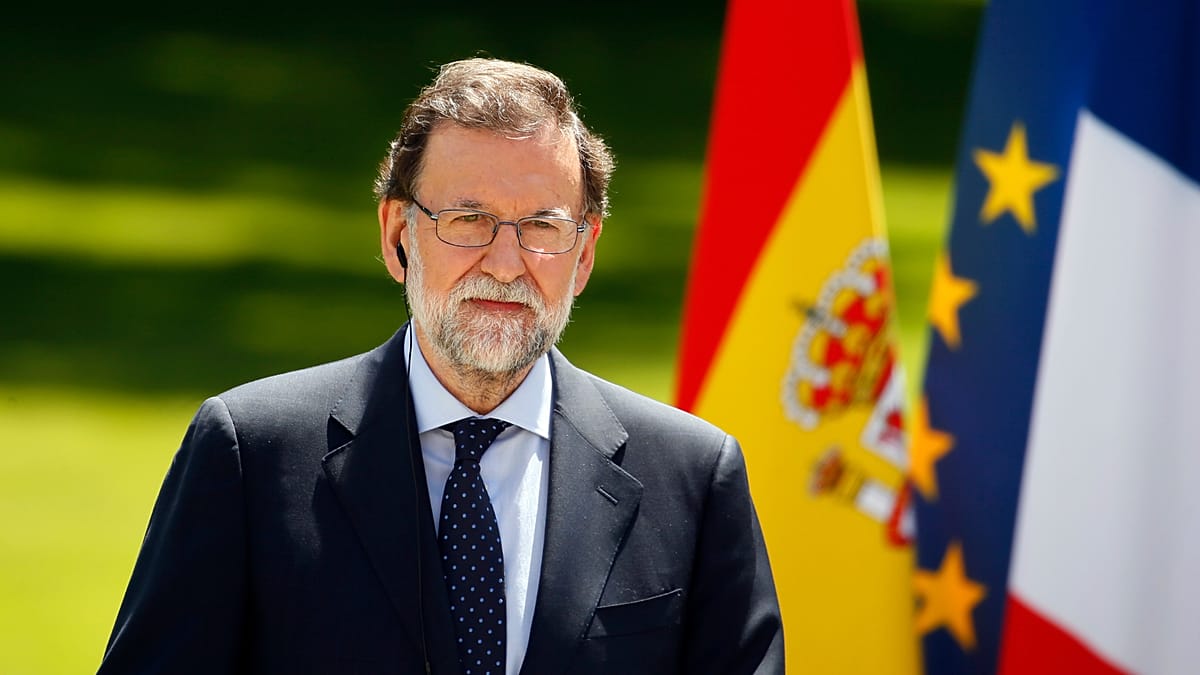
Mariano Rajoy did not wait long. Hours after Spain secured their place in the World Cup final by defeating France 2-0, the former prime minister published a new opinion piece in El Debate (Spanish link) titled 'You need to keep your sense of humour.' In it, he revisits—without softening—the controversy he sparked days earlier over the composition of the French national team.
The column opens with praise for coach Luis de la Fuente and the Spanish squad, before pivoting to politics. Rajoy takes a veiled swipe at current Prime Minister Pedro Sánchez, writing that he hopes Spain wins, 'not that the best team win'—a clear reference to Sánchez's earlier criticism. He concludes with a defiant line: 'You already know what I'm like and what I think. Long live Spain! We've won once again.'
The origins of the row
The dispute began after Spain's quarter-final victory over Belgium, when Rajoy described France as a team 'of a very high level' but, he added, 'without French players.' The remark was widely interpreted as questioning the nationality of players such as Kylian Mbappé, Ousmane Dembélé, and Michael Olise—sons of Cameroonian, Malian, and Congolese families, respectively—despite most being born or naturalised in France. The French embassy noted that 23 of the 26 players called up were born on French soil. Sánchez's government and several French ministers branded the comments xenophobic.
Prime Minister Pedro Sánchez accused Rajoy of 'bringing shame on Spain,' while Foreign Minister José Manuel Albares told his French counterpart that Rajoy's article did not reflect 'the majority feeling of Spaniards.' Government spokesperson Elma Saiz criticised the PP politician for not apologising. On Wednesday, Equality Minister Ana Redondo reacted on X, writing: 'It is surprising that Mariano Rajoy, who does not know the reality of Spain, was ever prime minister and that, without understanding the values of sport, he writes about football. What a joke.'
The controversy also reached the Spanish dressing room. Asked about Rajoy's comments ahead of the semi-final, Lamine Yamal—the son of a Moroccan father and an Equatoguinean mother—avoided the political confrontation and championed football as a tool for social cohesion, pointing out that Spain and France are good examples of integration. (Related: Attempted Burglary at Lamine Yamal's Barcelona Home During Spain-France Match)
Broader debate over identity
Rajoy's remarks echo a pattern seen elsewhere. Before the match between France and Senegal on 16 June, Ousmane Sonko, president of the Senegalese National Assembly, made similar comments about the French squad's origins without provoking the same backlash. Meanwhile, Fouzi Lekjaa, president of the Royal Moroccan Football Federation, has reignited the debate by referring to Lamine Yamal and his decision to play for Spain rather than Morocco. In an interview with Onze Mondial, Lekjaa said: 'Lamine Jamel. I don't know any Spaniard called Jamel'—a remark seen as a veiled reproach to the Spanish international.
The row underscores ongoing tensions across Europe over nationality, integration, and dual heritage—issues that resonate far beyond football. As Spain prepares for the final, Rajoy's refusal to back down ensures the debate will continue. (Related: Spain Defeats France 2-0 to Reach World Cup Final, Spoiling Bastille Day)