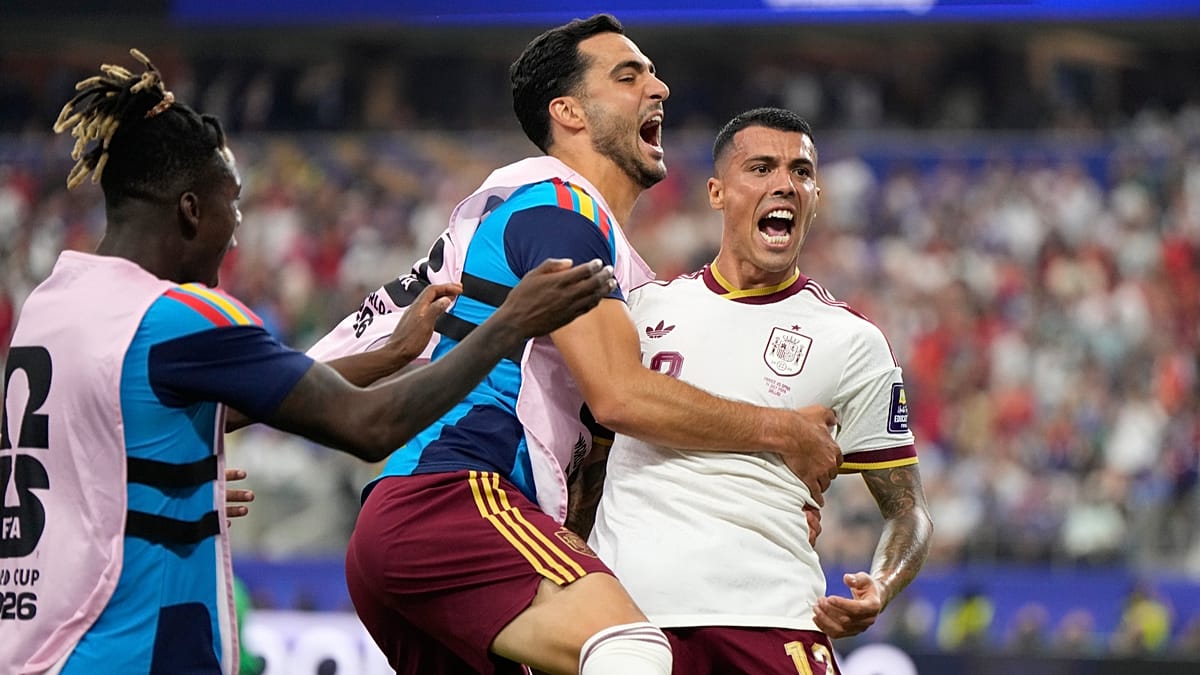
Spain delivered a commanding performance to beat France 2-0 in the World Cup semifinal at the AT&T Stadium in Arlington, Texas, on Tuesday, 14 July 2026. The result not only dashed French hopes on their national holiday, Bastille Day, but also propelled Luis de la Fuente's side into the final, where they will face the winner of the other semifinal between England and Argentina.
From the outset, France attempted to impose their rhythm, but Spain quickly seized control of possession and the midfield. The breakthrough came when Lamine Yamal's pace forced a penalty after a challenge from Lucas Digne. Mikel Oyarzabal converted from the spot with composure, putting Spain ahead before halftime.
In the second half, Spain's tactical discipline and defensive solidity neutralized France's attacking threats, including Kylian Mbappé. Rodri and Fabián Ruiz dominated the midfield, while Unai Simón remained largely untested. The decisive moment arrived when Dani Olmo threaded a precise pass to Pedro Porro, who surged forward from full-back to beat Mike Maignan and make it 2-0.
Didier Deschamps' substitutions failed to alter the course of the match. Spain managed their lead intelligently, moving the ball patiently and limiting France's opportunities. The final whistle sparked celebrations among the thousands of Spanish fans in Texas, as La Roja returned to a World Cup final for the first time since 2010.
This victory continues Spain's impressive run in the tournament, having already defeated one of the main favorites. The team's character, footballing quality, and competitive maturity have been hallmarks of their campaign. They now stand one match away from winning their second World Cup title.
The semifinal was part of a broader context of European football and geopolitics. Earlier on Bastille Day, Ukrainian President Volodymyr Zelenskyy attended the parade in Paris, as France showcased support for Ukraine. The match itself was a high-stakes encounter, with both teams representing significant footballing and economic power. For more on the financial stakes, see our analysis of the €2.8bn semifinal showdown.
Spain's journey to the final also reflects broader trends in European football, where tactical innovation and youth development have been key. The team's ability to control games through possession and discipline has drawn comparisons to the golden era of 2008-2012. Meanwhile, France's defeat raises questions about their ability to perform under pressure, despite their depth of talent.
Looking ahead, the final on Sunday will be a major event for European football, regardless of whether Spain faces England or Argentina. For Spain, it is a chance to add to their legacy and potentially secure a second World Cup title. For the continent, it underscores the strength of European football on the global stage.
As the tournament concludes, the focus will shift to the broader implications for European sport and diplomacy. The World Cup has provided a platform for showcasing European talent and unity, even as individual nations compete fiercely. For more on Spain's recent political developments, see our report on the Gibraltar deal.