The United States launched strikes on Tuesday targeting the Iranian port city of Bushehr, which hosts the country's only civilian nuclear power plant, as Iran's parliament moved to assert permanent control over the Strait of Hormuz. Deputy provincial governor Ehsan Jahanian told state-run IRNA that "four points in the city of Bushehr were hit by enemy projectiles at noon." There was no immediate confirmation of damage to the nuclear facility itself.
Further US strikes hit Abadan, home to the Middle East's oldest oil refinery, and the port city of Mahshahr, according to Valiollah Hayati, deputy governor of Khuzestan province. Iranian state television also reported five explosions west of Bandar Abbas, near the Strait of Hormuz.
Escalation in the Gulf
The strikes came after Iran struck two ships in the Strait of Hormuz on Tuesday, killing one crew member and injuring eight others. The UAE confirmed the vessels were hit by Iranian missiles. The UK Maritime Trade Operations agency (UKMTO) separately reported that a tanker 13 nautical miles southeast of Limah on the Omani coast was struck by a missile while transiting outbound on the southern route. Another tanker was hit 40 nautical miles northeast of Qalhat on Monday.
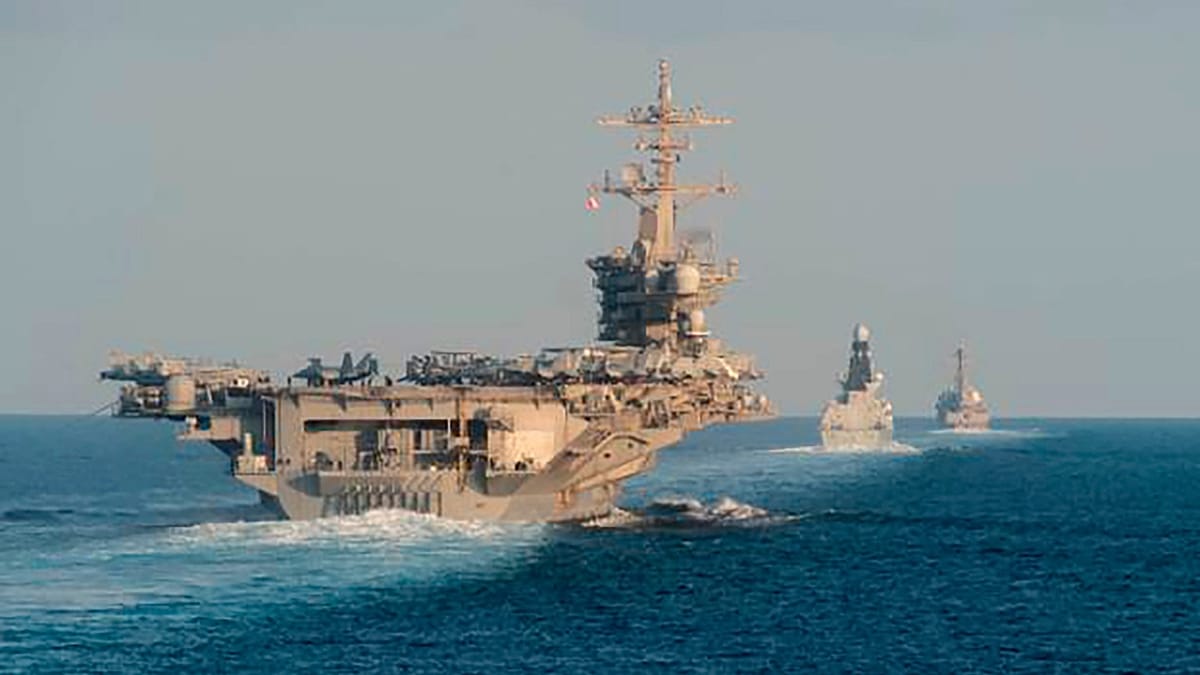
In response, US Central Command (CENCOM) announced the reimposition of a blockade on Iranian ports from 9 pm CET on Tuesday, following an order from President Donald Trump. Washington had eased the blockade after an interim agreement was reached in June. Trump declared on Truth Social that the US was "taking control" of the strait and proposed a 20% levy on the value of all cargoes passing through it, claiming that any costs incurred by the US in securing the passage would be "offset by charging a 20% rate on the total value of all shipments."
Iran had announced on Sunday that it was closing the strait again, reversing the reopening agreed under the interim deal. The Islamic Republic said it had exported around 80 million barrels of oil over the past 26 days despite the withdrawal of US sanctions waivers.
Brent crude rose above $85 per barrel for the first time since prices eased after the June ceasefire, with both Brent and West Texas Intermediate futures climbing roughly 2.5%. For European readers, this development is particularly concerning: the International Energy Agency has warned that a prolonged blockade of the Strait of Hormuz would devastate the continent's economy, given Europe's reliance on oil and liquefied natural gas transiting the waterway. As we reported earlier, the IEA chief warned Europe that a Strait of Hormuz blockade would devastate the economy.
Bahrain said its air defence systems intercepted and destroyed "several treacherous aerial attacks launched by Iran" on Tuesday morning, accusing Tehran of targeting civilians. Explosions were heard in the Bahraini capital Manama after warning sirens sounded for the third time since dawn. The Islamic Revolutionary Guard Corps (IRGC) confirmed it had carried out missile and drone strikes on the neighbouring country.
Iran's Parliamentary Move
Iran's parliament, which had been suspended since the outbreak of war in February and resumed sessions on Monday, began work on a bill titled "Strategic action for the security and sustainable development of the Strait of Hormuz and the Persian Gulf." Parliamentary National Security Committee head Ebrahim Azizi confirmed the bill had been formally submitted as US drones were being shot down over the region, adding that further measures were being drawn up.
A number of MPs have opposed negotiations with the United States and objected to having had no input in the June memorandum. Parliament is headed by Mohammad Bagher Ghalibaf, who also serves as Iran's chief negotiator in talks with Washington.
Brigadier General Akraminia, spokesperson for the Khatam al-Anbiya military headquarters, said Iran would "under no circumstances" allow the US to interfere in managing the strait and warned Gulf states that any cooperation with Washington would be regarded as "an act of war." Iran's army spokesperson said reopening the strait depended on "respecting the rights of the Iranian nation" and that any attempt to reopen it through military pressure was "doomed to fail."
China called on both sides to restore safe passage. Foreign Ministry spokesperson Lin Jian said at a press briefing that "the swift resumption of normal and safe transit through this strait is a shared demand of the international community" and that Beijing would "make unremitting efforts to help de-escalate" the crisis.
The situation remains highly volatile, with the potential to disrupt global energy markets and further destabilise the Middle East. For Europe, the stakes are high: any sustained disruption to shipping through the Strait of Hormuz would have immediate and severe consequences for energy prices and supply security across the continent. The European Union has yet to issue a formal response to the latest escalation, but diplomats in Brussels are closely monitoring developments.