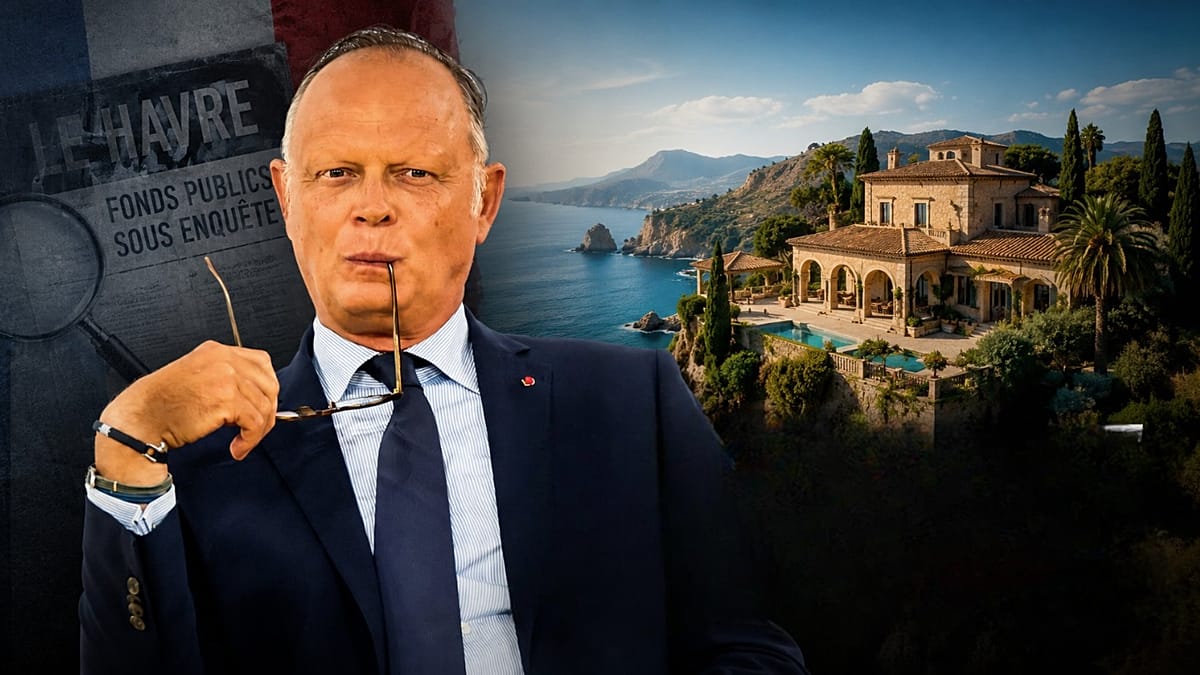
A fabricated story circulating on social media has claimed that Édouard Philippe, the former French prime minister and current mayor of Le Havre, purchased a luxury villa in Sicily. The story, which spread rapidly on X, tied the alleged purchase to a genuine but unrelated investigation into Philippe's management of public funds.
The video, which was shared widely, alleged that Philippe acquired the estate from Stéphanie de Bazelaire, a local councillor in Le Havre, and raised questions about the financing of the supposed transaction. It was first published by a website called "Repupplica.com," a domain that closely mimics the Italian news outlet Repubblica. The site has since been taken down, but not before the story gained traction.
The video also referenced an article from the Italian outlet Affari Italiani, which reported that Philippe is indeed under investigation. However, that article has been taken out of context: the investigation does not mention any property in Sicily. Repubblica never published such a story, and no credible source has confirmed that Philippe bought a villa in Sicily for €15 million.
A real investigation, a fabricated link
The names in the fake story were not chosen at random. Philippe and de Bazelaire are both involved in a real investigation in France concerning the management of a multi-million-euro digital development project in Le Havre. The probe includes allegations of favouritism and misuse of public funds. Philippe has denied any wrongdoing, and the investigation is ongoing.
This is not the first time Philippe has been the target of fake online stories. Earlier, a false claim suggested he had dementia. Other potential presidential candidates, including Raphaël Glucksmann and Gabriel Attal, have also been targeted by similar disinformation campaigns.
French authorities have linked some of these operations to pro-Russian networks. Prosecutors are examining suspected foreign interference aimed at influencing the 2027 presidential election, the first round of which is scheduled for 18 April 2027.
The incident underscores the growing threat of disinformation in European politics, particularly as elections approach. The European Union has been stepping up efforts to counter such interference, but the challenge remains significant.
For now, the story about the Sicilian villa appears to be a classic example of a fake scandal designed to damage a political figure's reputation. As with many such stories, the details were carefully crafted to appear plausible, but the evidence simply does not support them.



