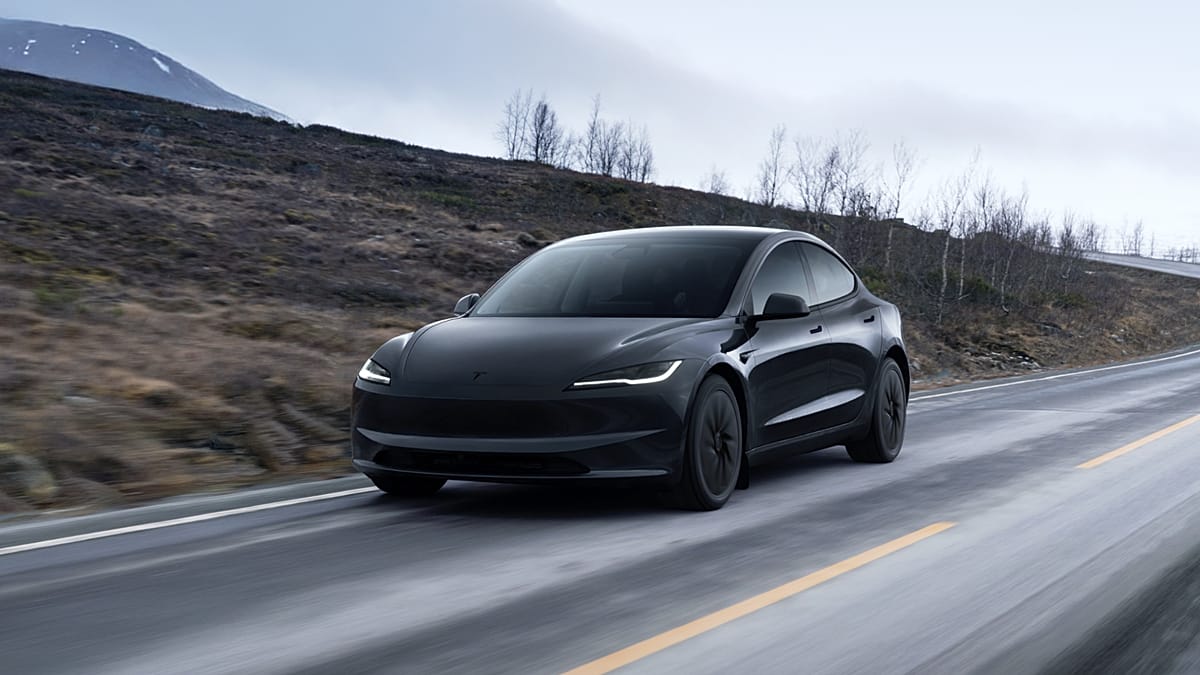
Finland has become the latest European country to allow Tesla to deploy its assisted driving technology, granting a temporary approval that lets the US carmaker offer the system to customers immediately. The decision, announced on Wednesday by the Finnish Transport and Communications Agency (Traficom), marks a significant step for the company as it navigates a fragmented regulatory landscape across the continent.
The system, now branded Tesla Assisted Driving (TAD), enables vehicles to steer, accelerate, and brake automatically, though drivers are required to remain attentive and supervise the technology at all times. The name change from the previous Full Self-Driving (FSD) Supervised label reflects a more accurate description of its capabilities, according to Traficom's senior specialist Jukka Juhola. He noted that the new terminology better distinguishes driver assistance from fully autonomous driving, a distinction that has become increasingly important as regulators scrutinise marketing claims.
Finland's approval follows similar moves by the Netherlands, Estonia, Belgium, Lithuania, and Denmark, all of which have authorised the system in recent months. However, the patchwork of national permissions underscores a deeper challenge: the European Union has yet to agree on a unified framework for automated driving. The European Commission's proposal for a regulation on driverless vehicles has been stalled in the Council, with member states divided over liability, data access, and technical standards.
This regulatory deadlock has pushed companies like Tesla to seek approval at the national level, a process that is both time-consuming and inconsistent. In Finland, Traficom's decision came after Tesla made unspecified modifications to the technology, suggesting that the company is willing to adapt its systems to meet local requirements. The temporary nature of the approval also hints at the possibility of future revisions once EU-wide rules are finalised.
National approvals vs. EU-wide harmonisation
The current situation highlights a broader tension within the EU's single market. While the bloc aspires to harmonise rules for emerging technologies, the pace of innovation often outstrips the legislative process. For automated driving, the stakes are high: a fragmented market could deter investment and slow the deployment of safety-enhancing features, while also creating confusion for consumers and manufacturers alike.
Finland's move is particularly notable given its reputation as a pioneer in automotive safety and its harsh winter conditions, which present unique challenges for sensor-based systems. The approval suggests that Tesla's technology has met Finnish standards for reliability, at least in its current form. However, the company still faces hurdles in other EU countries, where regulators may impose additional requirements or outright reject the system.
The broader context is one of growing pressure on Brussels to act. Industry groups and several member states have called for a common approach to avoid a race to the bottom in safety standards. Meanwhile, environmental and consumer organisations have urged caution, pointing to incidents involving Tesla's driver assistance features in other markets. The debate is likely to intensify as the EU prepares for a vote on the proposed regulation, which could take place later this year.
For now, Tesla's approval in Finland offers a glimpse of how automated driving might evolve in Europe: not through a single, sweeping directive, but through a series of incremental, national decisions. This approach has its drawbacks, but it also allows for experimentation and adaptation, as seen in the company's broader strategic pivot towards robotaxis and other autonomous ventures.
The Finnish decision also raises questions about the future of driver assistance across the continent. With the EU's regulatory process still in limbo, other countries may follow Finland's lead, creating a de facto standard that Brussels will eventually have to reckon with. As Juhola put it, the new name "reflects the true nature of the system," a sentiment that could apply equally to the regulatory landscape itself.
In the meantime, Finnish Tesla owners will be able to use the assisted driving features, but they will need to remain vigilant. The system is not a substitute for a human driver, and Traficom has emphasised that it must be supervised at all times. This cautious approach may serve as a model for other European nations as they grapple with the promise and peril of automated vehicles.