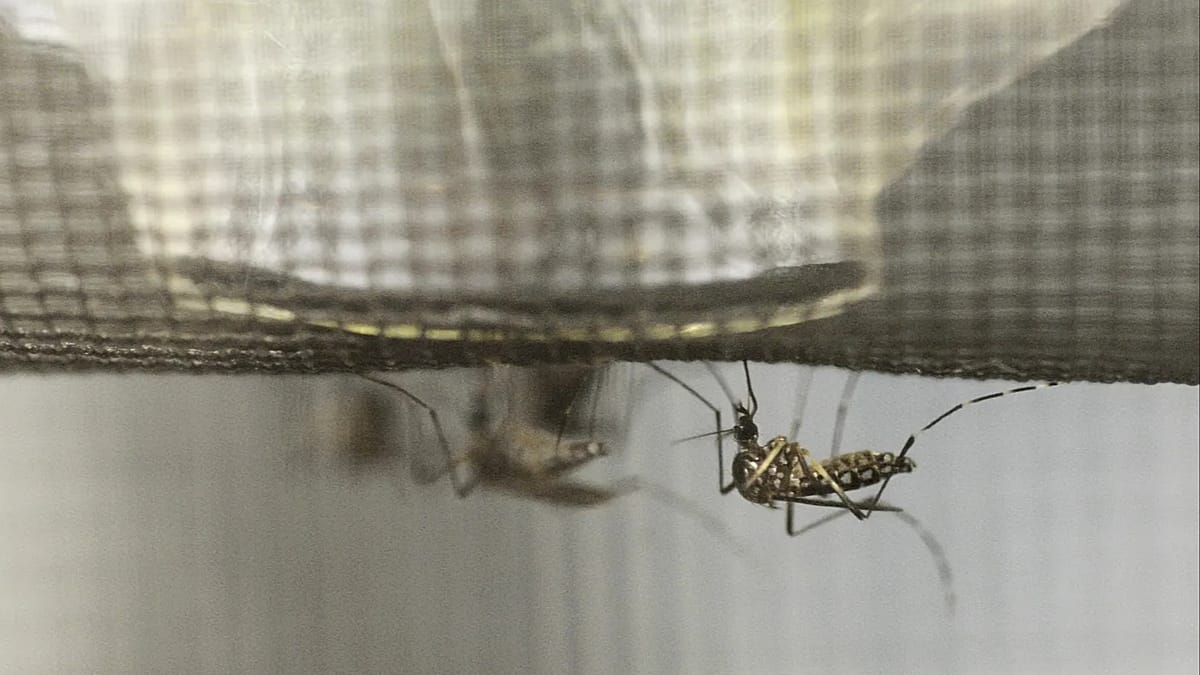
In the southern French city of Montpellier, a novel biological strategy is taking flight against one of Europe's most unwelcome newcomers: the tiger mosquito. Terratis, a local startup, is breeding and releasing millions of sterilised male insects into urban neighbourhoods, hoping to curb the spread of diseases such as dengue, Zika and chikungunya.
The technique, known as the sterile insect technique, is not new in agriculture but is now being deployed at commercial scale against a public health threat. Male tiger mosquitoes, which do not bite, are separated from females and exposed to X-rays that render their sperm infertile. When released, they compete with wild males to mate with females, but no offspring result. Over successive generations, the mosquito population declines.
Terratis currently produces around 1.5 million sterile males per week at its facility in Montpellier. The insects are released in designated zones such as the Malbosc district, where residents have reported growing problems with the invasive species. The company says the method is non-GMO, chemical-free and environmentally friendly, offering an alternative to widespread insecticide spraying that can harm pollinators and other wildlife.
Scaling Up Across Europe
France is among the first countries to move this technology from laboratory research into real-world deployment. Terratis plans to ramp up production to 40 million sterile males per week within two years, a scale that would allow coverage of larger urban areas. Researchers say interest in the technique is growing worldwide, with dozens of projects underway in different countries, particularly in southern Europe where the tiger mosquito has become endemic.
The tiger mosquito, originally from Southeast Asia, has spread across much of Europe over the past two decades, facilitated by global trade and warmer temperatures. It is now established in all 27 EU member states as well as the UK, Switzerland and the Balkans. In France, the insect has been reported in all mainland departments, and local authorities have struggled to contain its spread.
Public health officials are particularly concerned about the mosquito's ability to transmit viral diseases. While outbreaks of dengue and chikungunya in Europe have so far been limited, the risk is rising as climate change extends the mosquito's active season and geographic range. The sterile insect technique offers a targeted, long-term tool that could complement existing measures such as larvicide treatments and public awareness campaigns.
Terratis' approach has drawn attention from other European countries facing similar challenges. Italy, Spain and Greece have all expressed interest in pilot programmes, and the European Commission has funded research into the technique's feasibility for continental-scale deployment. The company is also exploring partnerships with local authorities in the Balkans, where tiger mosquito populations have surged in recent years.
Critics caution that the method is not a silver bullet. Sterile releases must be sustained over many years to achieve lasting suppression, and the technique works best when combined with other control measures. There are also logistical challenges: producing and releasing tens of millions of insects requires significant infrastructure and coordination with local communities.
Nevertheless, supporters see the sterile insect technique as a promising addition to Europe's public health toolkit. In an era of rising insecticide resistance and environmental concerns, biological control methods offer a way to reduce disease risk without collateral damage. For residents of Montpellier's Malbosc district, the arrival of sterile mosquitoes may soon mean fewer bites and a lower chance of falling ill.
As Europe grapples with the twin pressures of climate change and globalisation, innovative solutions like this one are likely to become more common. The fight against the tiger mosquito is far from over, but in the skies above southern France, a quiet revolution is taking place.