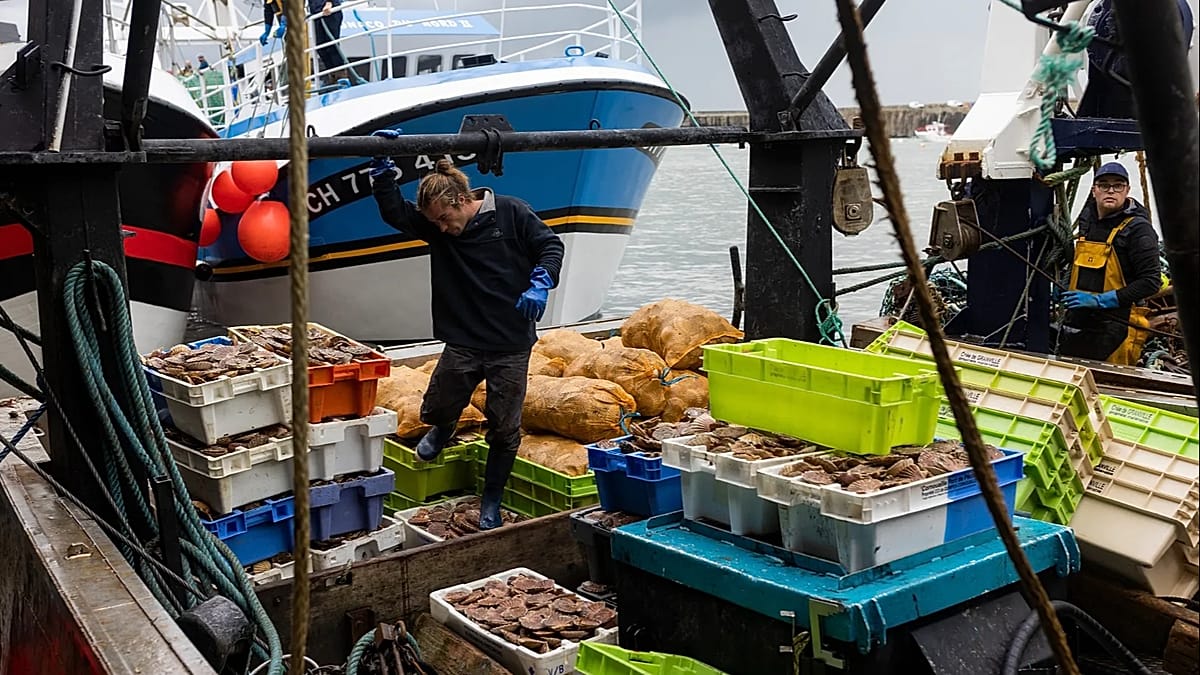
Dozens of French fishermen convened in Cherbourg this week to confront a mounting crisis that threatens the viability of their industry. The meeting, held in the port city of the Manche department, brought together representatives from across the sector to discuss fuel prices, resource management, and the growing pressure from foreign competition.
Fuel costs have become the most immediate concern. In May, diesel represented up to 60 percent of ship owners' operating expenses, forcing many to reduce the number of days they spend at sea. Protests erupted in April from the coast of Normandy to the Mediterranean island of Corsica, as fishermen demanded relief from prices that have eroded their margins.
The French government responded with a package of emergency measures. In April, it introduced a subsidy of 20 cents per litre of fuel, which rose to 35 cents per litre in May. According to the government, the total allocation for these two months amounts to €13 million. While the aid has provided some breathing room, many in the sector argue that it is a temporary fix for a structural problem.
Broader pressures on the fishing fleet
Beyond fuel, French fishermen face a complex web of challenges. In the English Channel, they must share increasingly crowded waters with aquaculture operations, offshore wind farms, and heavy maritime traffic. Small-scale fishermen, who operate vessels under 25 metres, are pushing for a ban on larger ships—those over 25 metres—from the French coastal strip, arguing that industrial trawlers deplete local stocks and damage the seabed.
On the Atlantic coast, the industry is bracing for a potential temporary fishing ban in the Bay of Biscay next year, aimed at protecting dolphin populations. Environmental groups have long called for such measures, but fishermen warn that the economic impact could be severe, particularly for ports in Brittany and the Pays de la Loire.
The recent framework agreement between Iran and the United States has offered a glimmer of hope for lower energy prices, but the deal remains fragile and its effects on global fuel markets are uncertain. For now, French fishermen continue to operate under the shadow of high costs and uncertain demand.
In a related development, the European Union is grappling with broader trade and environmental policies that affect the fishing sector. The bloc's ongoing negotiations on fisheries quotas and sustainability targets are closely watched in ports from Boulogne-sur-Mer to Sète.
As the sector navigates these pressures, the gathering in Cherbourg underscored a shared sense of urgency. Fishermen are calling for long-term solutions—not just subsidies, but also clearer rules on competition, better enforcement of quotas, and a fairer distribution of maritime space.